Avant-Garde:
Concerning his friend Max Liebermann, the Jewish painter from Berlin who, like himself, hailed from that city, the museum director Max J. Friedländer composed a biography in 1924. It stands as a document of emancipation. “Liebermann’s father was a manufacturer,” Friedländer writes of the painter, “as were nearly all his relatives merchants or industrialists—capable and successful men […]. The finest among them were stern, because they themselves had not been spared hardship; liberal, because they depended upon tolerance; conservative, because they had possessions to safeguard; and radical insofar as the older ruling strata of the country denied them full belonging.”
“Stern, liberal, conservative, radical”: rarely has Max Liebermann been captured more tersely or more incisively than in these four seemingly antithetical adjectives. They speak to his origins, to his art—and to the Impressionist network of which he became the fulcrum. He belonged to an avant-garde elite that reinvented everything, yet continued to prize the representational tradition.
Private collection
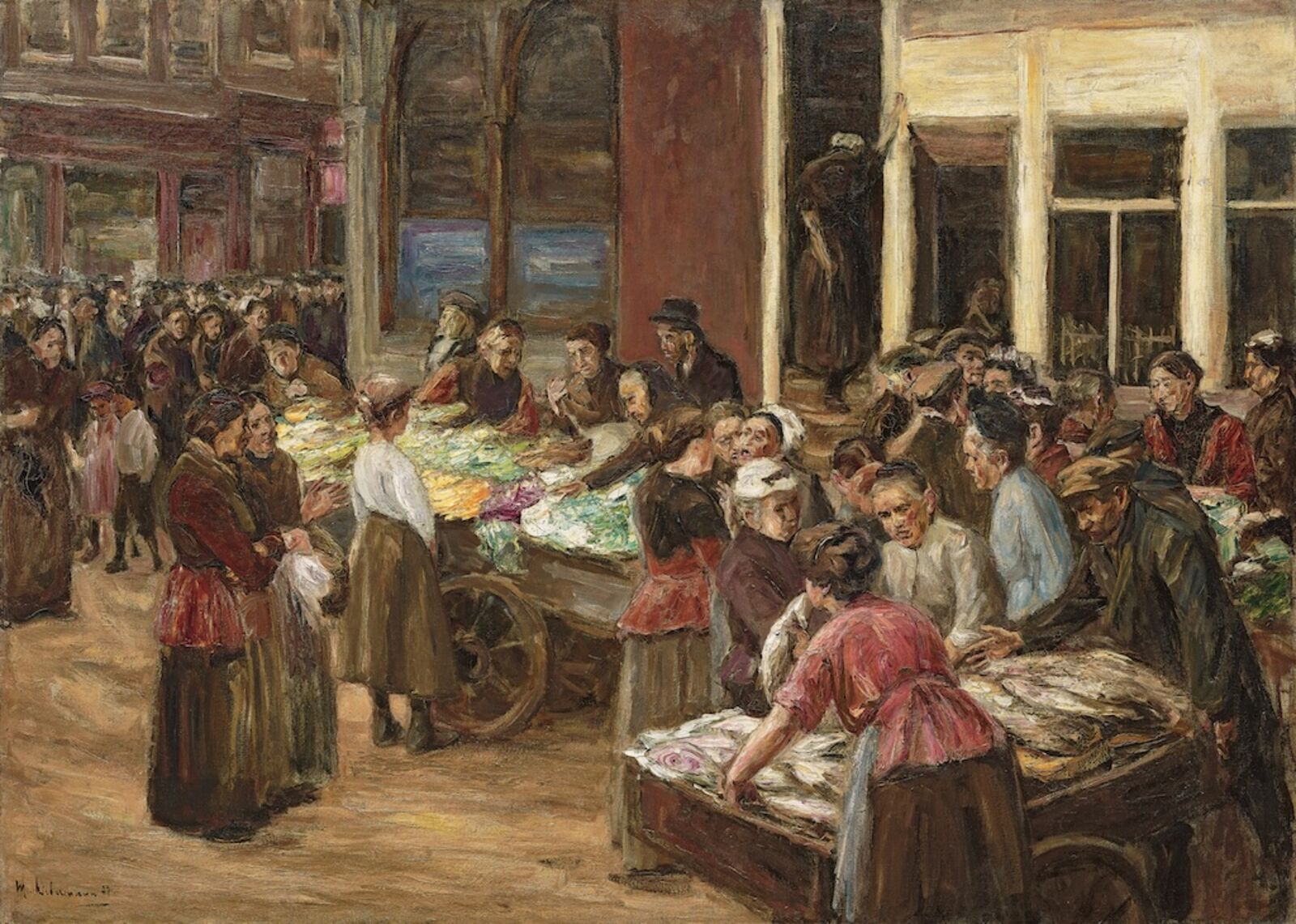
Jewish elements appear only sporadically in Max Liebermann’s work: Jewish Street in Amsterdam (1909)
Private collection
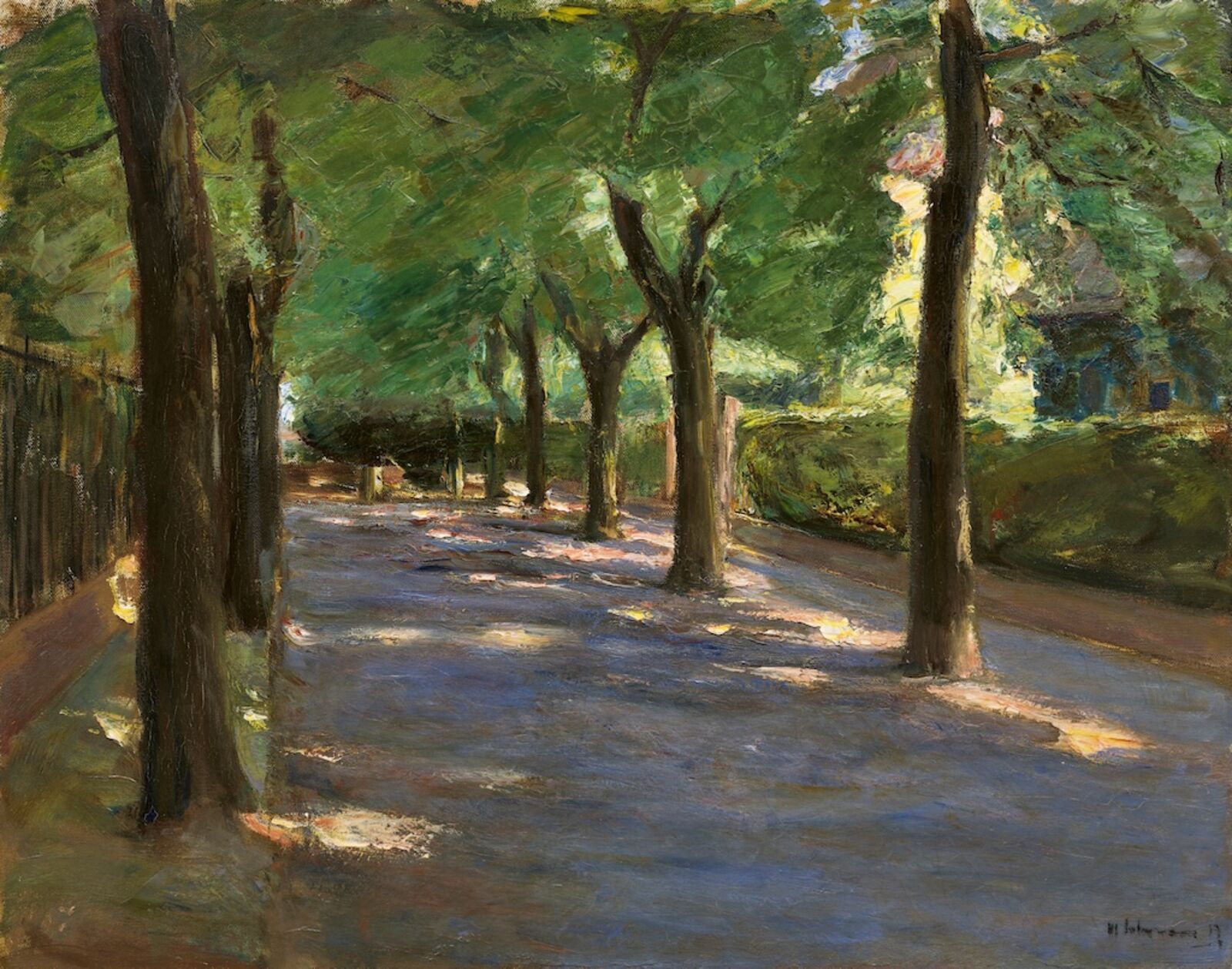
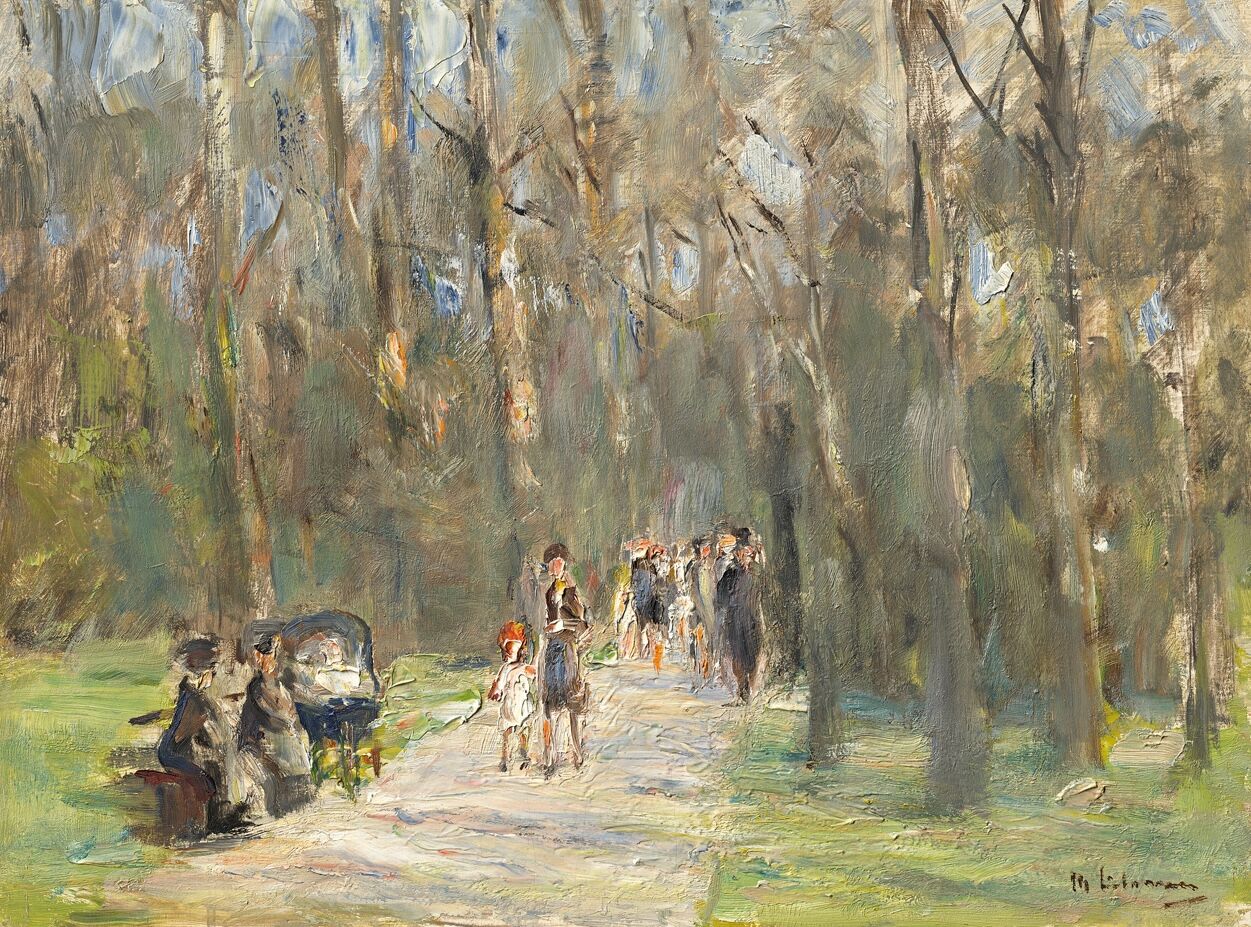
Trees, street, light—less is more: Colomierstraße in Wannsee (1917)
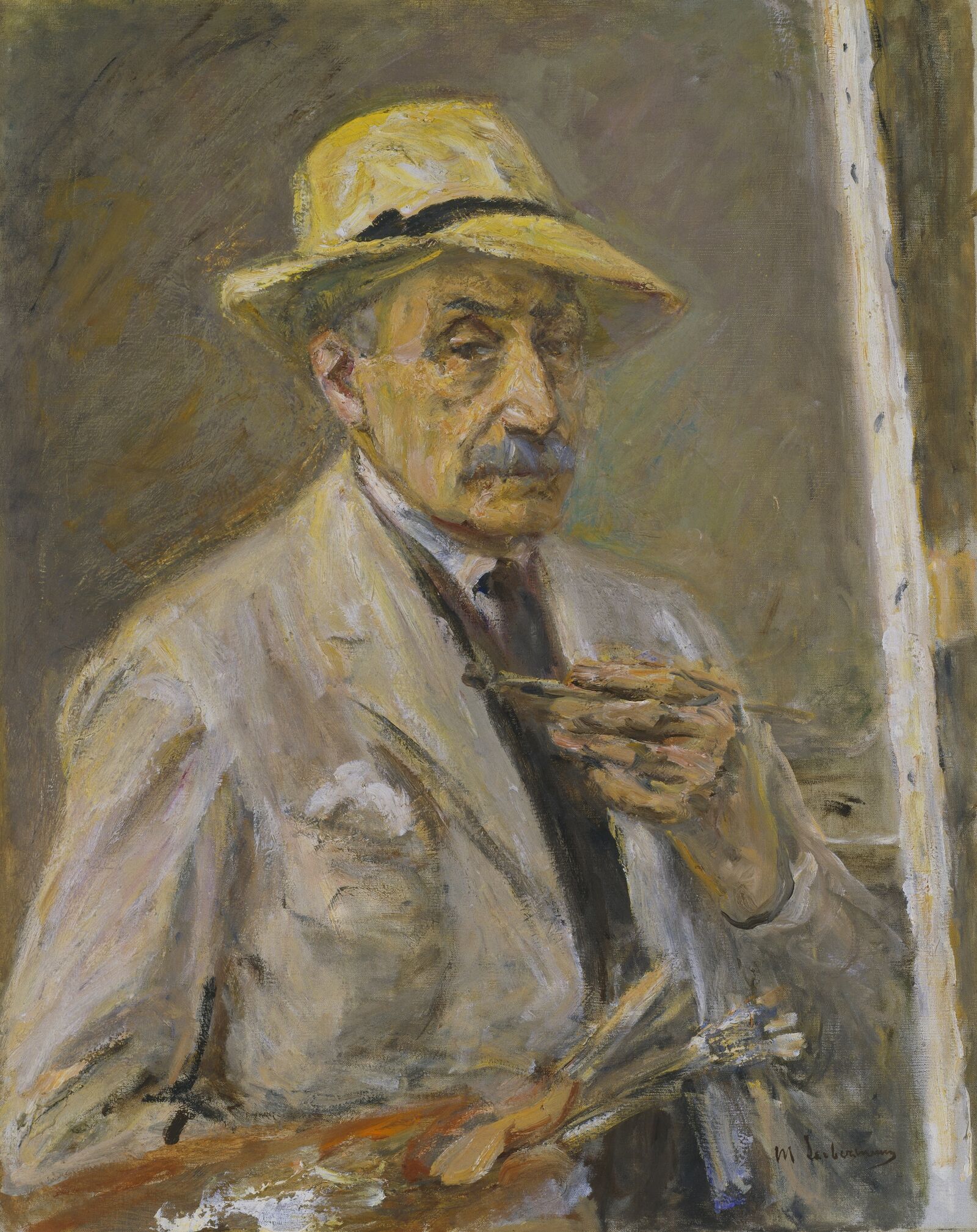
One perceives this with particular clarity in Max Liebermann’s self-portraits—even in this late, somewhat weary example of 1934: he remained, always, a bourgeois artist. His aesthetic evolved through diligence and creative fervor, with order and audacity held in poised equilibrium. At the same time, he belonged to the first Jewish generation tentatively permitted to become part of German society.
Tate
Self-Portrait, 1934
"There is no more inane assertion than this: that Naturalism is dead. For all art is grounded in nature, and whatever endures in it is nature. Not merely the nature that surrounds the artist, but above all his own."
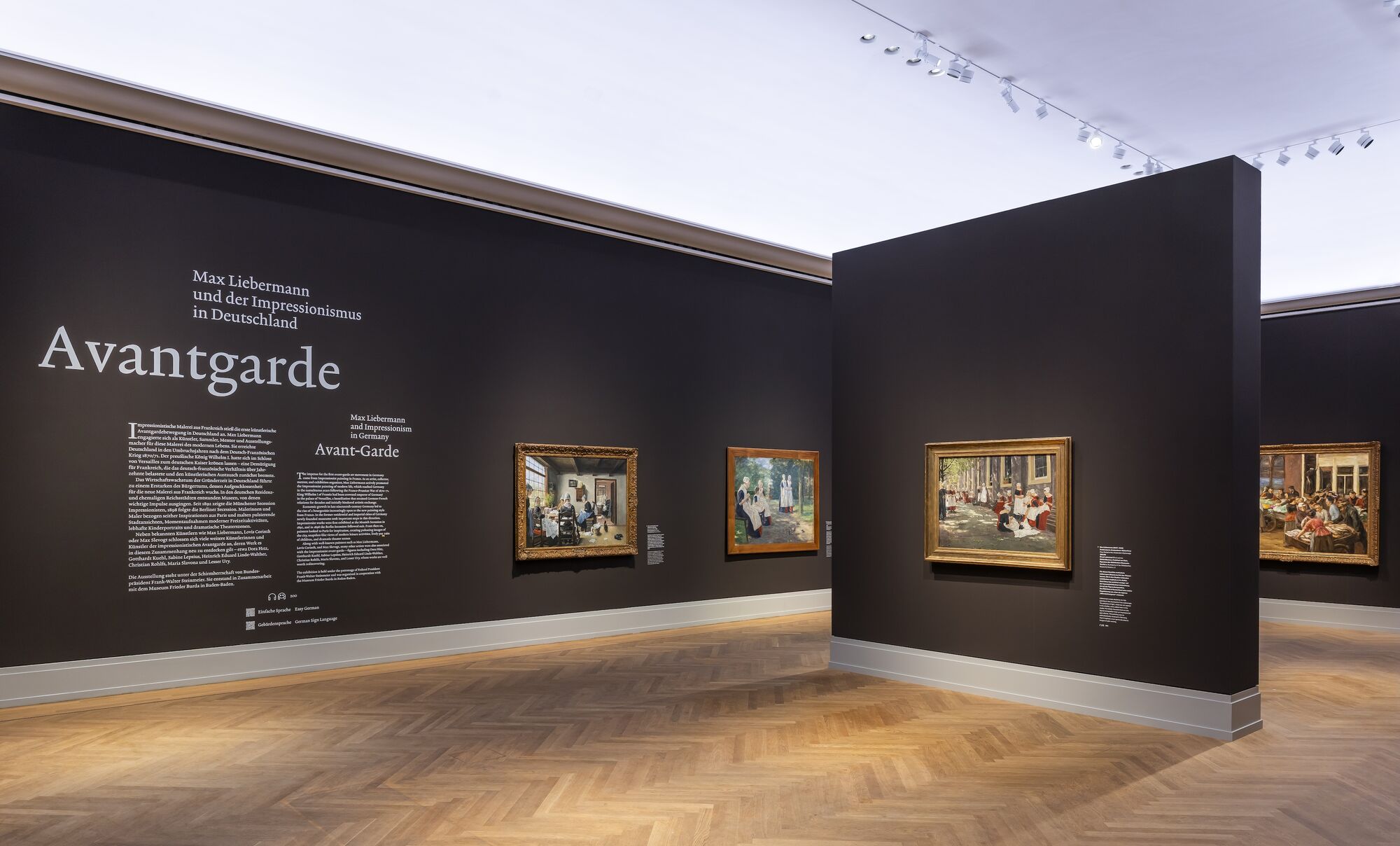
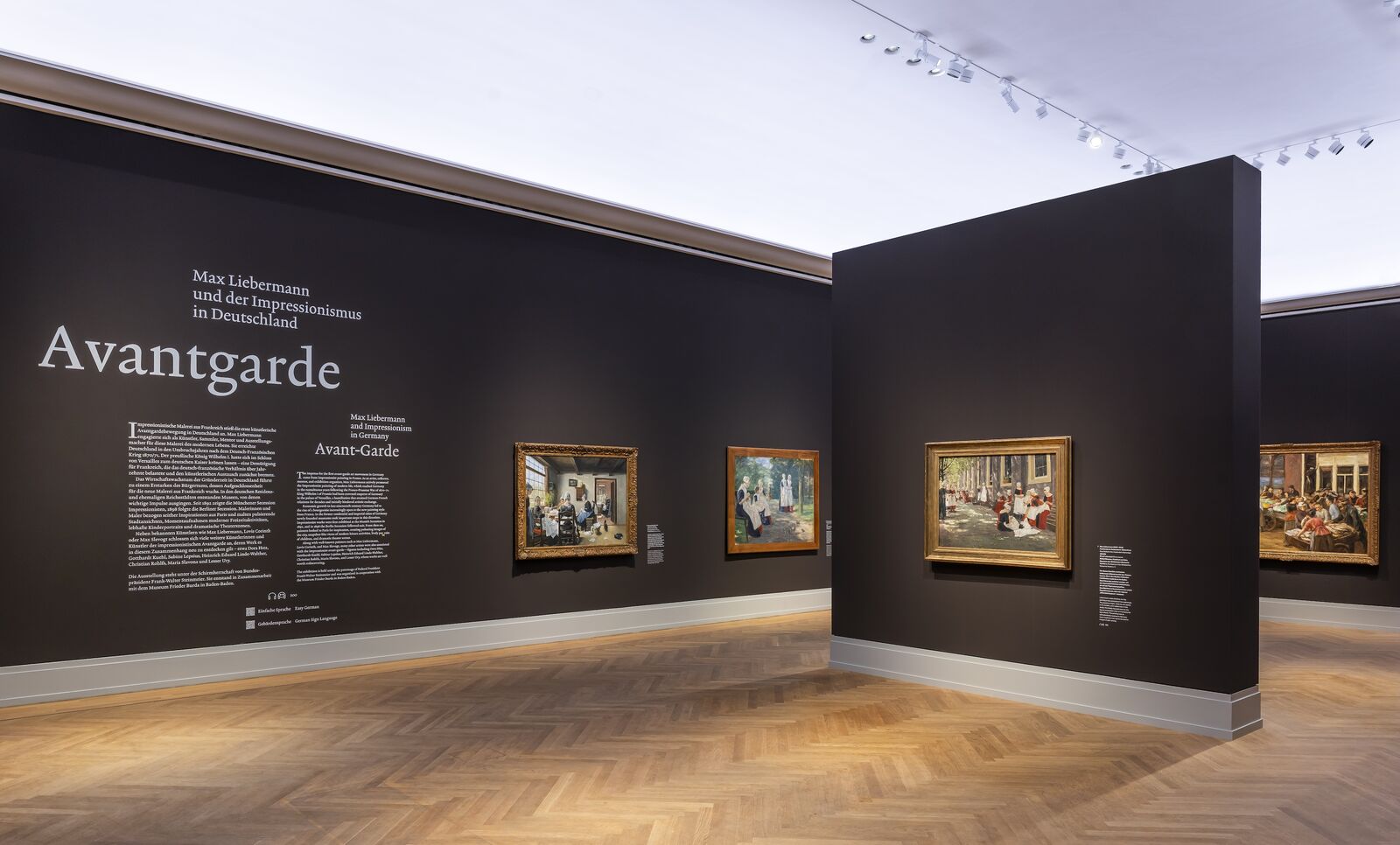
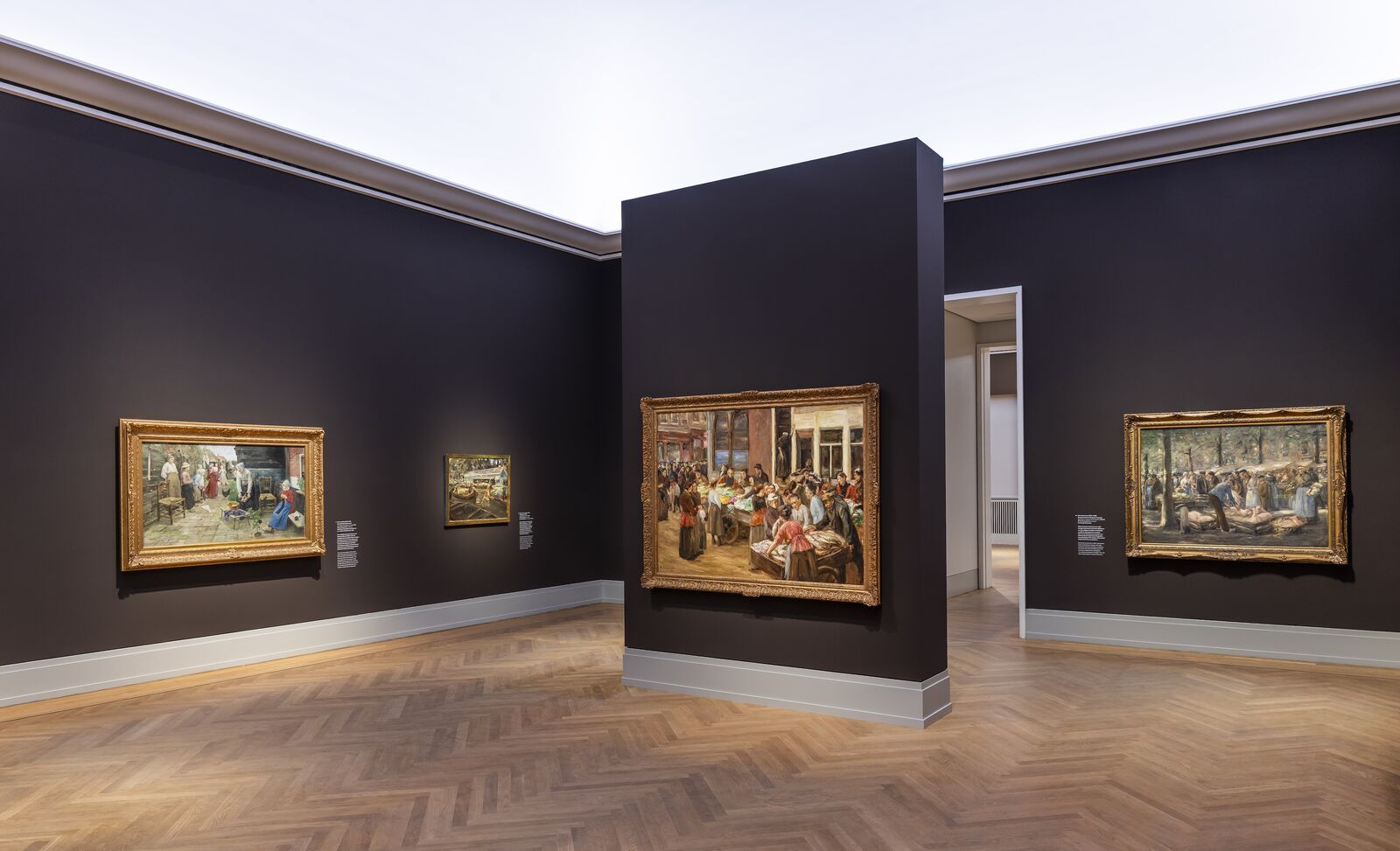
Max Liebermann’s studio by the Brandenburg Gate has not survived. His paintings, however, have. And they have scarcely ever been presented with greater breadth or distinction than they are now: Avant-Garde. Max Liebermann and Impressionism in Germany, a joint exhibition organized by the Museum Barberini, Potsdam, in collaboration with the Museum Frieder Burda, Baden-Baden, under the patronage of the President of Germany, Frank-Walter Steinmeier.
With this exhibition, Liebermann’s pivotal role in the German avant-garde is once again being celebrated. For the first time on such a scale, Impressionism in Germany itself comes under sustained scrutiny—featuring more familiar figures such as Max Slevogt and Lovis Corinth, who together with Liebermann formed what was already then termed the “triumvirate” of German Impressionism, as well as lesser-known artists, among them Gotthardt Kuehl and Lesser Ury.
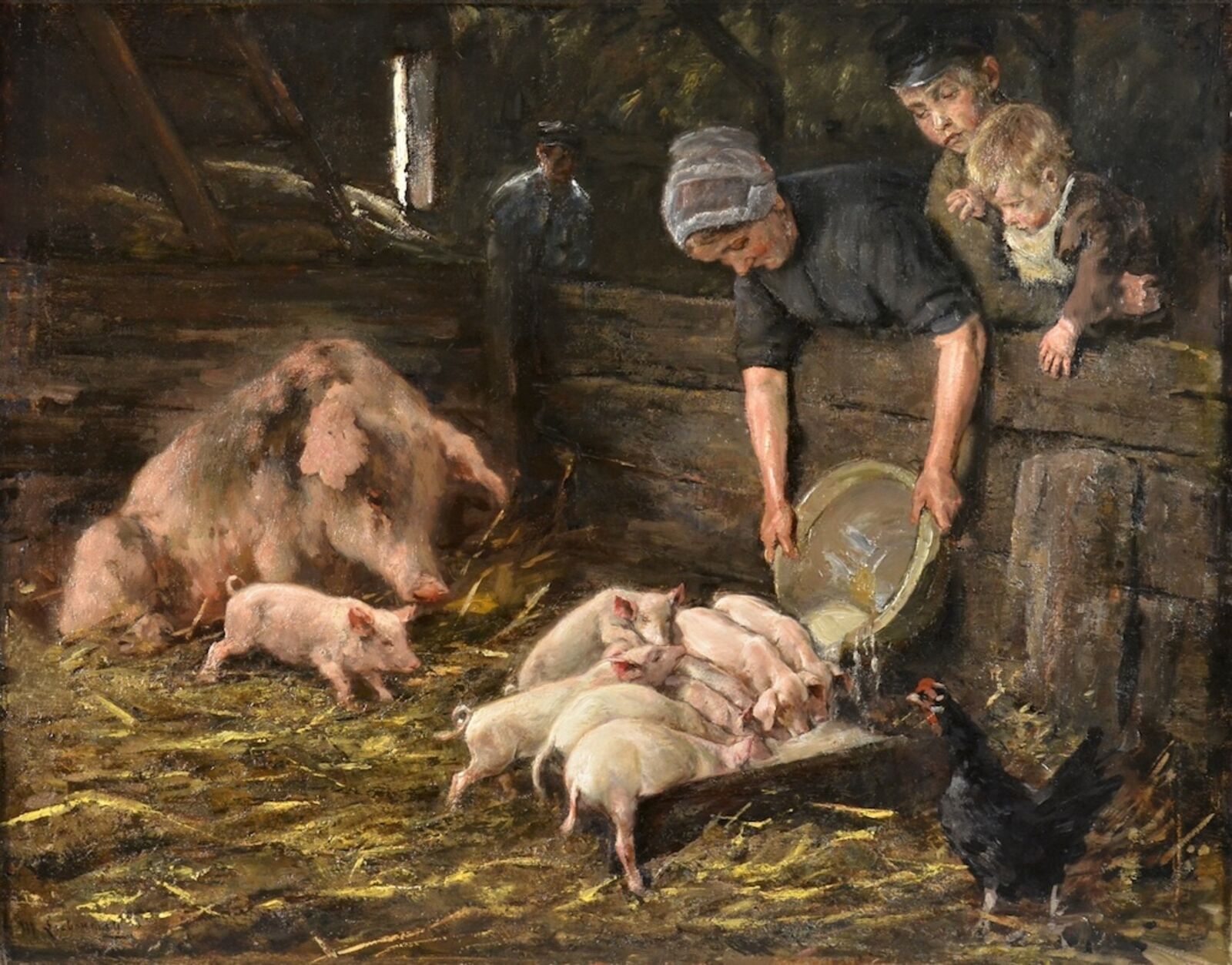
Private collection
The Maternity Ward (1888): a powerful genre scene, heralding a shift in taste…
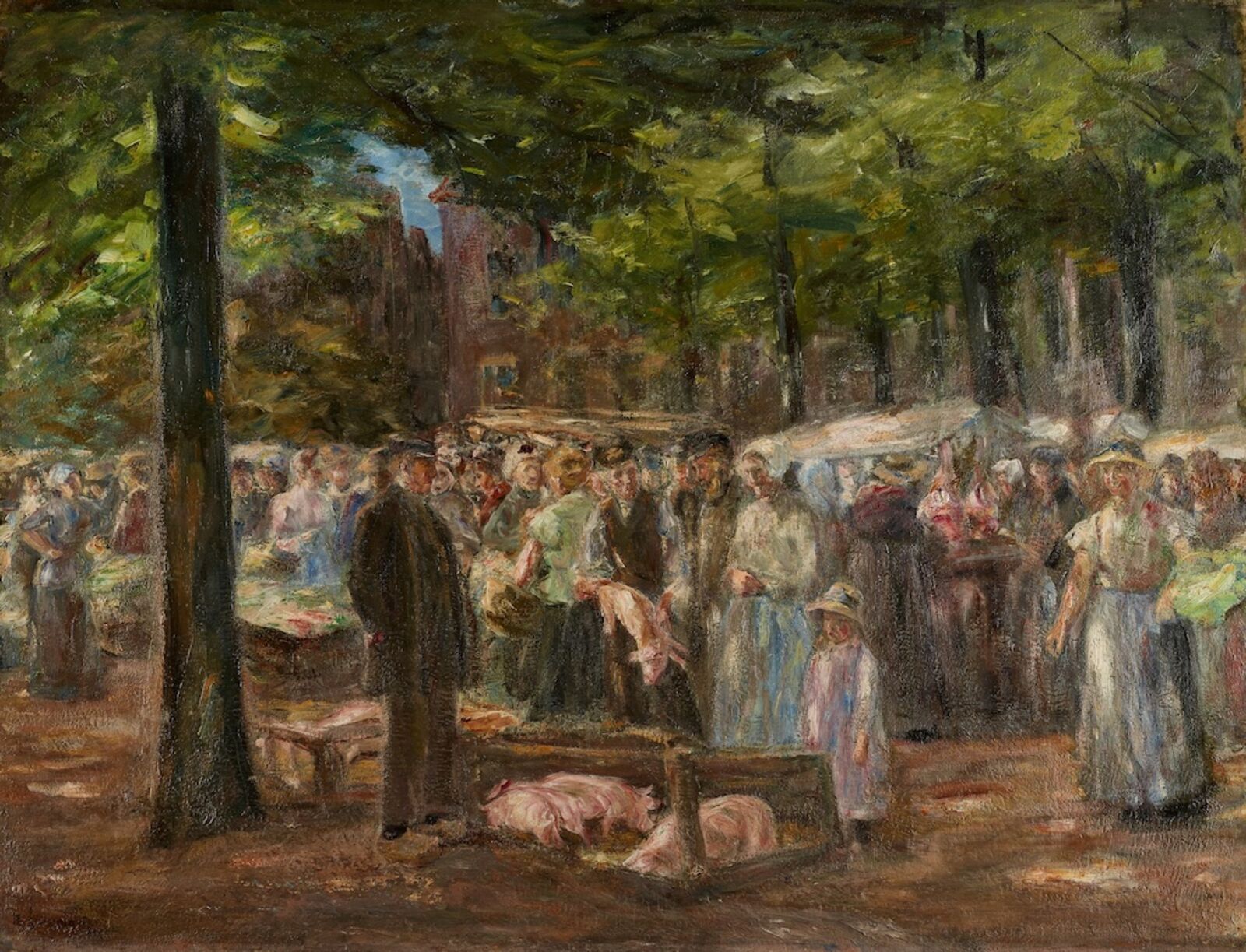
Kunsthalle Mannheim
Single Figures as Luminous Painterly Ornament: Liebermann’s Pig Market in Haarlem (1894)
Altogether, 116 works by 25 artists—including Max Liebermann—from over 50 international collections have been brought together. Among them are paintings by six female Impressionists: Charlotte Berend-Corinth, Emilie von Hallavanya, Dora Hitz, Sabine Lepsius, Maria Slavona, and Eva Stort.
Women played a subtle yet decisive role at the time, even though they were not yet permitted to study formally. In subsequent reception, however, their contributions were effectively erased—fortunately, no longer today.
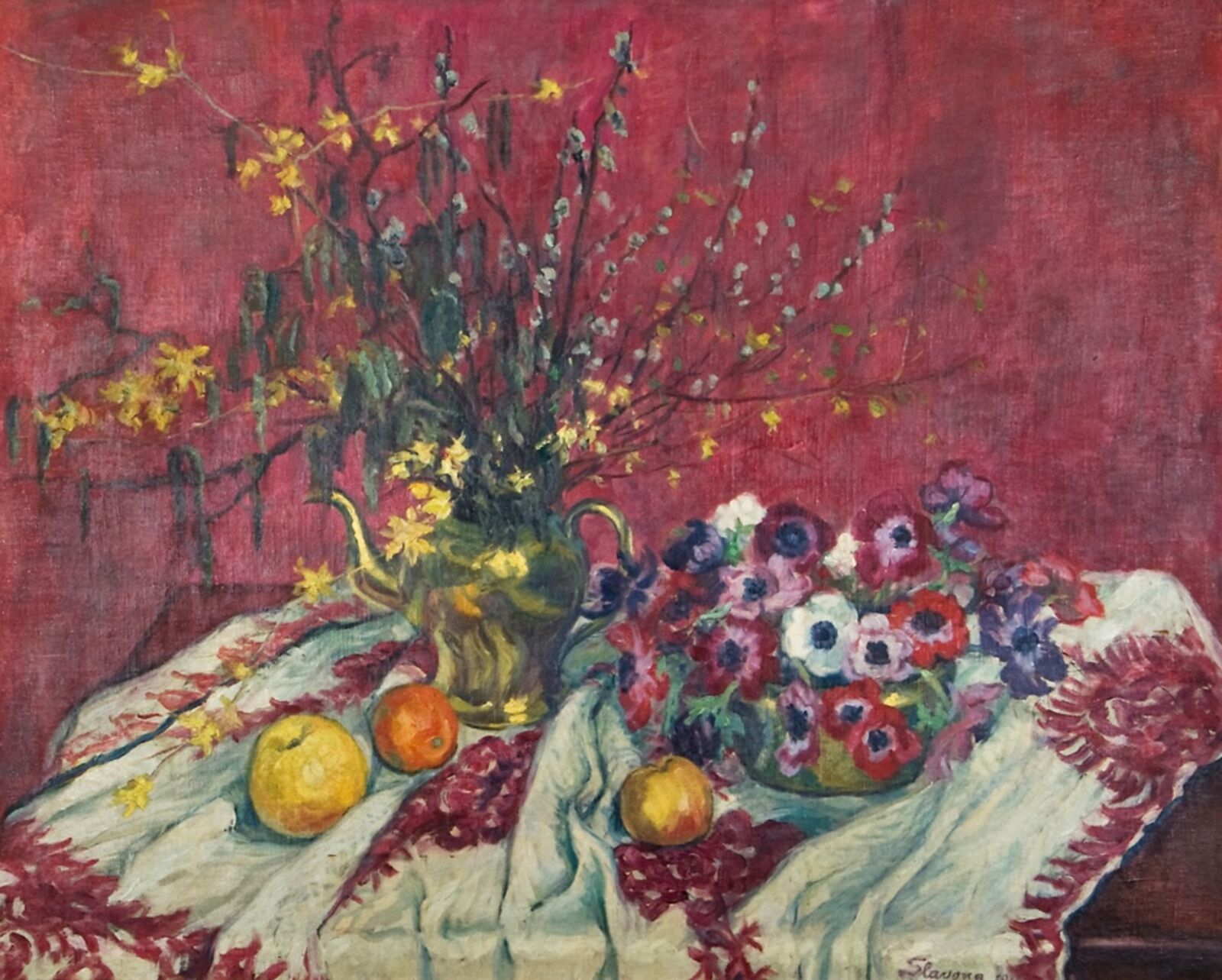
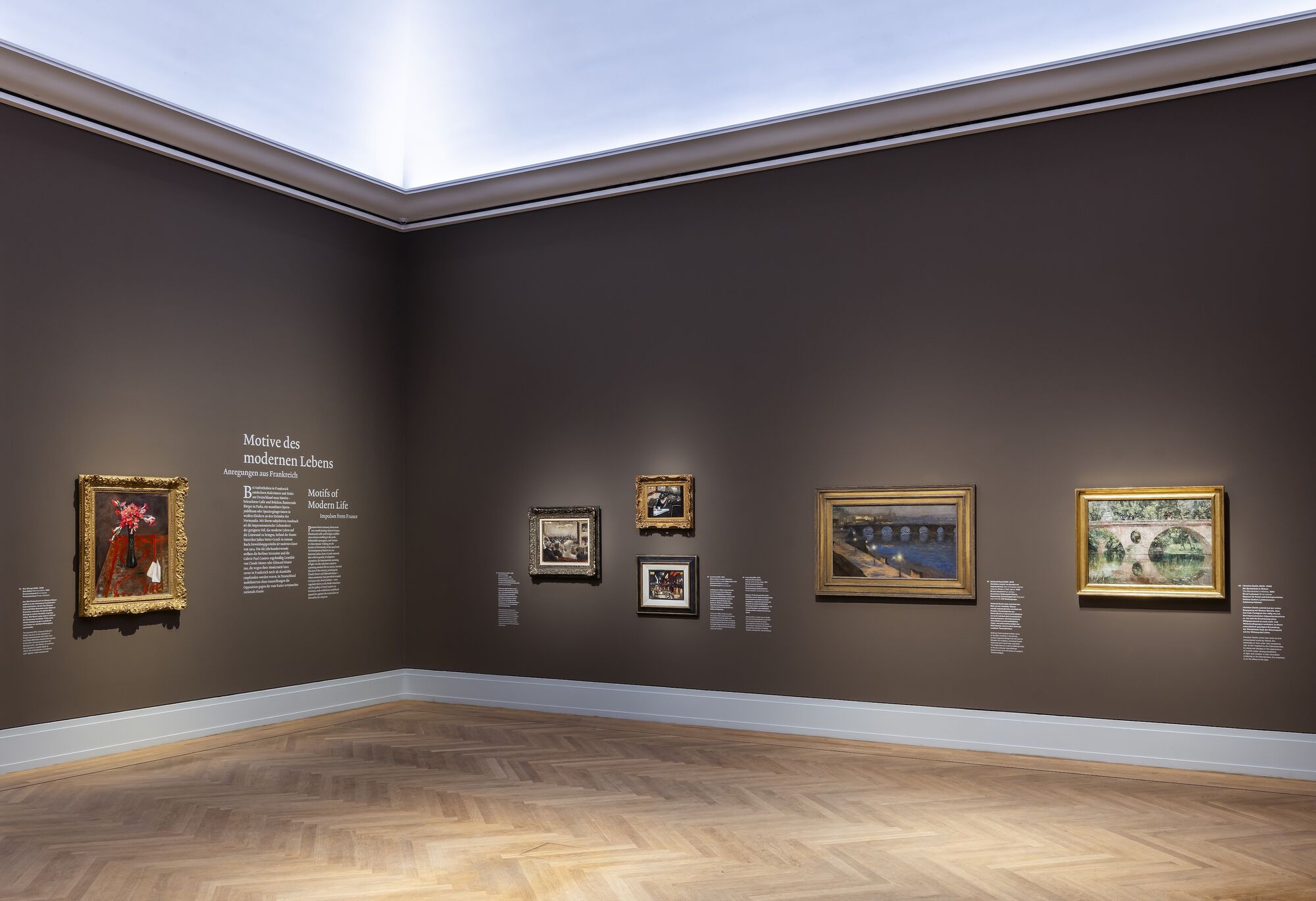
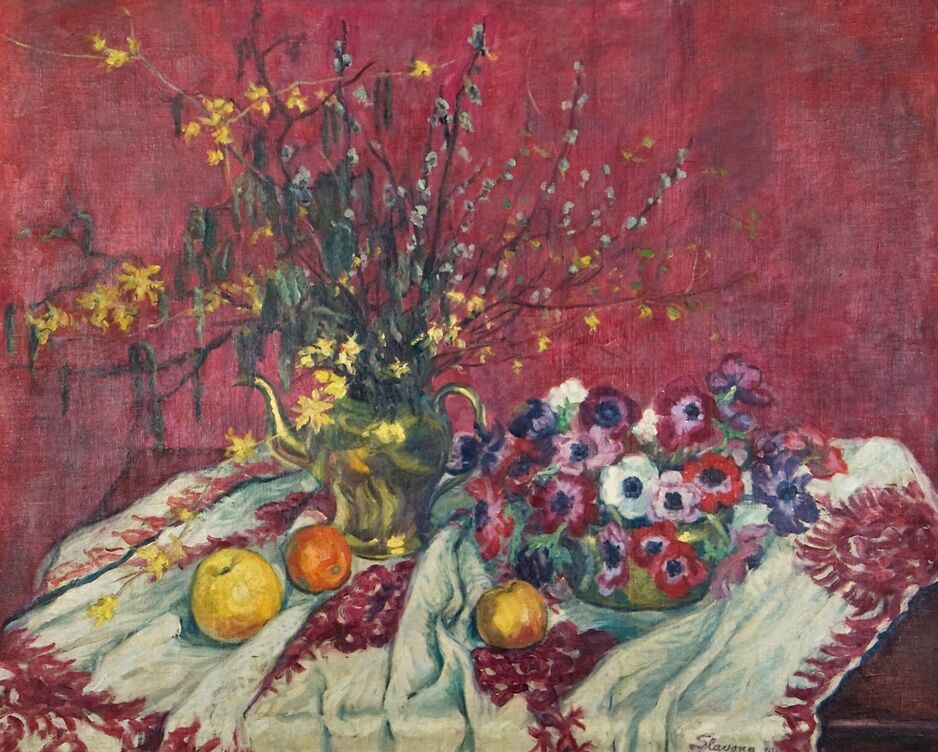
Maria Slavona’s Still Life against a Red Background (1911)
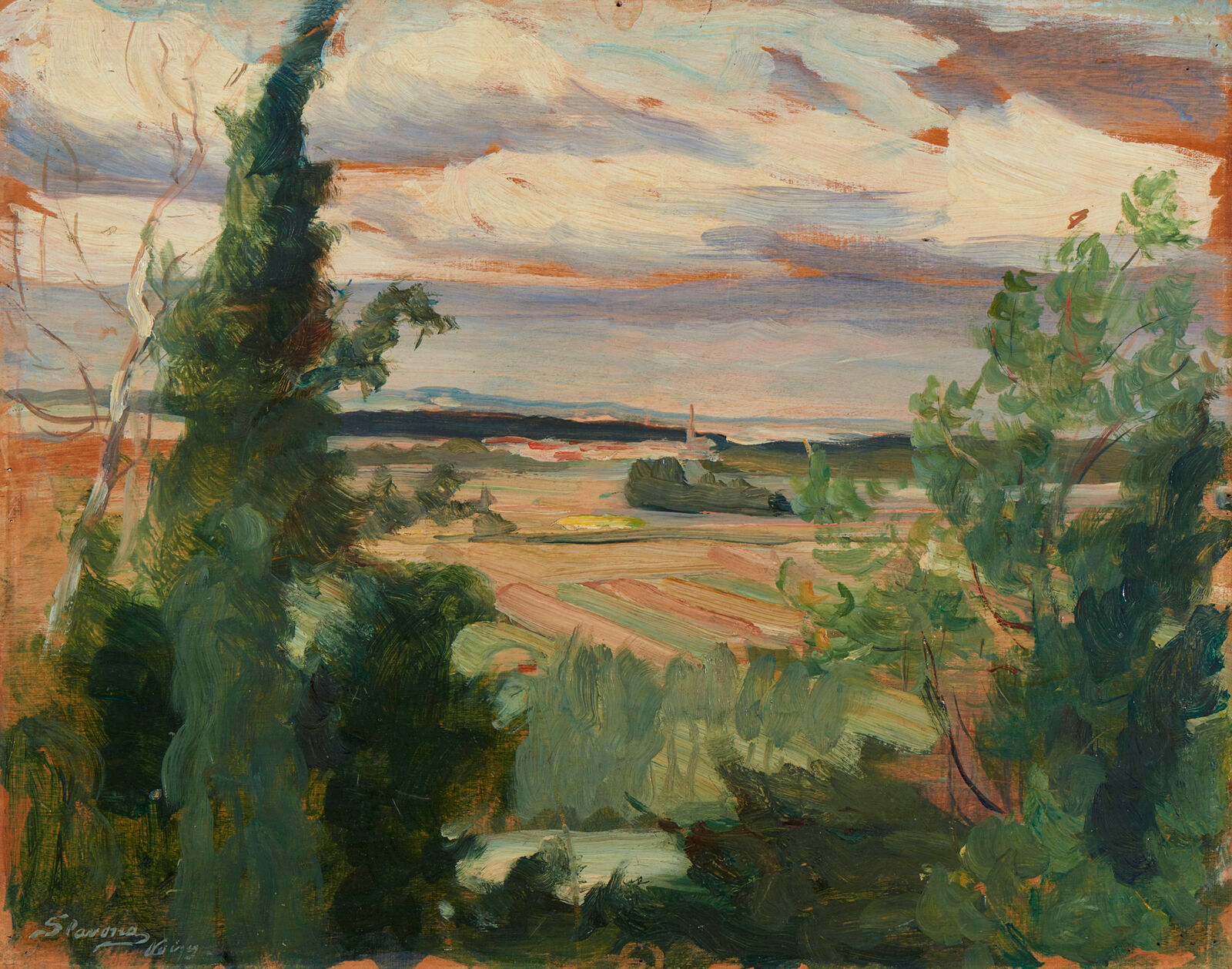
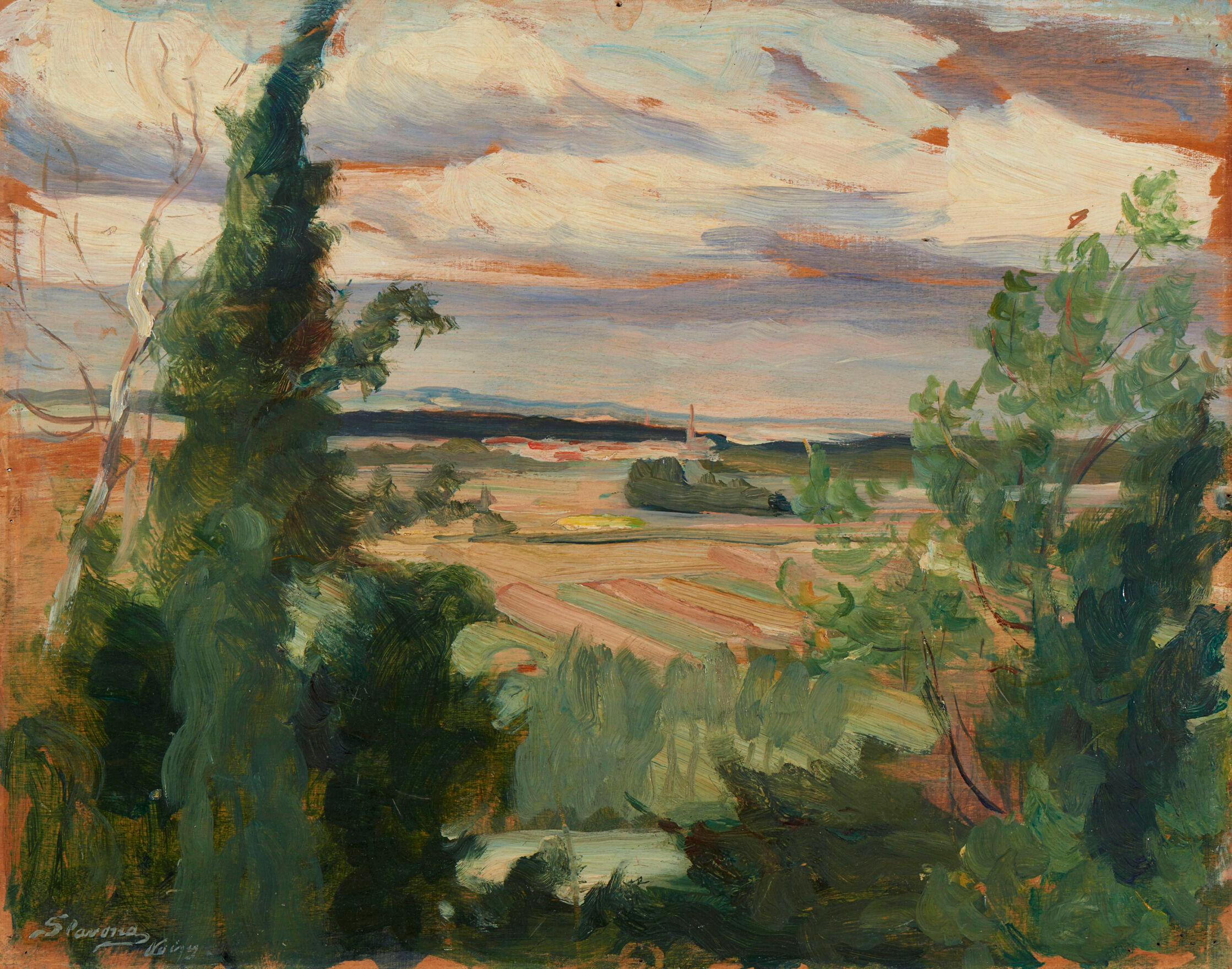
Maria Slavona, Landscape on the Oise, 1901–1906
It is a bourgeois era of sprawling cities and massive factories—soon joined by automobiles and telephones—a time of sweeping modern renewal. This contemporary reality is reflected throughout the exhibition, both in its subjects and in the artists’ technique: a style at once free, sometimes improvisational, yet entirely precise.
Shifting between object and colored light, realism and Impressionism, this style sometimes edges into the expressive. The focus of the artists alternates between nature and the metropolis, sunlight and gaslight, the individual and the type.
To enter the exhibition on firm footing, one might begin with these works by Lovis Corinth, Max Liebermann, Max Slevogt, and Lesser Ury.
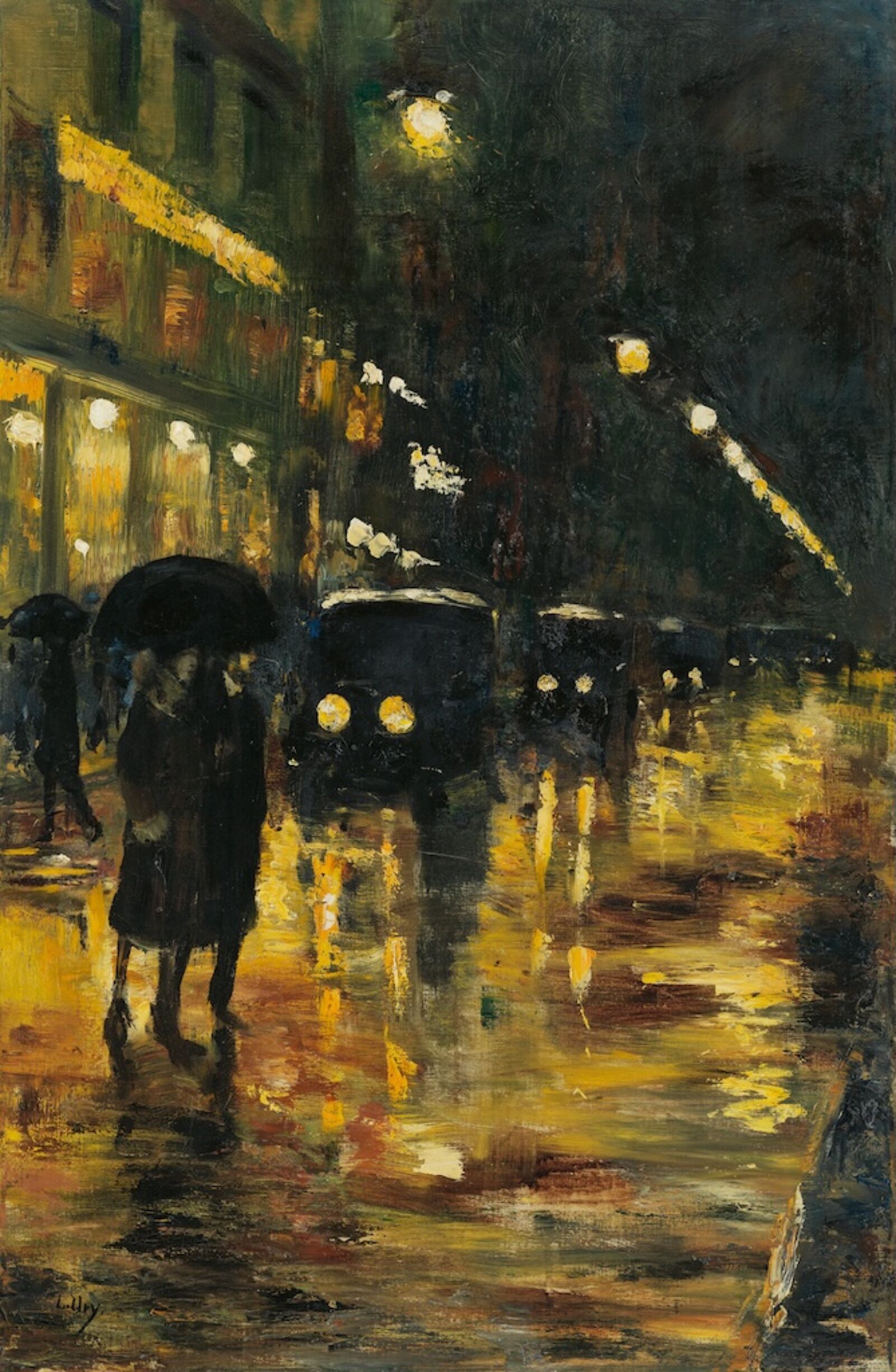
Private Collection
Café König by Night (1925/30): Lesser Ury thrived in this era of sprawling cities and Impressionism, where color was discovered in shadow and light revealed itself at night.
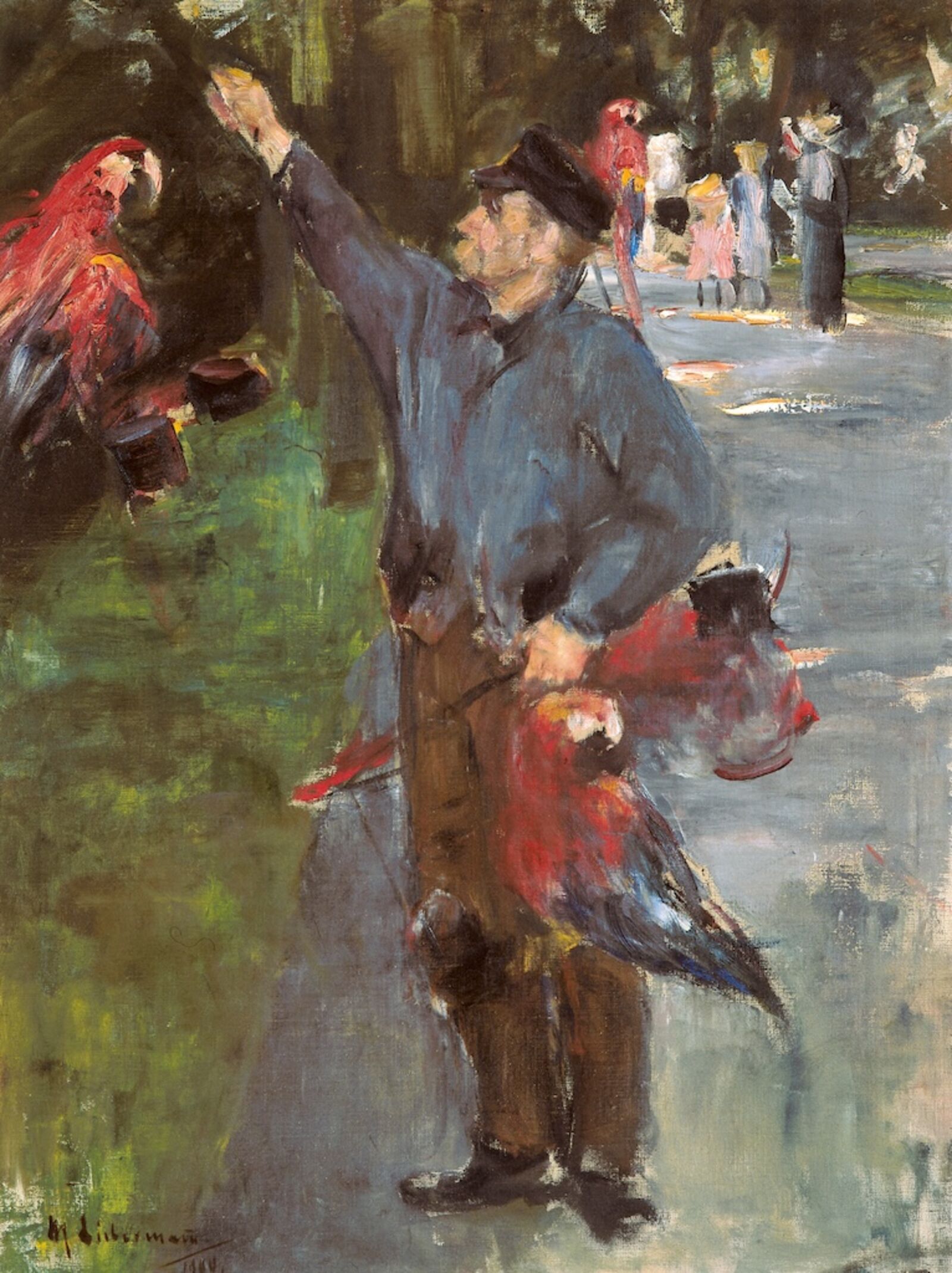
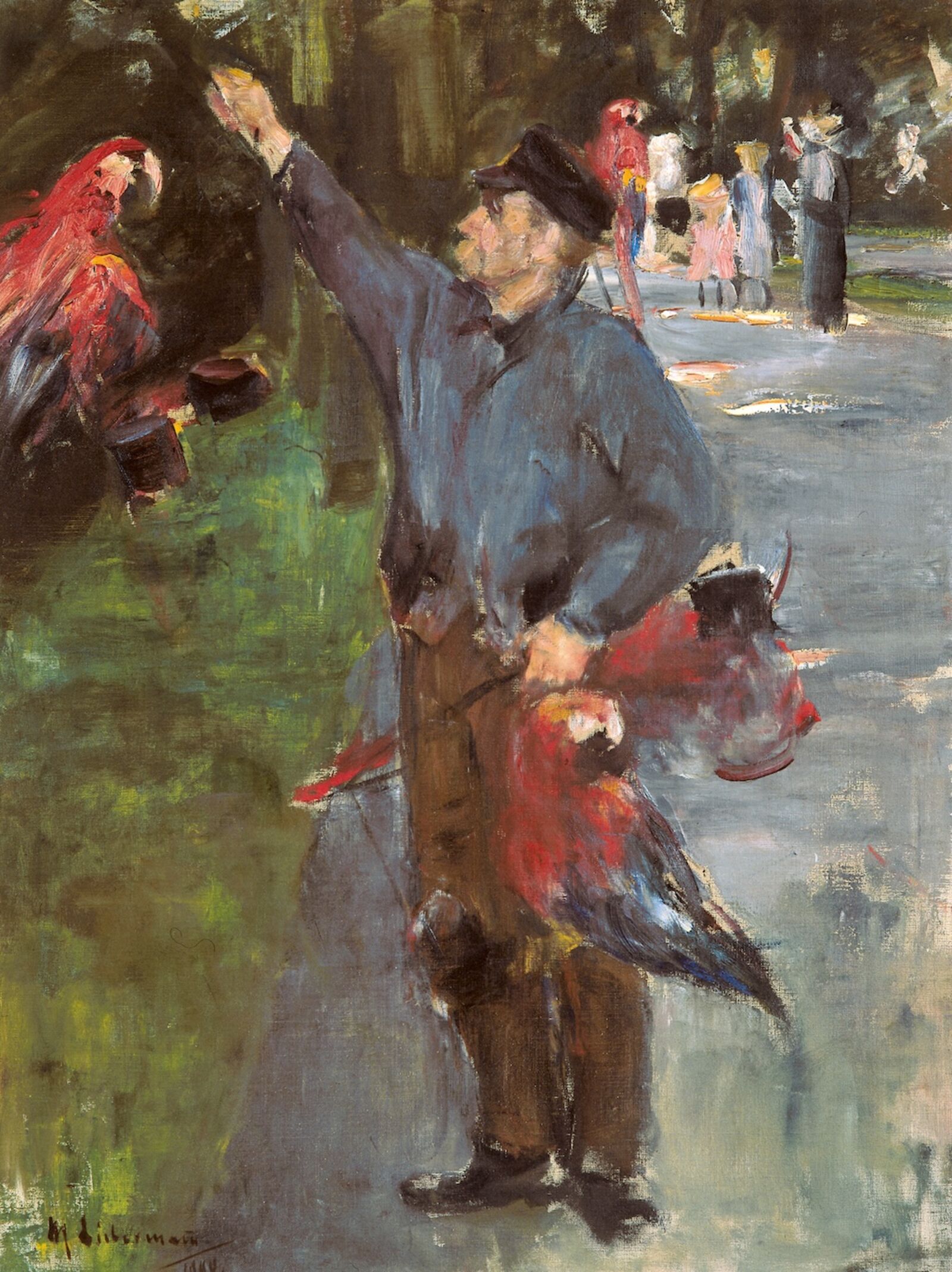
Genre, impression—object, light: Max Liebermann’s Parrot Man (1901)
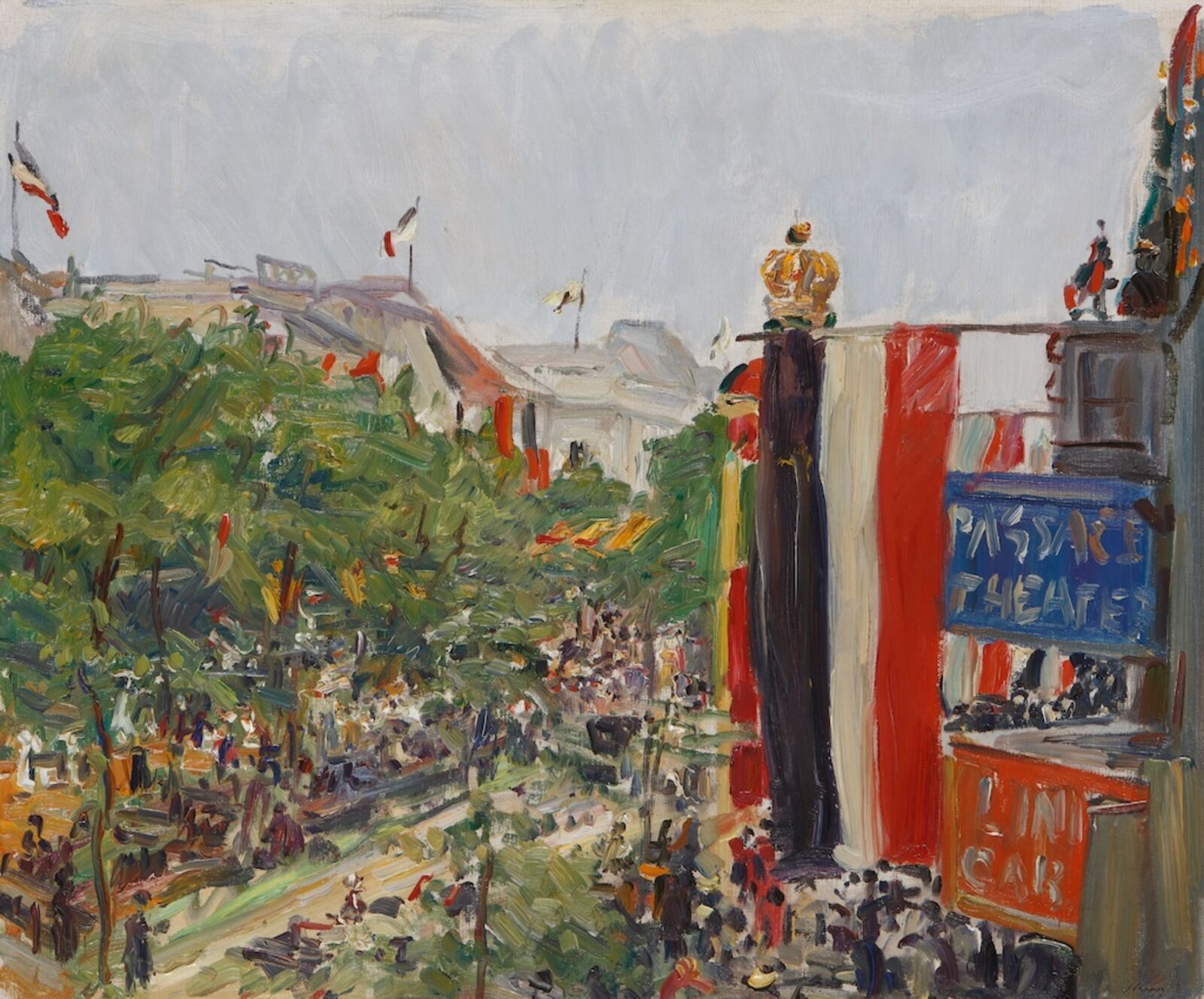
Hessisches Landesmuseum Darmstadt
Unter den Linden (Flags in Berlin) (1913): Max Slevogt dissolves German nationalism into pure color.
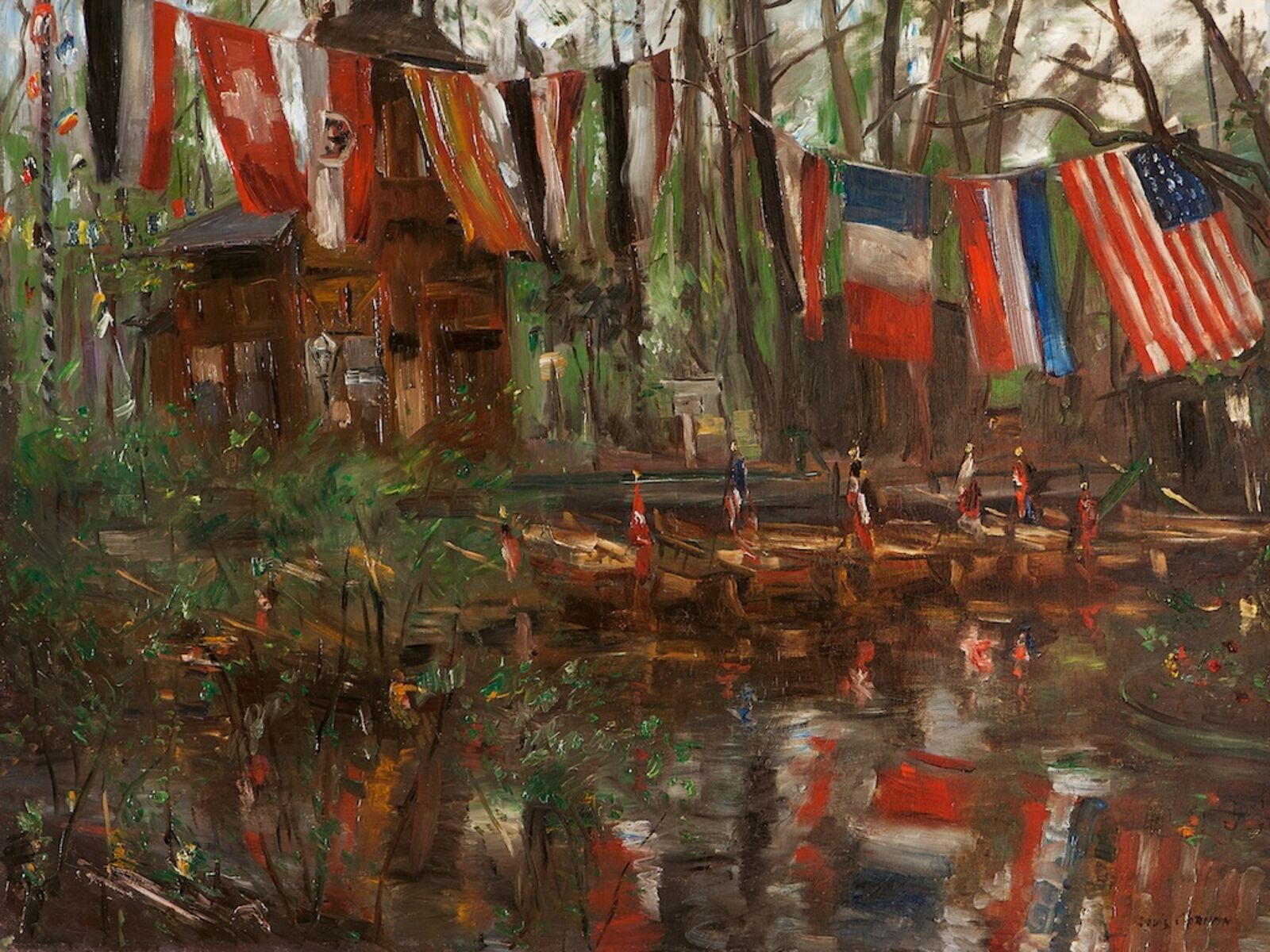
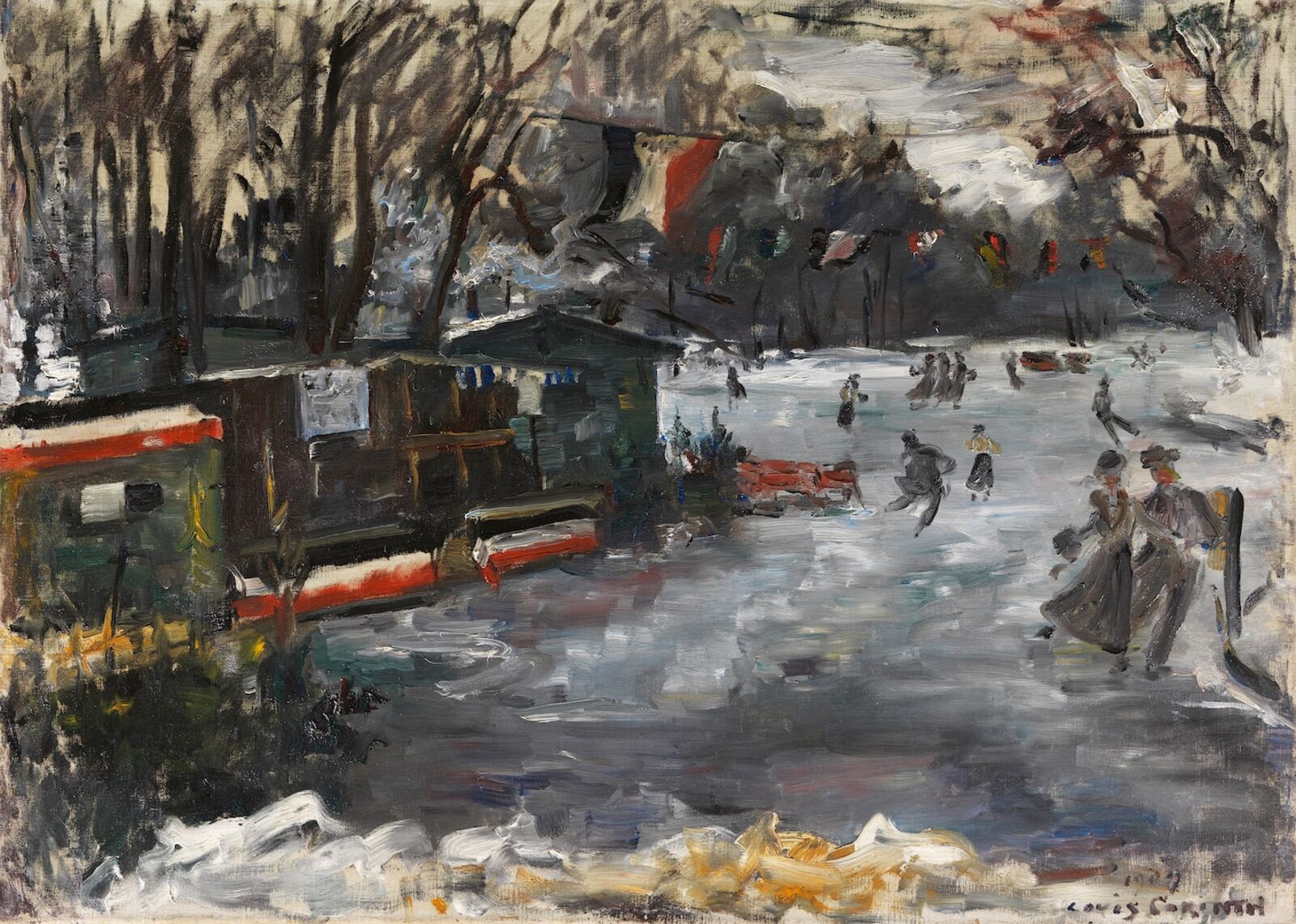
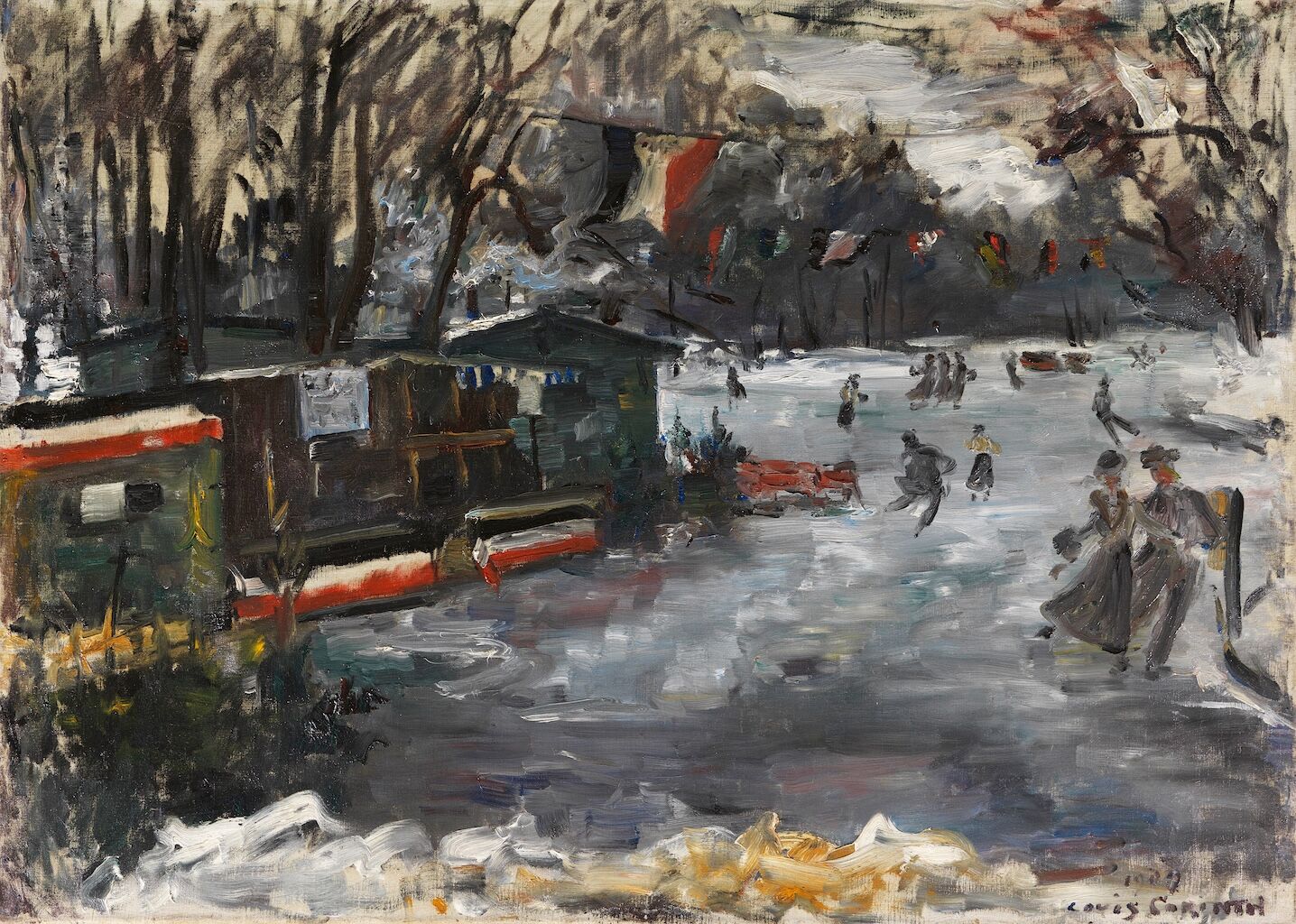
Color and brushwork surpass the visible world: Lovis Corinth’s view of the Neuer See in the Tiergarten (1903)
These paintings by Lovis Corinth, Max Liebermann, Max Slevogt, and Lesser Ury. They reveal what was perhaps the defining element of Impressionism in Europe—though it assumed different inflections in France, Germany, Holland, or Russia. Everywhere, however, the sovereignty of color prevailed. ith it came an atmospheric shimmer of brushwork previously unknown: objects dissolved into color and light, and color and light themselves became the true subjects of painting.
In the conservative German Empire of the 1870s, academic studio painting reigned supreme. Later, Max Liebermann would derisively call it “brown gravy,” a reference to its heavy, dark tonalities. It was a painting of mythologized landscapes, of dignified and representative portraiture, of grand historical tableaux. And it was art in the service of the state.
“And I confess that when I first saw the Impressionists’ paintings thirty years ago, I could not have written a single line about them. One must learn to see, just as one must learn to hear a movement by Ludwig van Beethoven.”
France—where, almost unnoticed, a new Impressionist painting was emerging from the plein-air spirit of Barbizon—had just been defeated in the war of 1870–71. Officially, the country was still regarded less as Germany’s hereditary friend than as its hereditary foe.
Liebermann and his contemporaries certainly recognized naturalist impulses in the work of Gustave Courbet, Camille Corot, and Jean-François Millet, who painted directly from nature in the open air—after all, Liebermann had already been to Paris in 1873. And yet, for the time being, it was Holland that became his decisive source of inspiration.
Beginning in 1871, Max Liebermann turned his attention to scenes of everyday life in the remote fishing and farming villages of the Netherlands, developing a lasting fascination with the country and its people. Works such as Freistunde im Amsterdamer Waisenhaus and Stevenstift in Leiden reveal a naturalistic vision of daily life already animated by early plein-air elements. The flecks of light dispersed across the canvas were often added later in the studio; at this stage, Liebermann remained deeply committed to the primacy of the figure and the rigor of compositional structure.
“Holland may seem dull at first glance — we must first uncover its hidden beauties. Its true beauty resides in intimacy.”
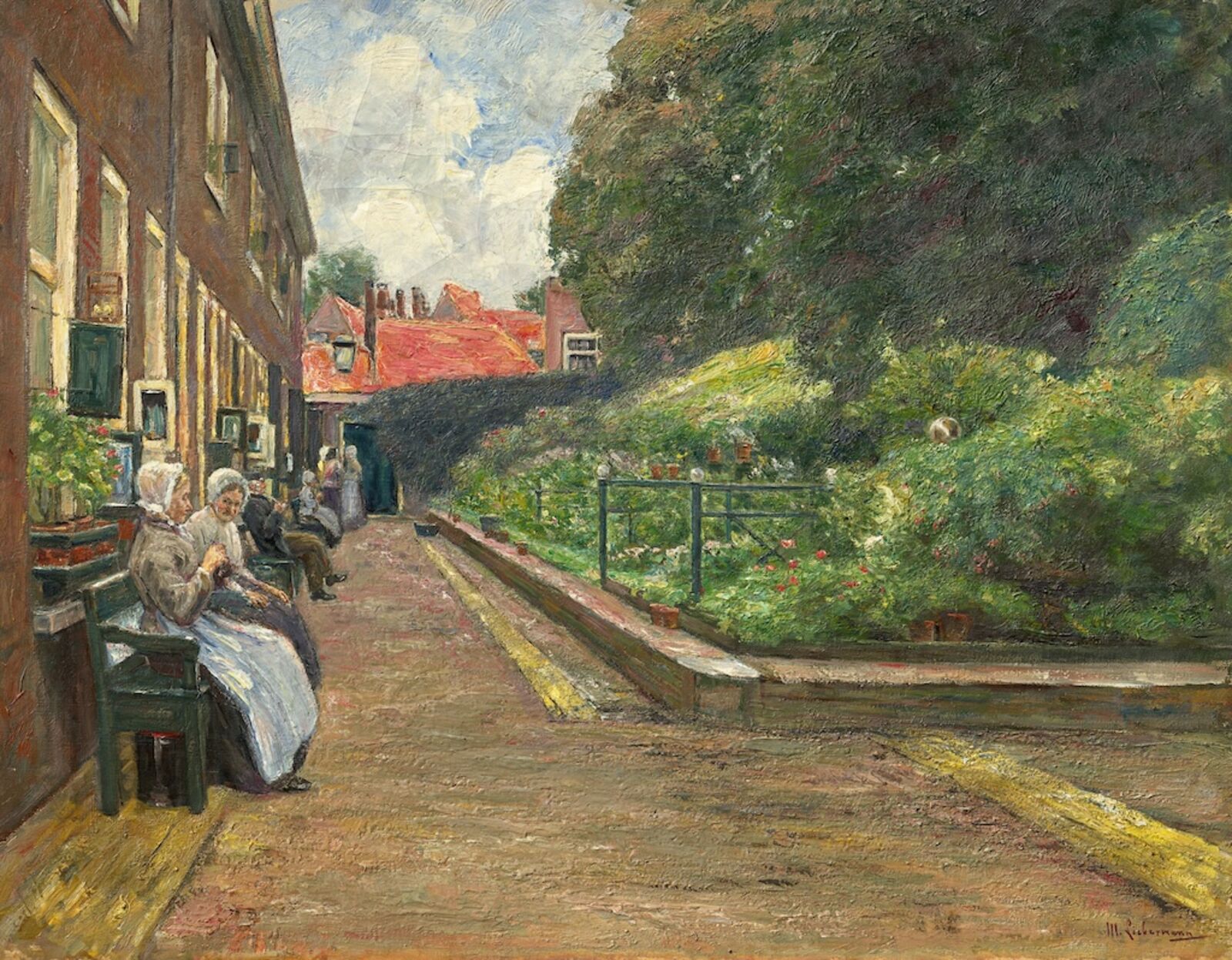
Private Collection
Max Liebermann, Stevenstift in Leiden, 1890
What strikes us today as gentle, even faintly bucolic, was in its own time electrifying — new, provocative, even scandalous. Max Liebermann also anticipated a pattern familiar to many modern artistic careers: they often begin with outrage.
In the 1870s, he painted a depiction of Jesus Christ that incensed critics. It unsettled conservative aesthetes and, regrettably, emboldened antisemitic agitators. Other works, too, did not always conform to prevailing tastes, repeatedly placing Liebermann at odds with a critical establishment resistant to his unvarnished naturalism.
In Freistunde, Max Liebermann unites the socially attuned genre painting pioneered by his beloved Netherlands with an emergent painterly language. This new mode of representation frequently evolved outdoors, at the motif itself—at least in preparatory studies—before finding its final articulation on canvas.
With this work, Liebermann also effectively inaugurated an entire “seamstress genre” in Germany, establishing a subject that would resonate widely within the discourse of modern painting.
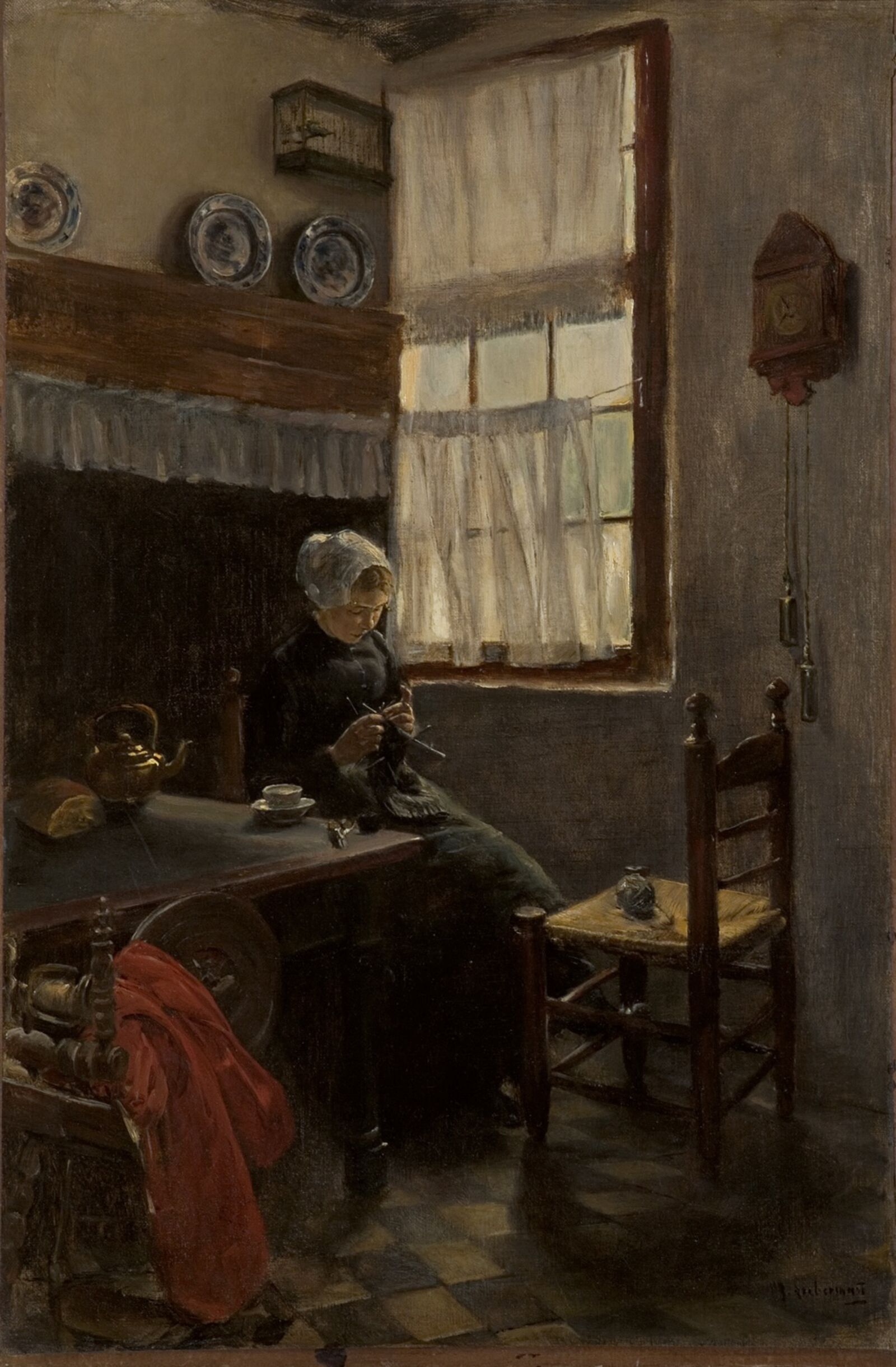
Museum Kunst der Westküste, Alkersum/Föhr
Liebermann´s painting Tranquil Work (1885): Today, it retains a quaint, almost painterly allure…
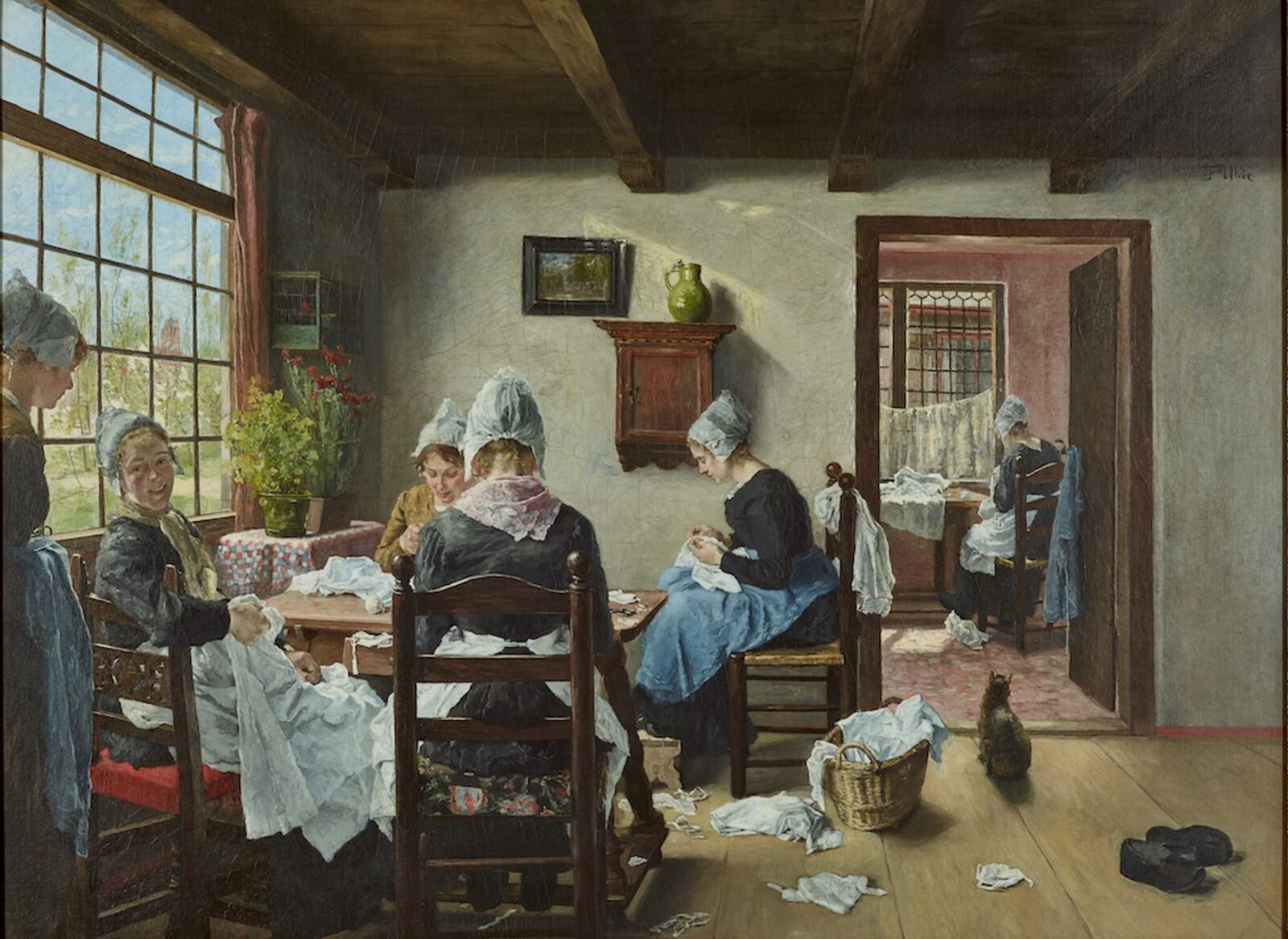
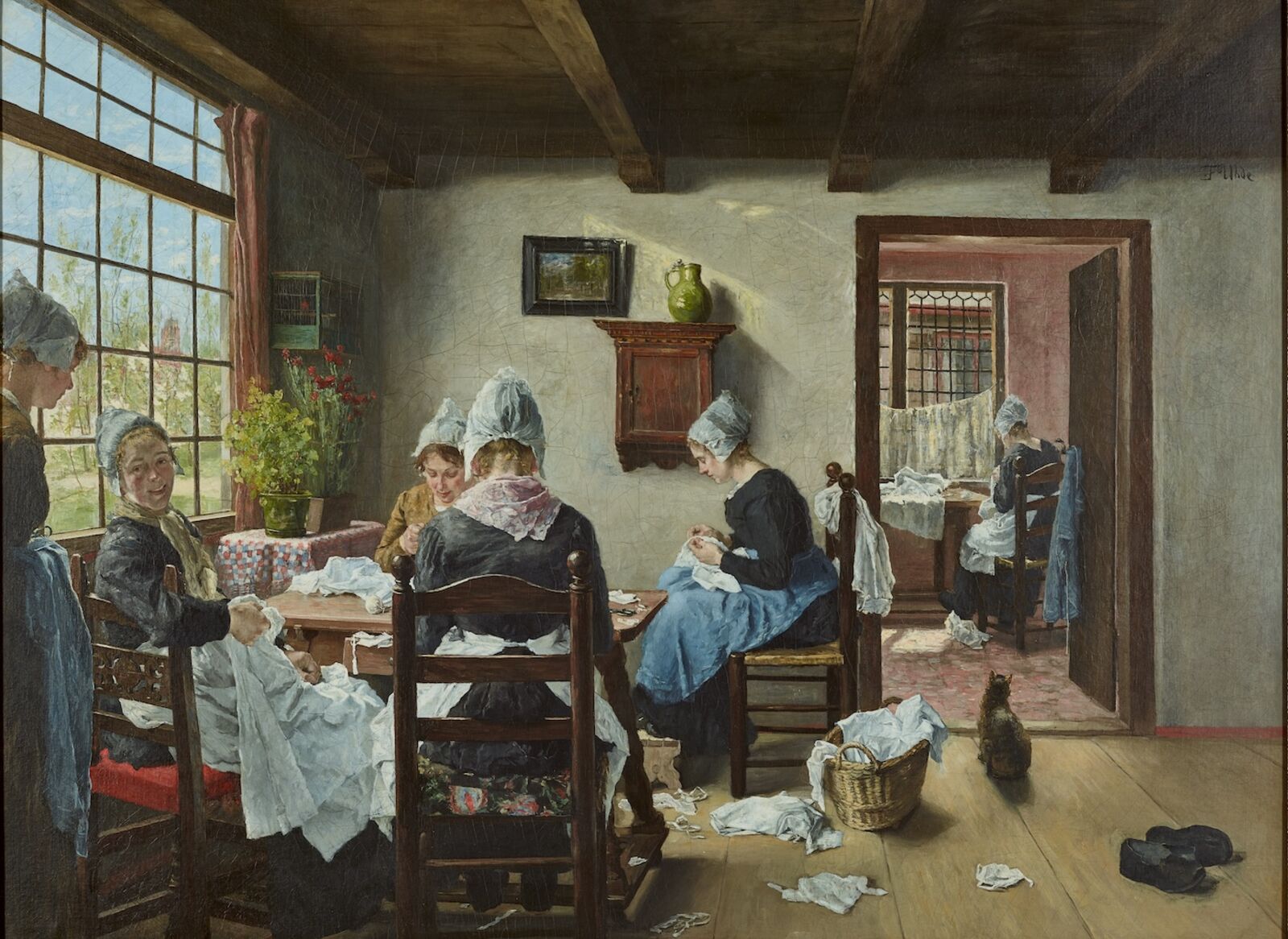
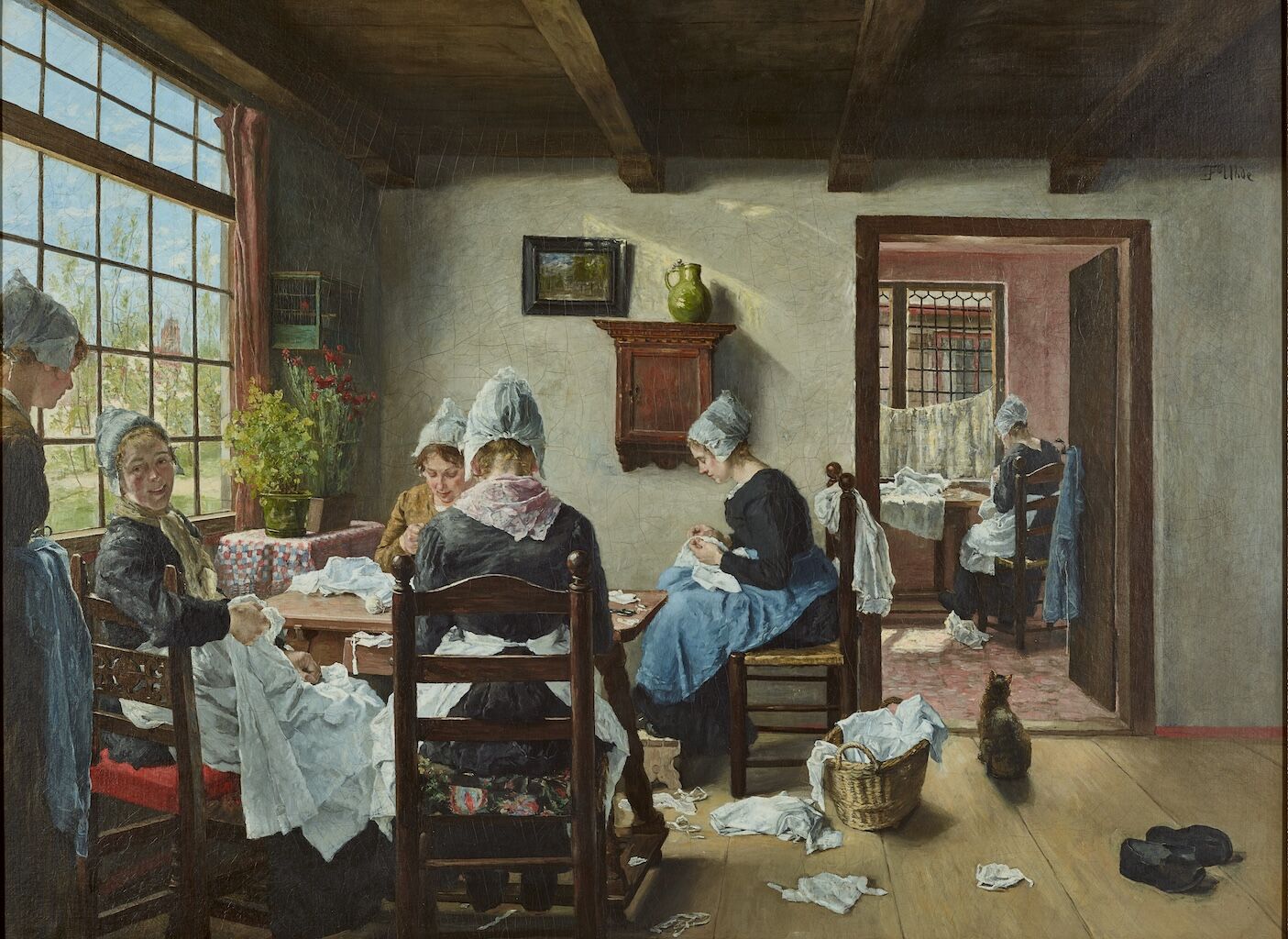
…yet in that era, it depicted ordinary life: Fritz von Uhde’s The Dutch Sewing Room (1882).
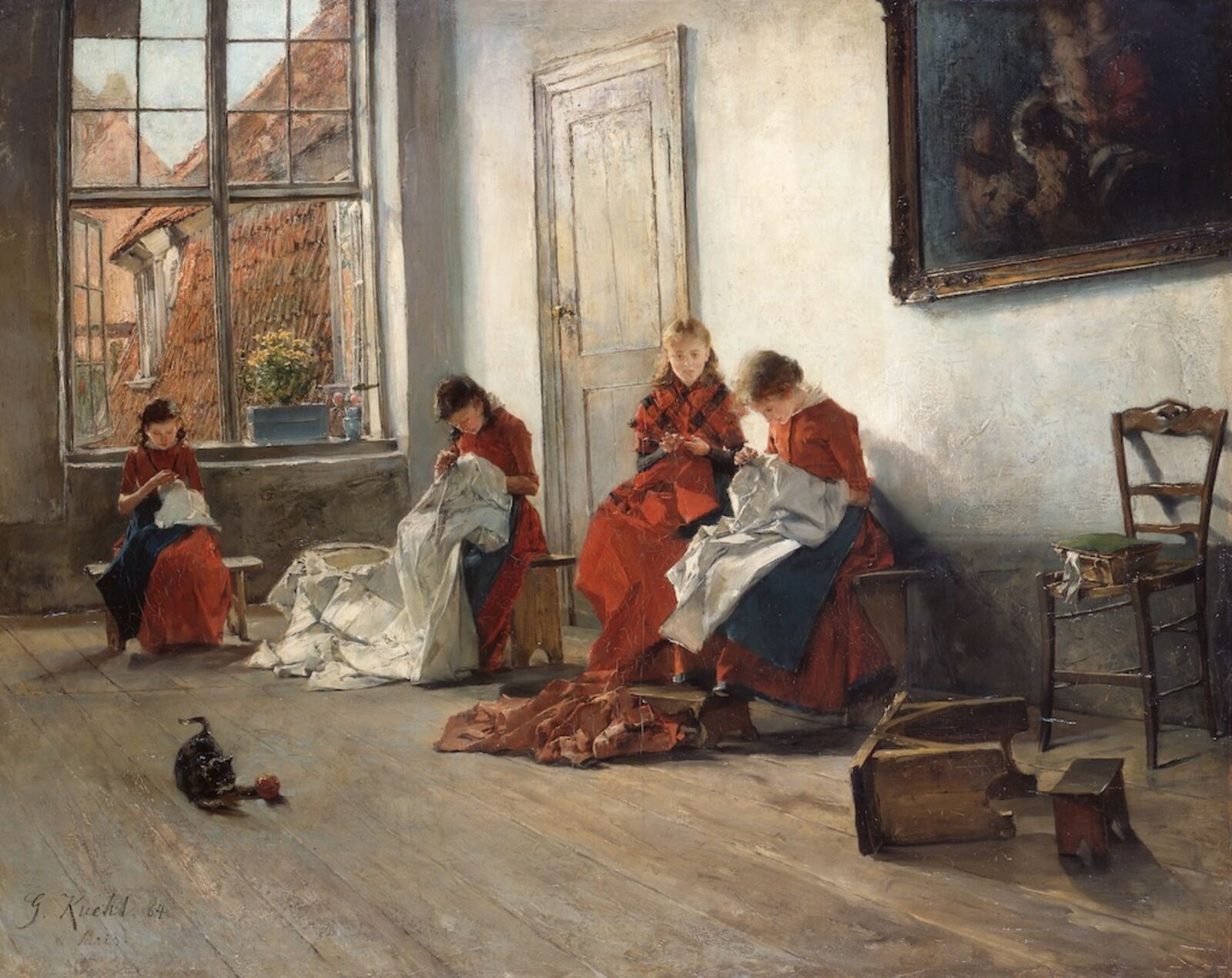
Albertinum, Staatliche Kunstsammlungen Dresden, bpk/Jürgen Karpinski
Fabrics were meticulously handcrafted: Gotthardt Kühl’s Orphans in Lübeck (1884)
Others, however, remained loyal to those who had failed to recognize Liebermann’s early promise. In the 1870s, for instance, The Goose-Girls, and in the 1880s, The Net-Menders—works that today are rightly celebrated as untouchable masterpieces in Berlin’s Alte Nationalgalerie and the Hamburger Kunsthalle.
Contemporary criticism, often laced with overt antisemitism or outright hostility toward Jews, dismissed Liebermann as a “painter of filth,” a “painter of the poor,” an “apostle of ugliness,” revealing as much about the prejudice of his detractors as about his art.
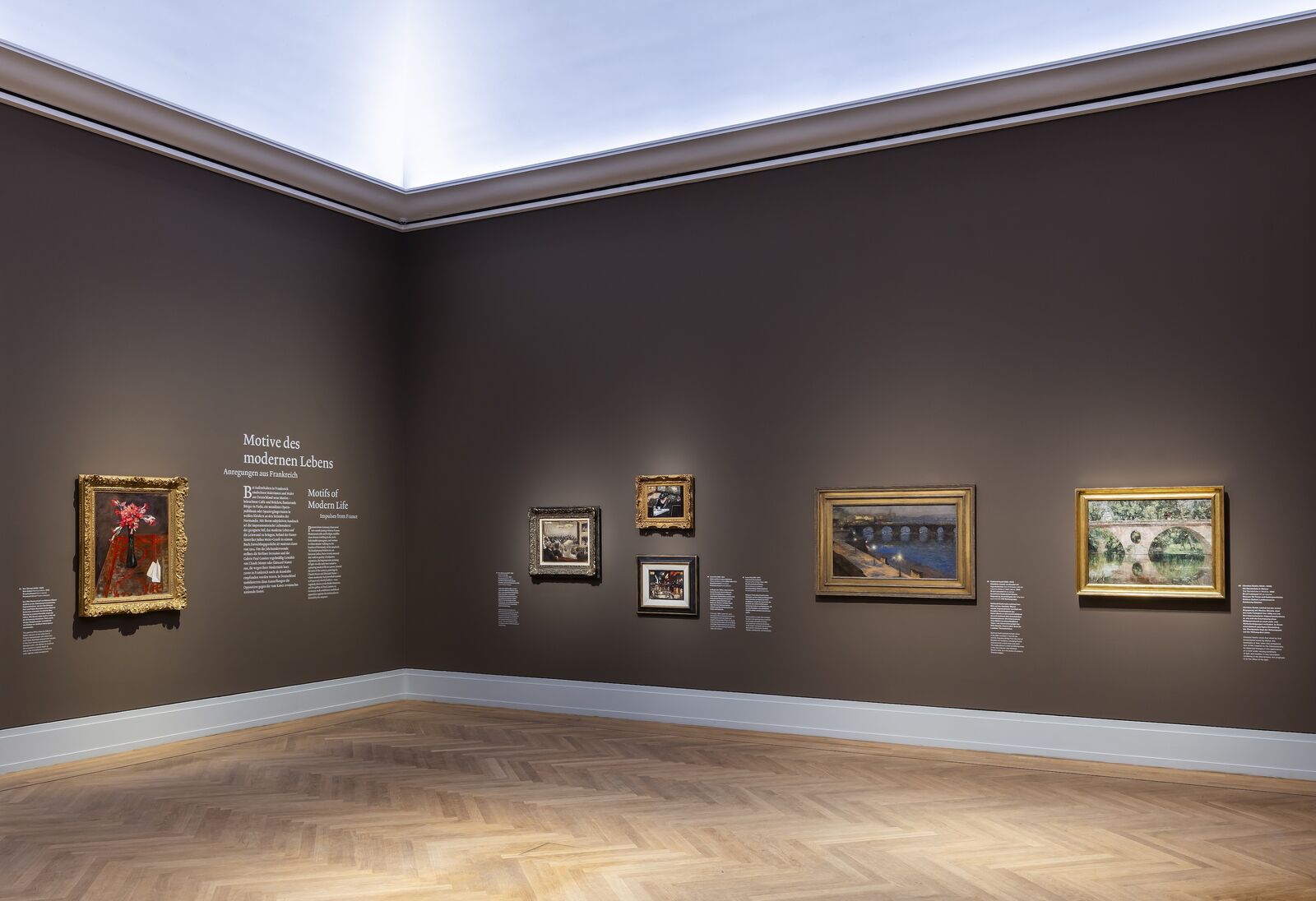
Although the French remained a source of antipathy for many patriotic Germans, their country nonetheless offered a wealth of innovation: democratic-republican ideals, emancipation movements, groundbreaking literature, Paris as the epitome of modern urban existence—and the most cutting-edge art of the day.
“They [the avant-garde] matter because they genuinely transform the world as we perceive it: the street, the house, the room.”
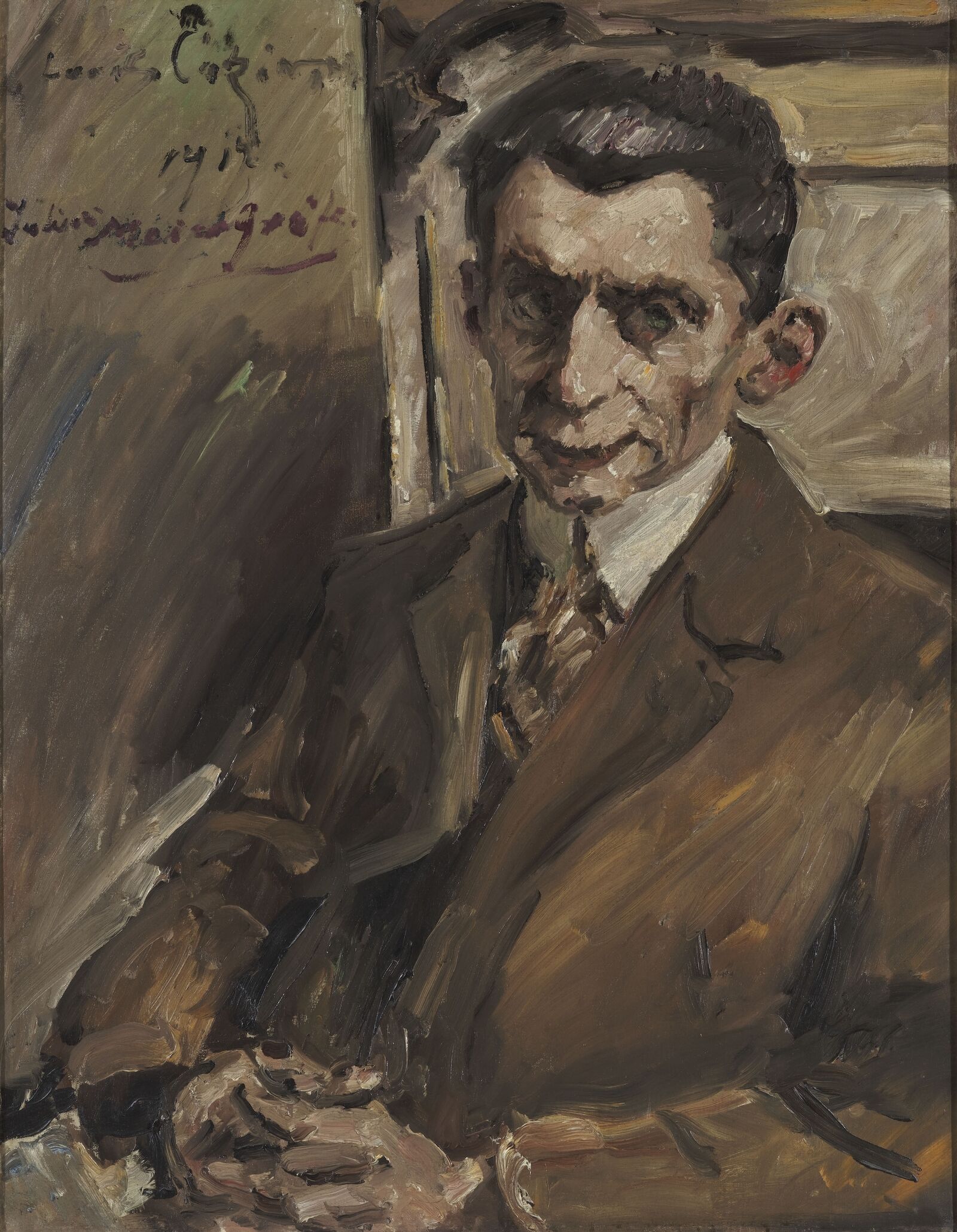
Musée d’Orsay, Paris, GrandPalaisRmn/Hervé Lewandowski
Lovis Corinth, Julius Meier-Graefe, 1917
By the late 19th century, Hugo von Tschudi had already purchased Manet’s Winter Garden. Notably, he made the acquisition during a trip to Paris, accompanied by Max Liebermann—remarkably, for the National Museum erected following Germany’s triumph over France, the Berlin National Gallery.
That this acquisition was made for exactly this museum aptly underscores the German-French tensions of the era—or, in the words of Ortrud Westheider, director of the Museum Barberini and curator of the exhibition, as cited in the catalog, it illuminates the “paradoxical juxtaposition of elements of innovation and continuity in the evolution of modern art.”
Prior to the National Gallery’s acquisitions, the private gallery of Fritz Gurlitt had already showcased contemporary French art as early as 1883. At the turn of the century, both the Berlin Secession, organized around Max Liebermann, and the Cassirer Art Salon repeatedly exhibited works by Claude Monet and Édouard Manet—Manet’s Le Déjeuner sur l’herbe notably appearing in Berlin in 1900. These exhibitions stood in deliberate opposition to academic painting and to the German emperor’s assertions of a national artistic canon.
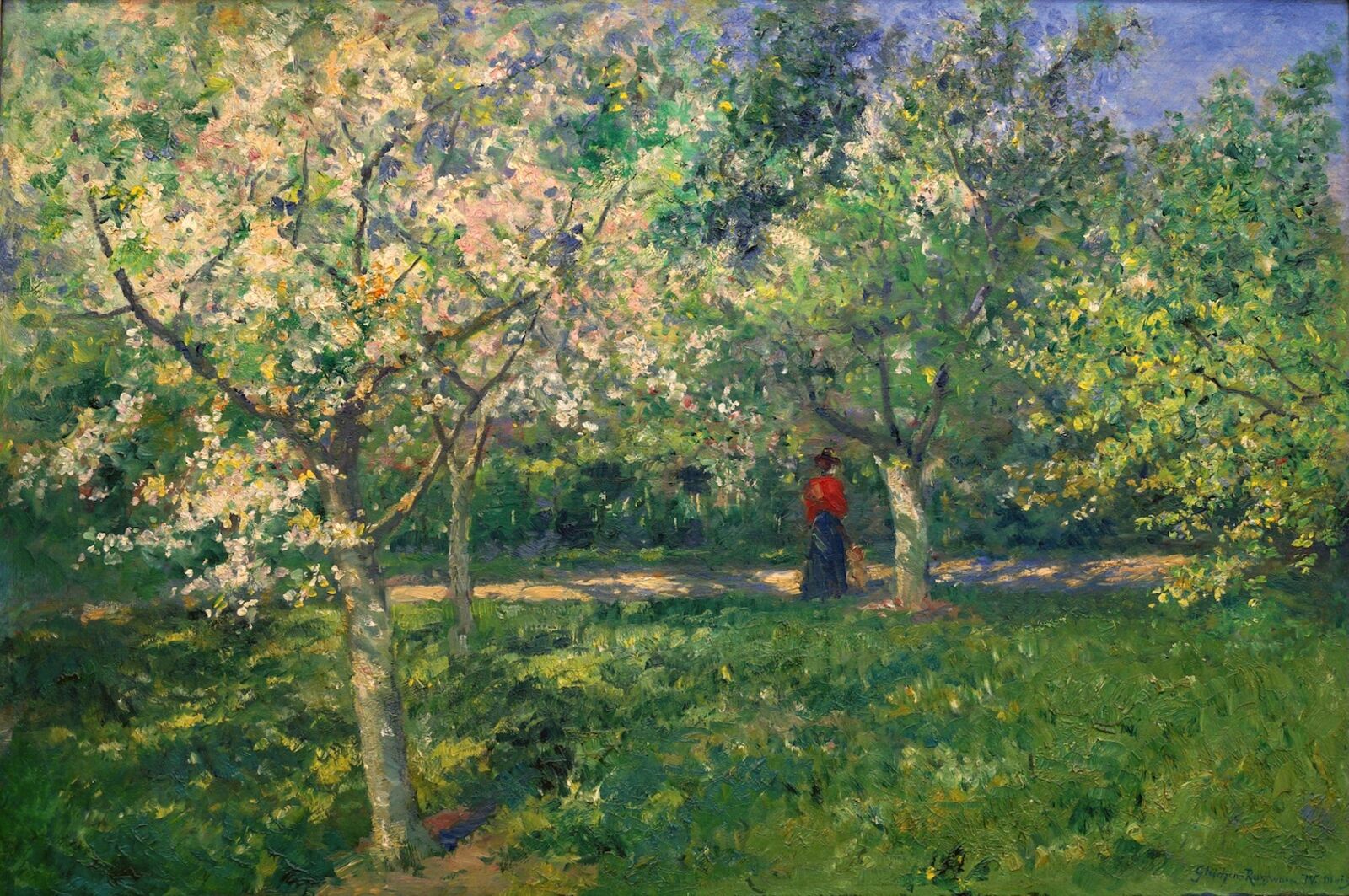
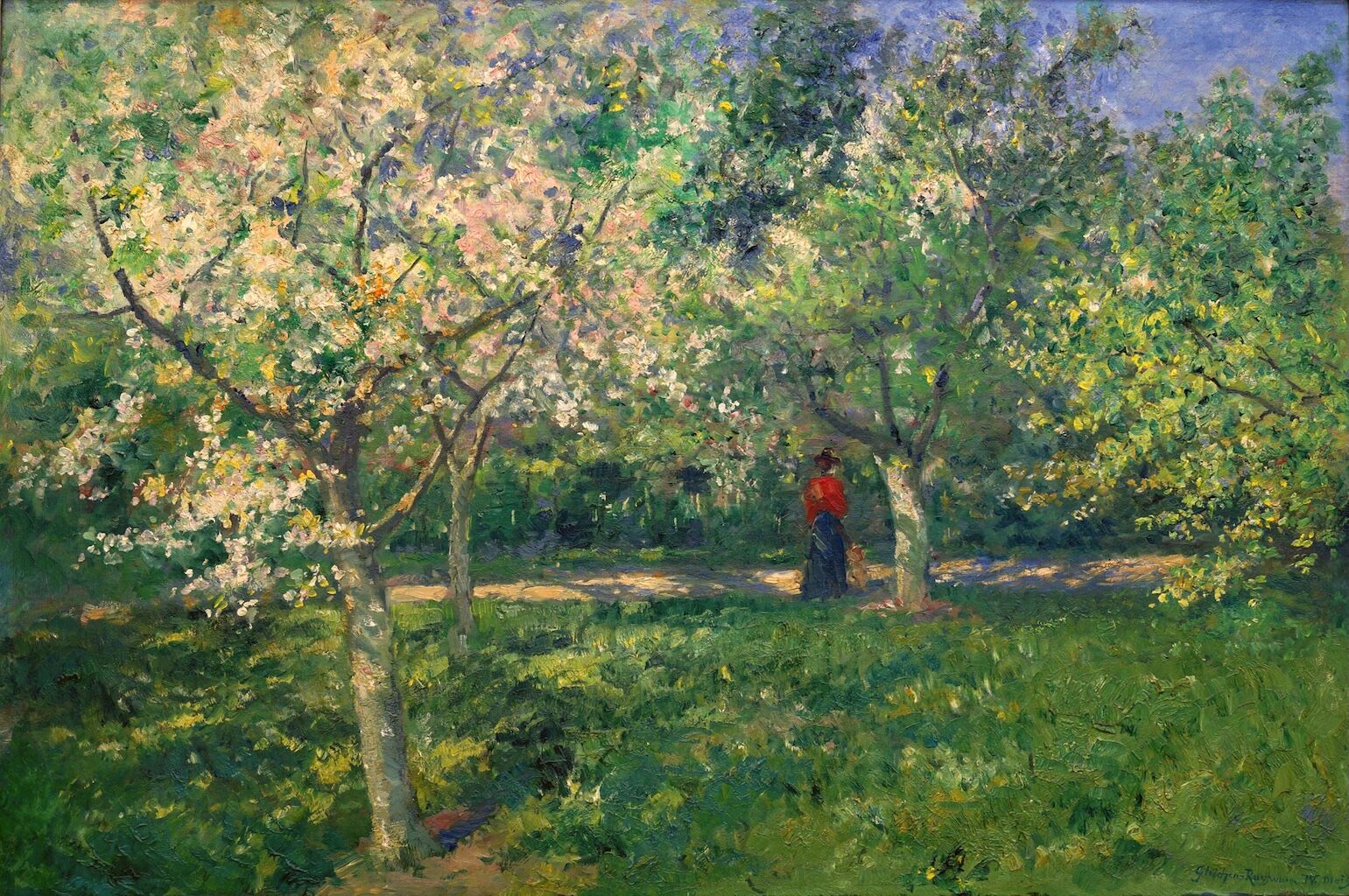
Floral Splendor in a Luminous, Classical Impressionist Mode: Ludwig von Gleichen-Rußwurm’s Stroll Beneath Blossoming Apple Trees (1893)
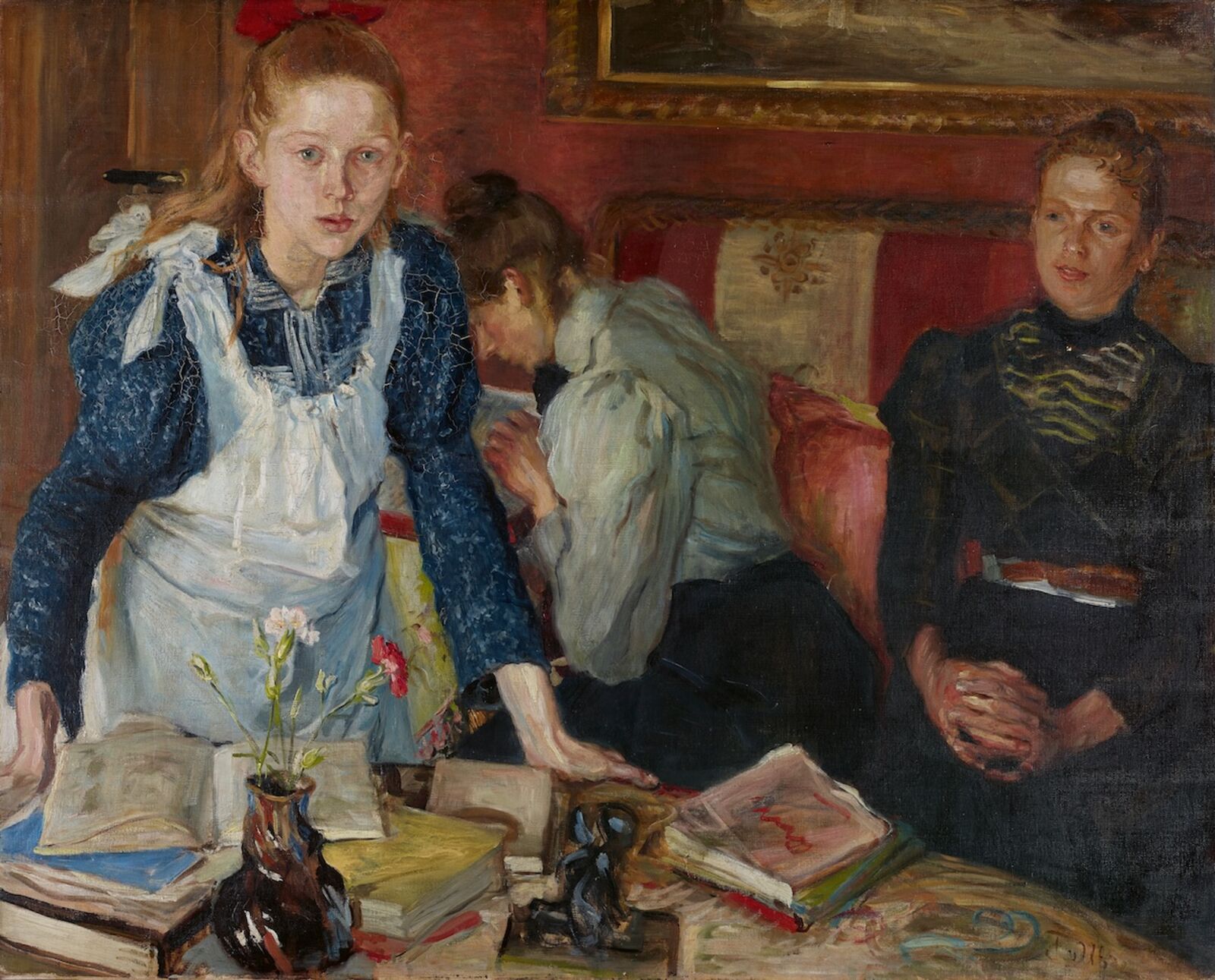
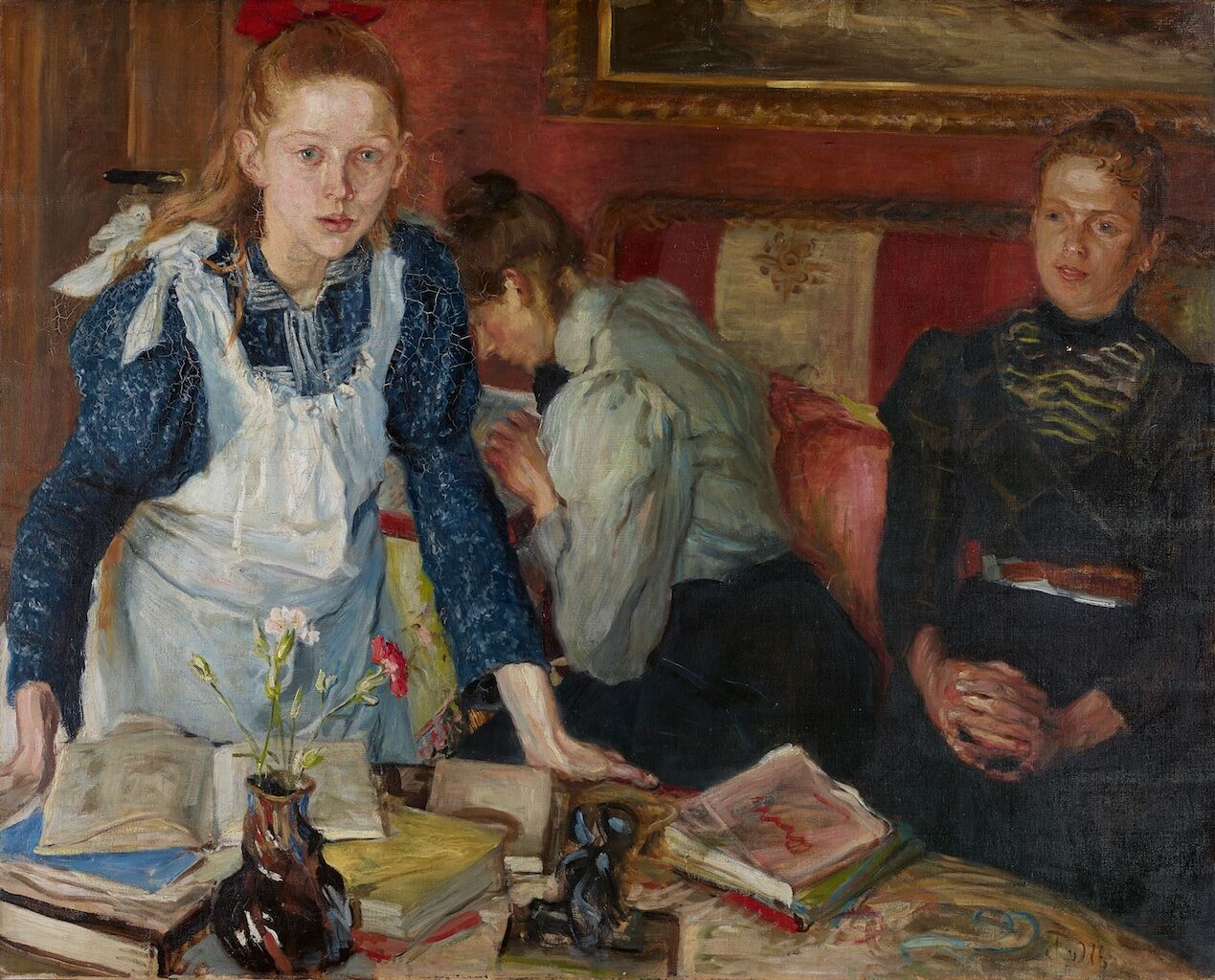
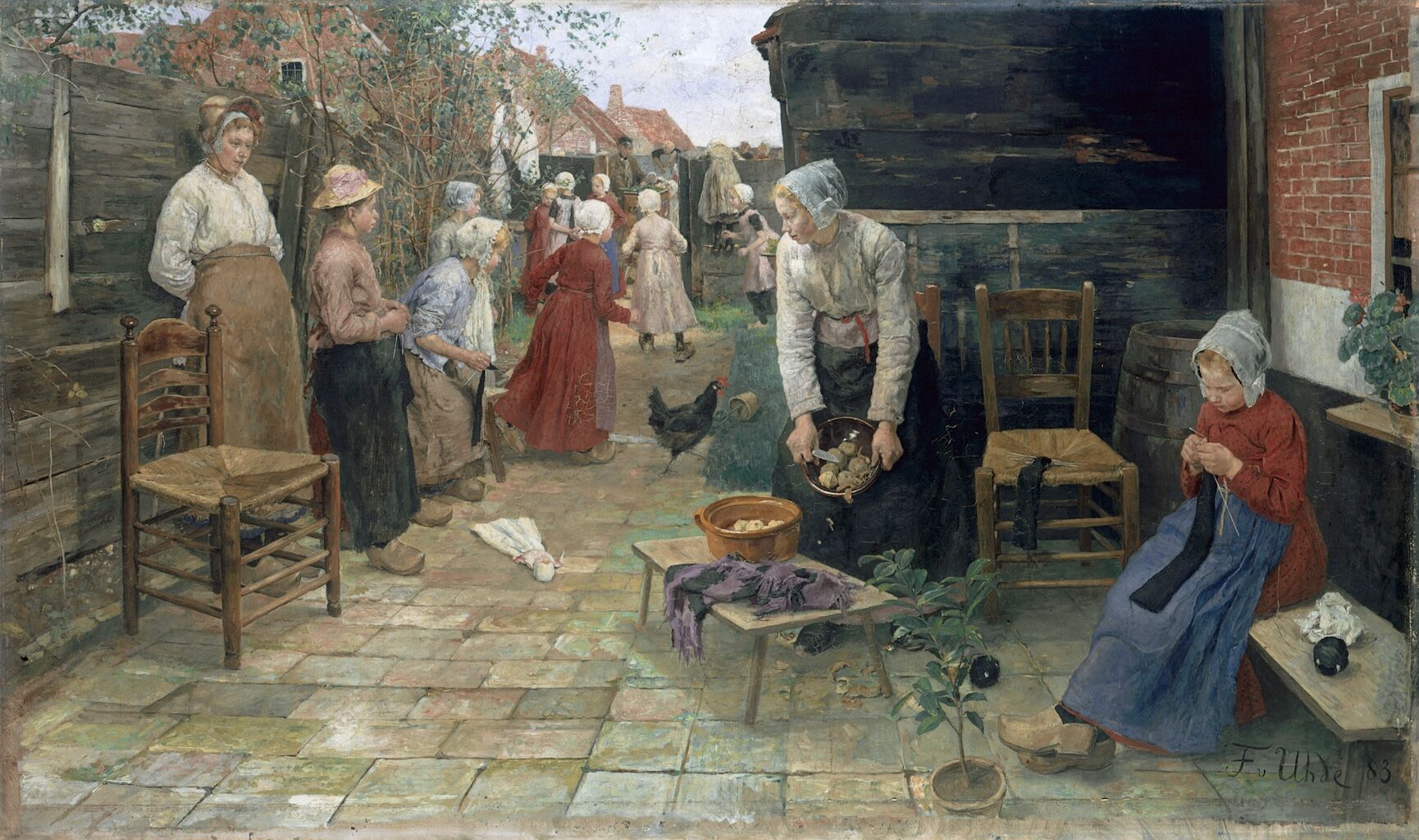
Color Radiates Even in Realism: Fritz von Uhde’s School Lesson (1899)
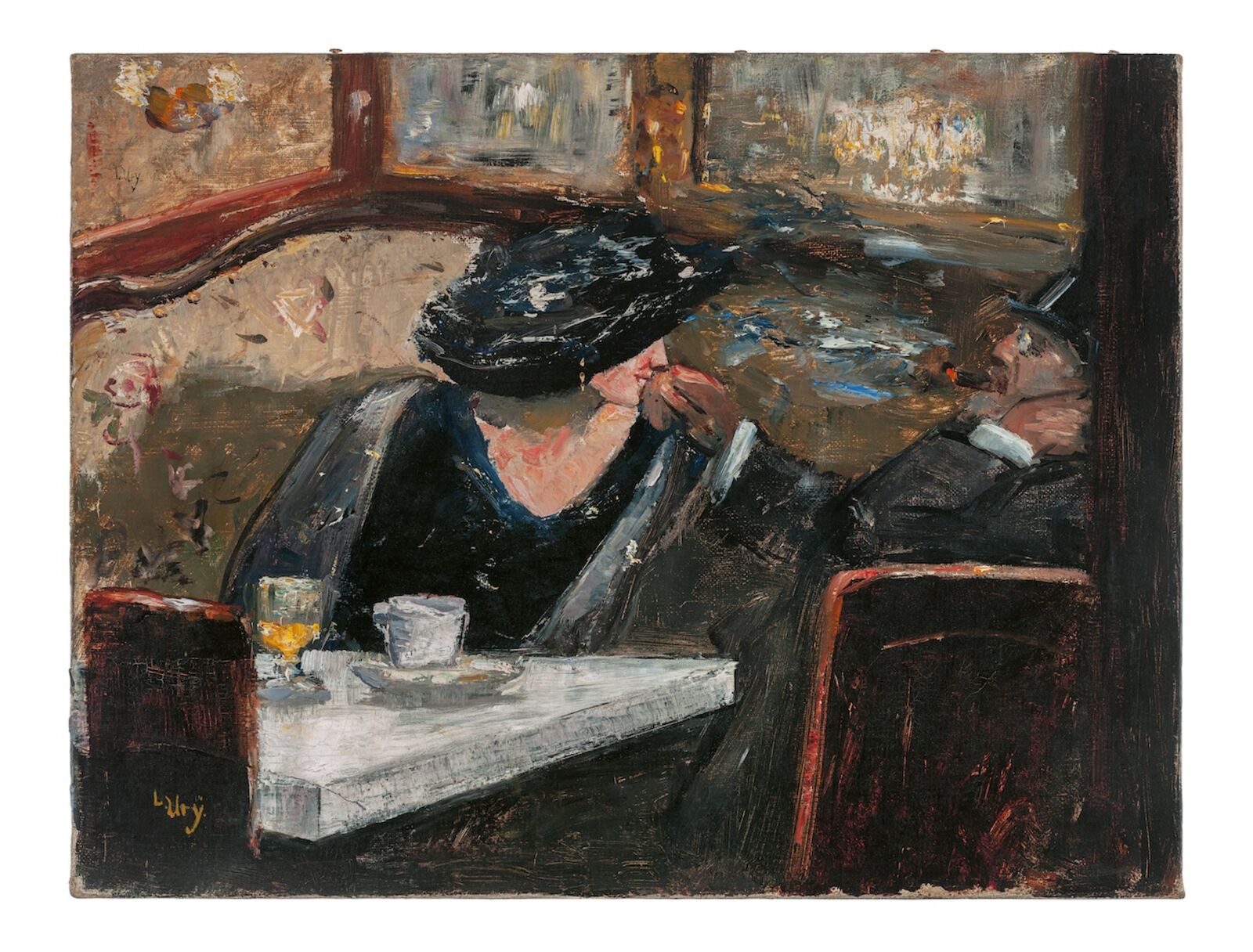
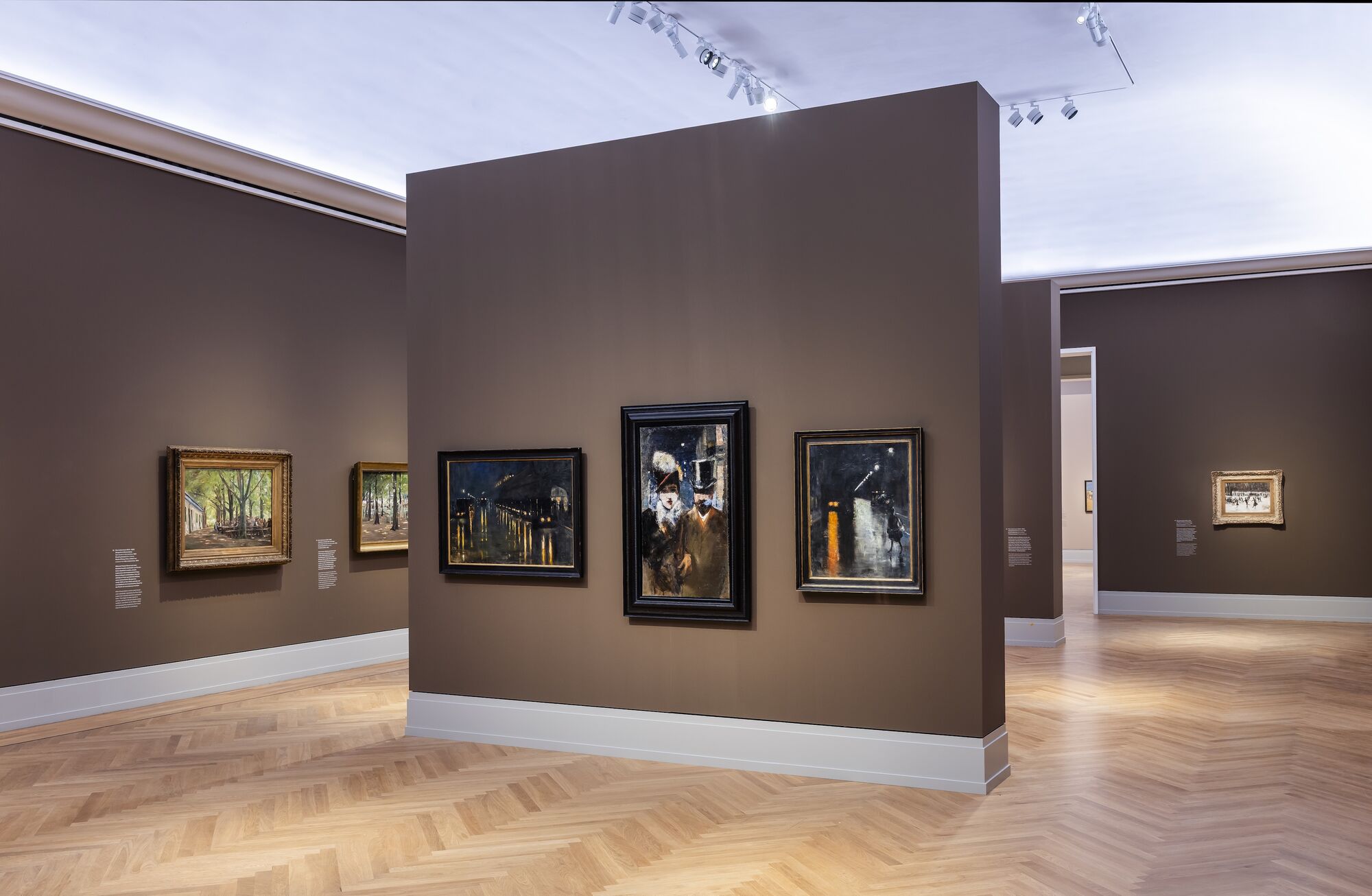
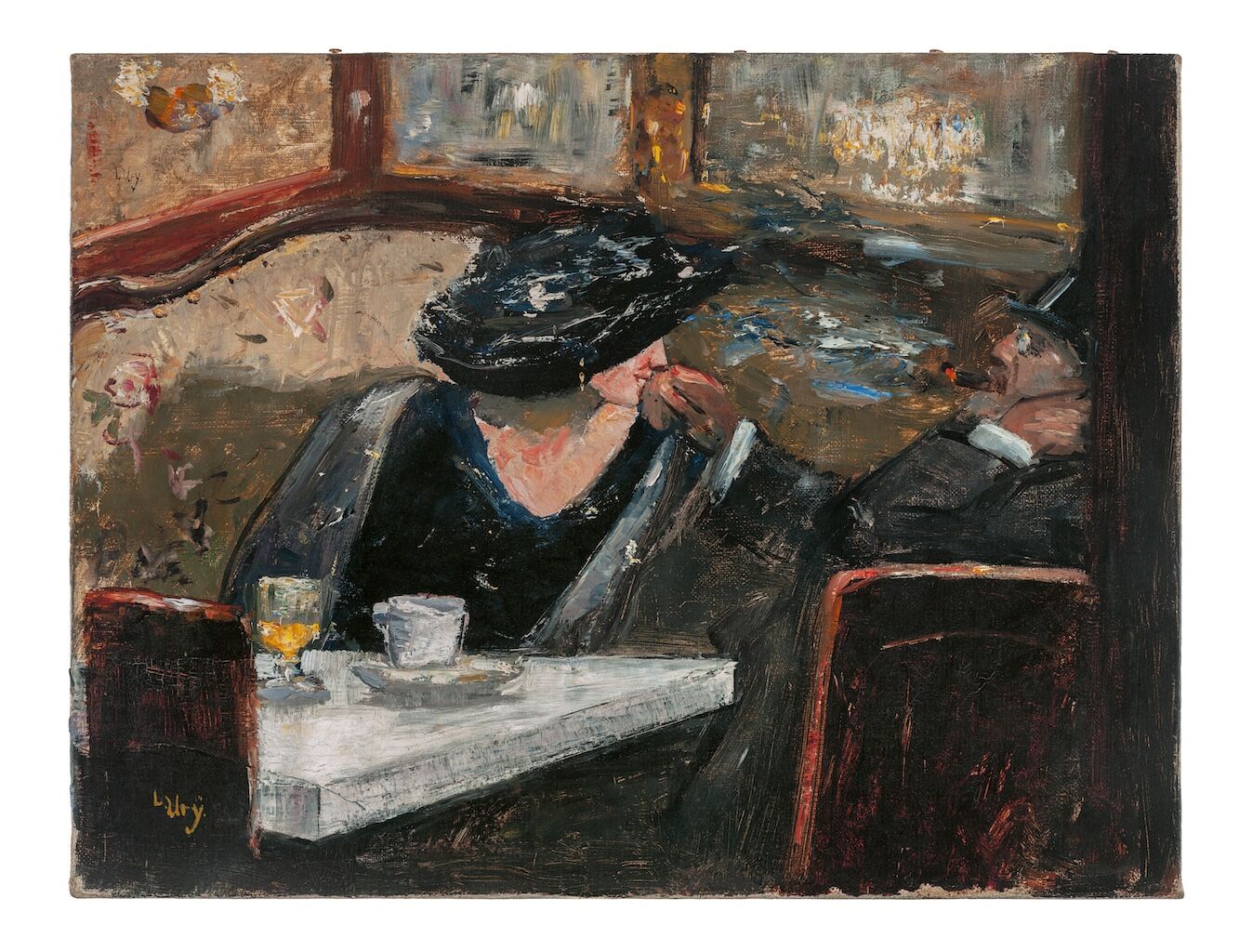
Metropolis and the Bourgeoisie: Few in Germany Captured Them More Masterfully than Lesser Ury — Lady and Gentleman in a Café (1920s)
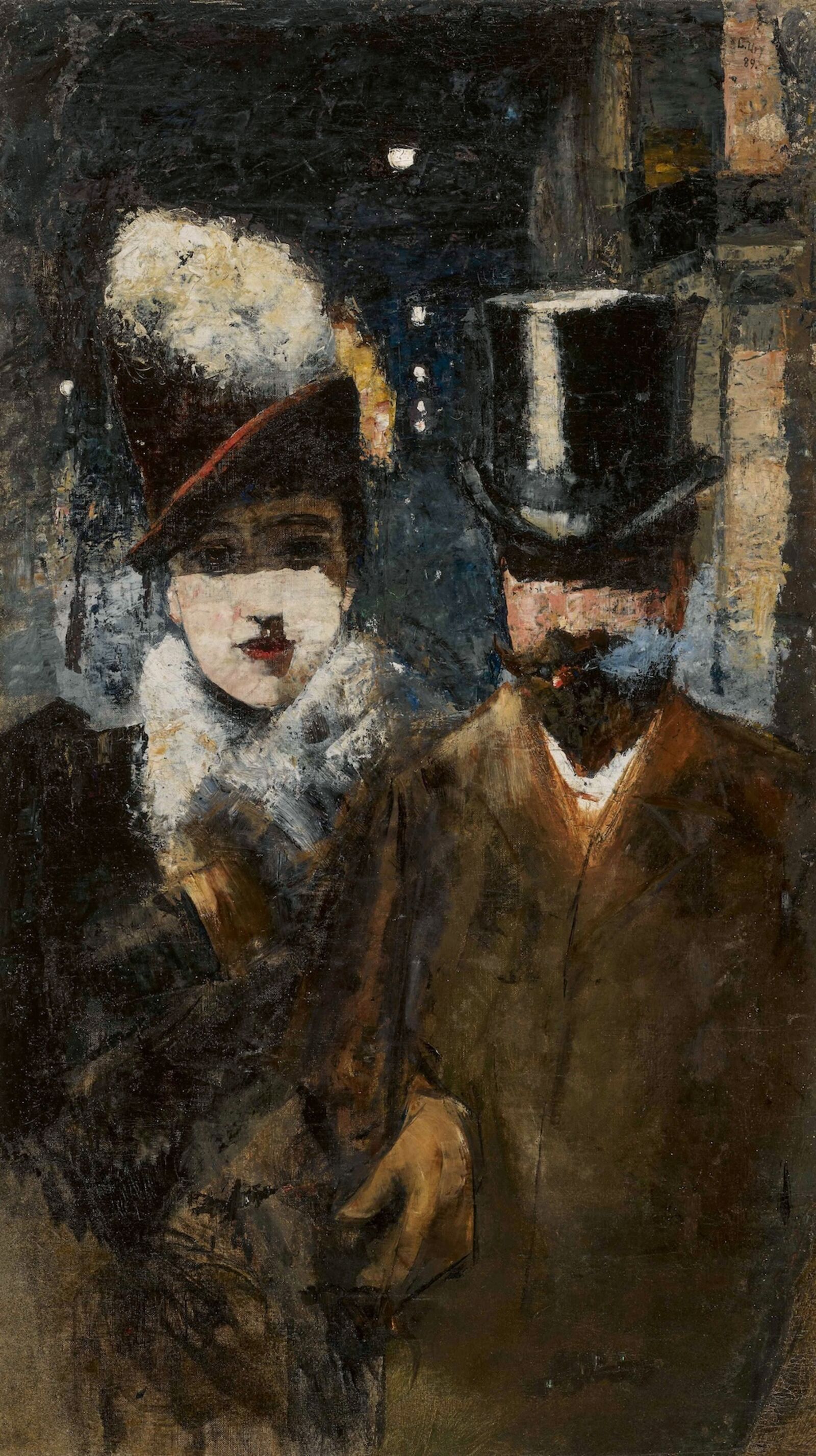
German artists eagerly traveled to France, where they sought inspiration in both nature and the modern city. There—just as elsewhere across Europe—they discovered new subjects: laborers and bourgeois citizens, railway stations and metropolitan streets; everyday roads, fields, and rivers; trees in radiant bloom. What had once lingered at the margins of painting now moved decisively to its center.
"I believe that the Paris exhibition will also secure victory for our way of seeing in Germany, and that the Munich ‘brown sauce’—which the painters here do not even possess—will now be thoroughly swept aside.”
A dismissal of the old Salon and academic painting tradition: In a letter to his colleague Gotthardt Kuehl following the pivotal Paris World’s Fair of 1889, Liebermann mockingly referred to the “brown sauce,” by which he meant the muddy brown tonality characteristic of academic painting.
Private collection
Color Surpasses the Subject: Max Liebermann’s Parrot Man (1901)
Max Liebermann was a Realist who nonetheless invoked the autonomy of Impressionist painting. In 1903, in a letter to the art critic Emil Heilbut, he described it as a “painting made for its own sake […] freed from any purpose.”
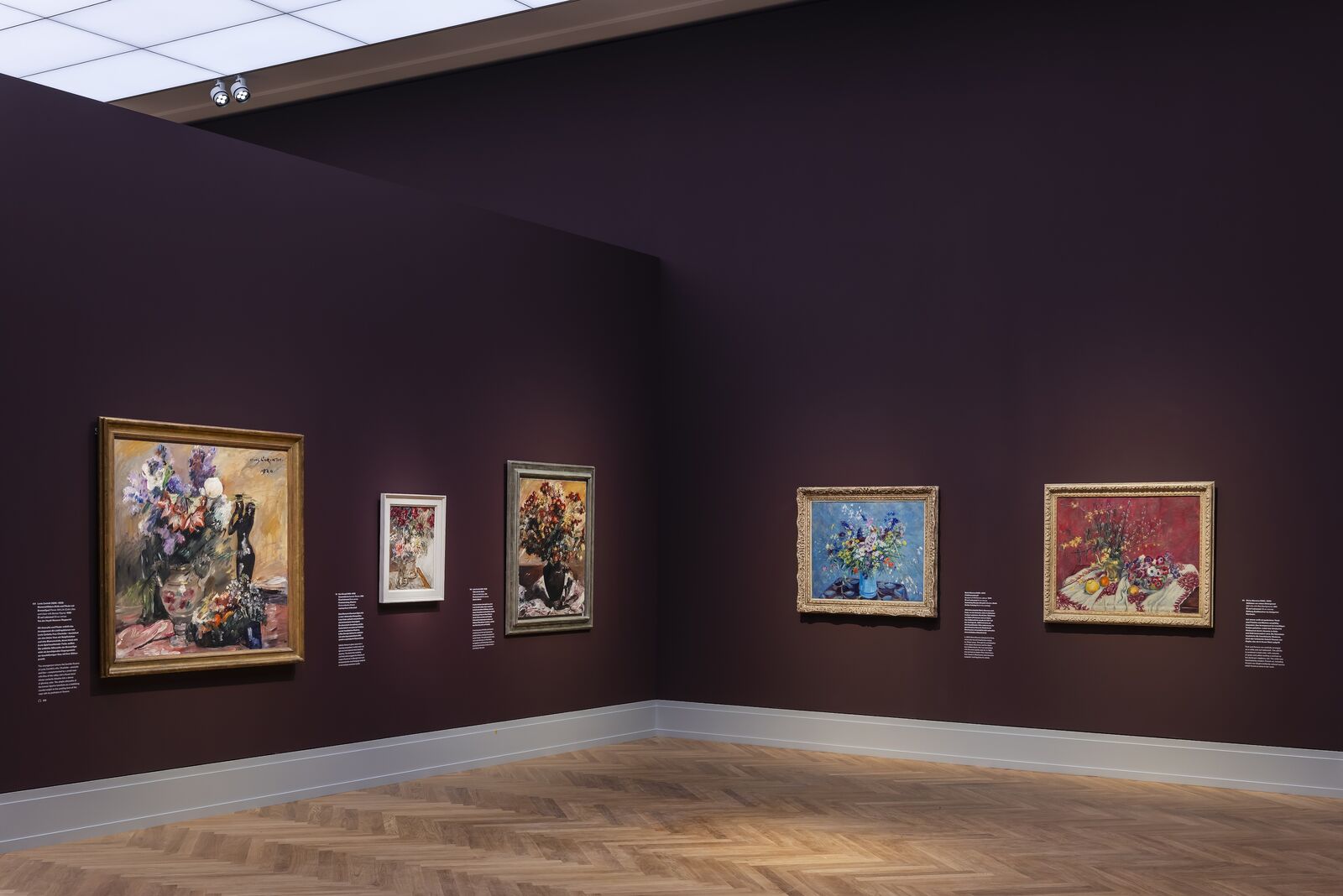
Incidentally, it was Alfred Lichtwark—a connoisseur of the avant-garde and friend of the Berlin painter—who soon acquired Liebermann’s work for the Hamburger Kunsthalle. With his essay Makart Bouquet and Floral Arrangement, Lichtwark had already penned one of the early German texts on the shift in taste—back in 1892, in step with Liebermann’s own artistic development.
The Makart bouquet was a wired, artificially shaped floral arrangement that embodied the rigid old-German style. It also evoked the history painter Hans Makart. By contrast, the loose floral bouquet represented the new, modern sense of naturalness.
“In the spring of 1890, for the first time one could see large quantities of wildflowers offered for sale in the streets of Berlin—not in finished bouquets, but bundled as raw material […] Piles of the first blossoms from the meadows and forests of Brandenburg were stacked before the fruit cellars, their whites and yellows shining far across the gray streets. It was a momentous event […] The first stirrings of a new taste. The beginning of the trade in wildflowers in Berlin. The Makart bouquet is abolished.”
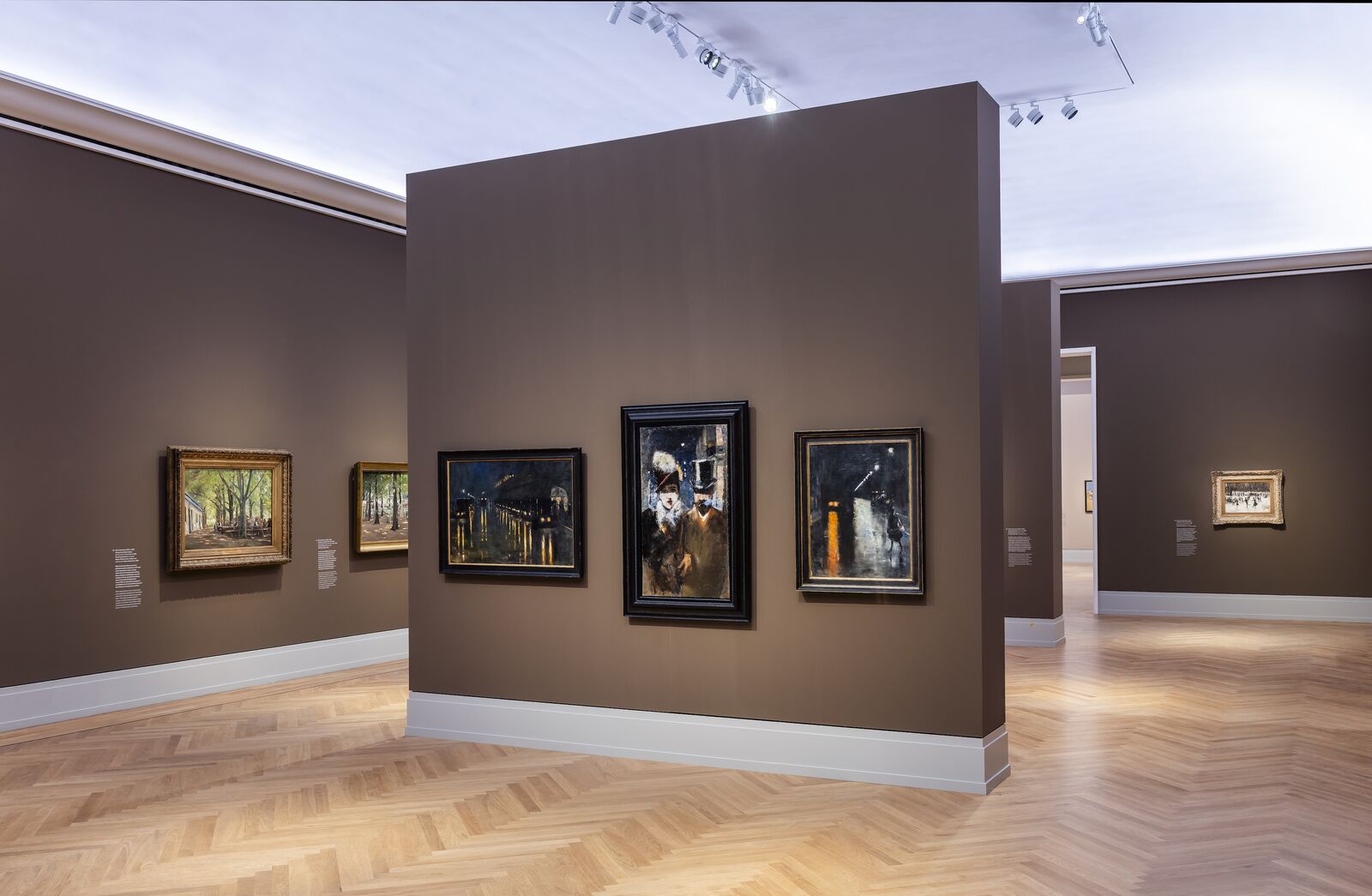
The transformation of Paris from the 1850s onward established a new model of the modern metropolis. Berlin followed suit with the Hobrecht Plan of 1862. The creation of wide sidewalks and tree-lined avenues did not immediately lead to traffic chaos; rather, it ushered in the era of the strolling flâneur.
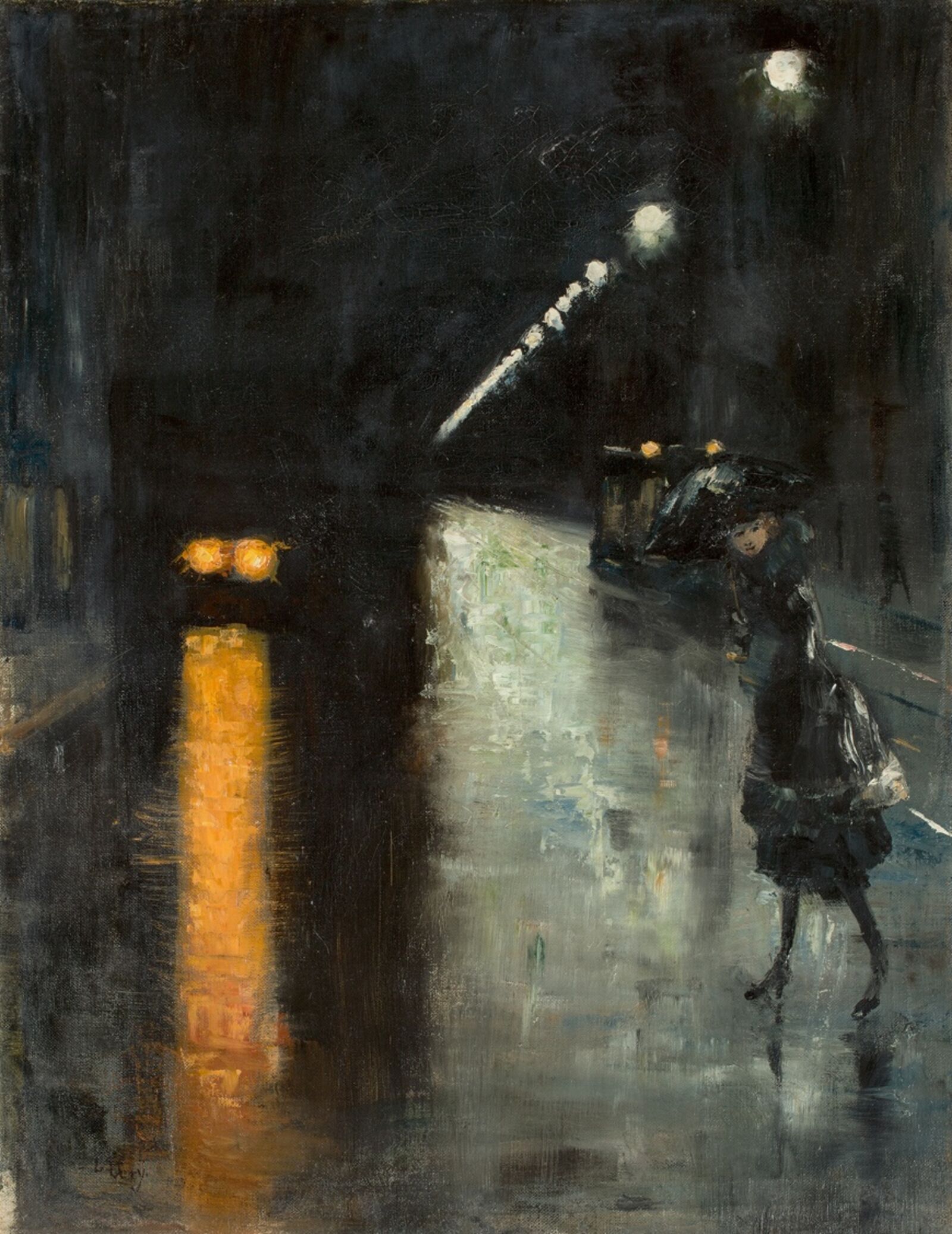
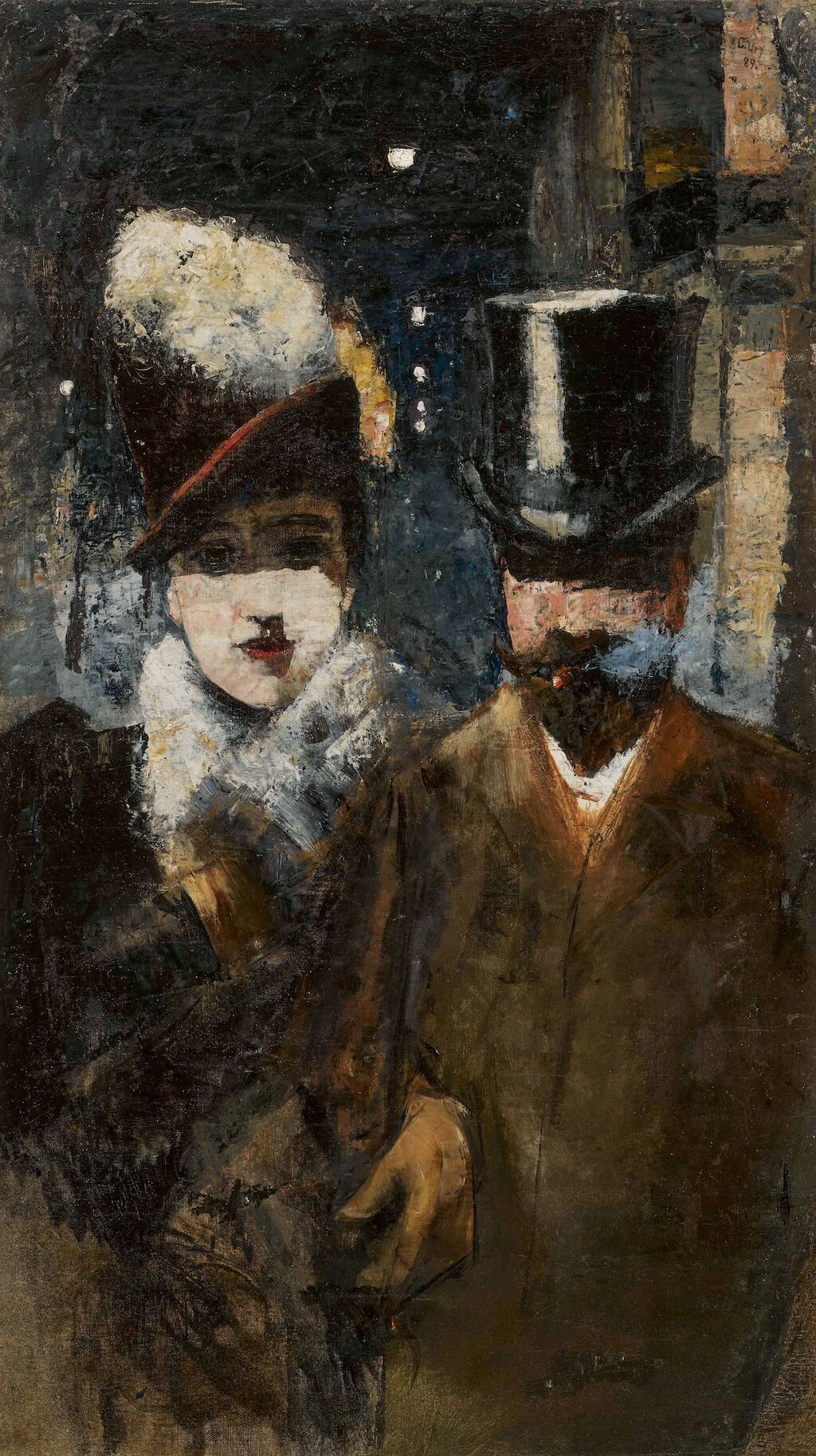
At the same time, the night was conquered with modern gas and electric lighting. Nighttime cafés drew society into their glow. And the mood—the “nervous energy” of the big city, as it was already called—was perhaps captured in Germany better than anywhere else by Lesser Ury. Ury’s artificial lights—street lamps, carriage lamps, spotlights—vibrate in a world that is often dark. It is not as quiet as the light of other Impressionists. It is expressive, almost loud. “The city that never sleeps,” people said of New York in 1912. In a way, that has applied to every metropolis ever since.
Dr. Matthias Wilkening Stiftung/Grisebach
Lesser Ury, Nocturnal Street Scene, um 1915/1920
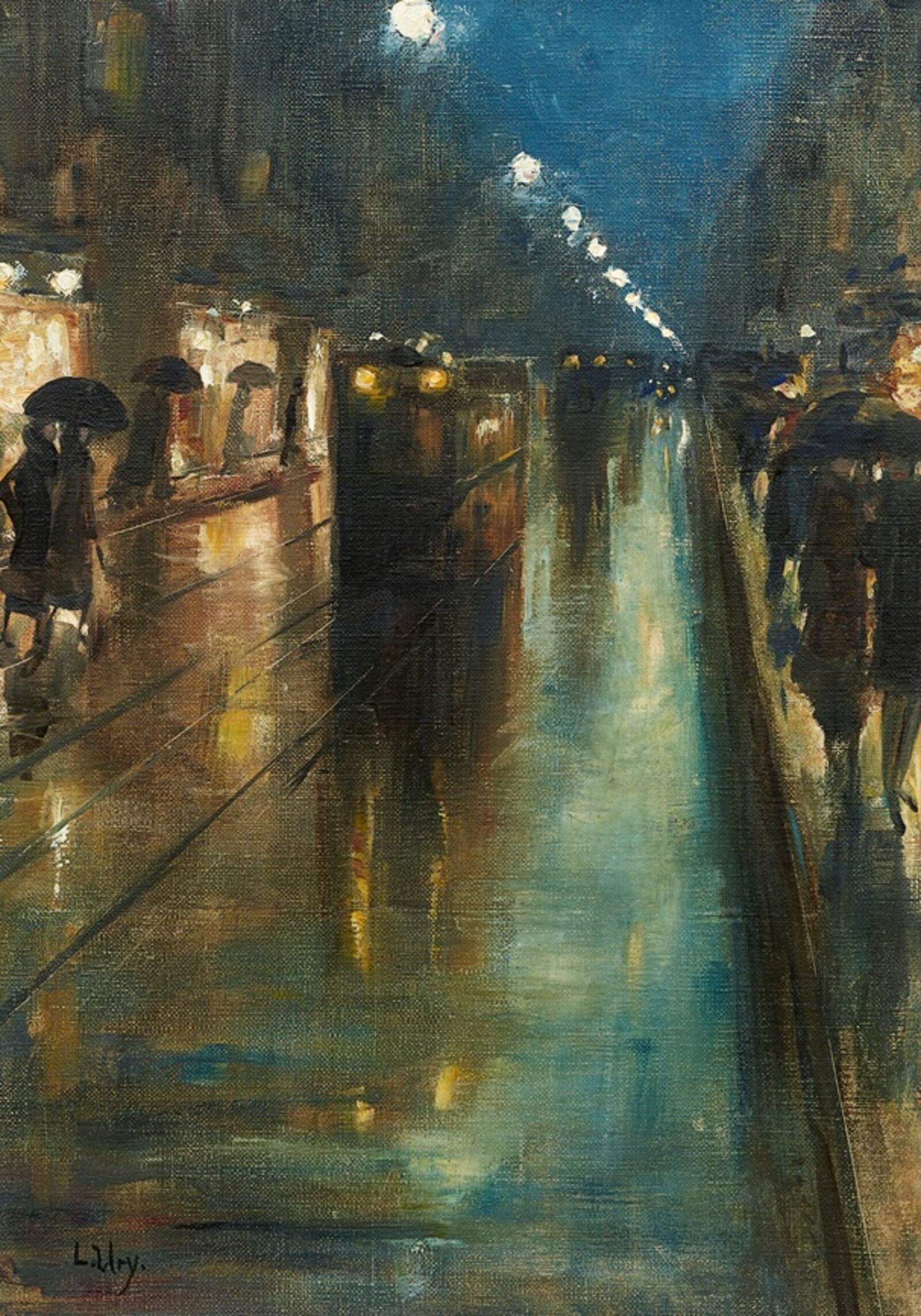
Private collection, Galerie Ludorff, Düsseldorf
Lesser Ury, Nocturnal Street Scene, Berlin—Leipziger Strasse, 1915/1920
Manet inspired Max Slevogt’s Unter den Linden, which depicts Emperor Wilhelm II’s 25th jubilee. The military parade is rendered with swift brushstrokes—soldiers, spectators, and trees shimmer as fields of color.
Hessisches Landesmuseum Darmstadt
Unter den Linden (Flags in Berlin) (1913): Max Slevogt dissolves German nationalism into pure color.
The new enjoyment of strolling—through parks and by lakes—belonged to both the modern city and the nation. Lovis Corinth’s The New Lake, pictured at the very beginning of this prologue, depicts a cloudy day when the boathouse remained closed, offering a quiet backdrop to the city’s weekend leisure.
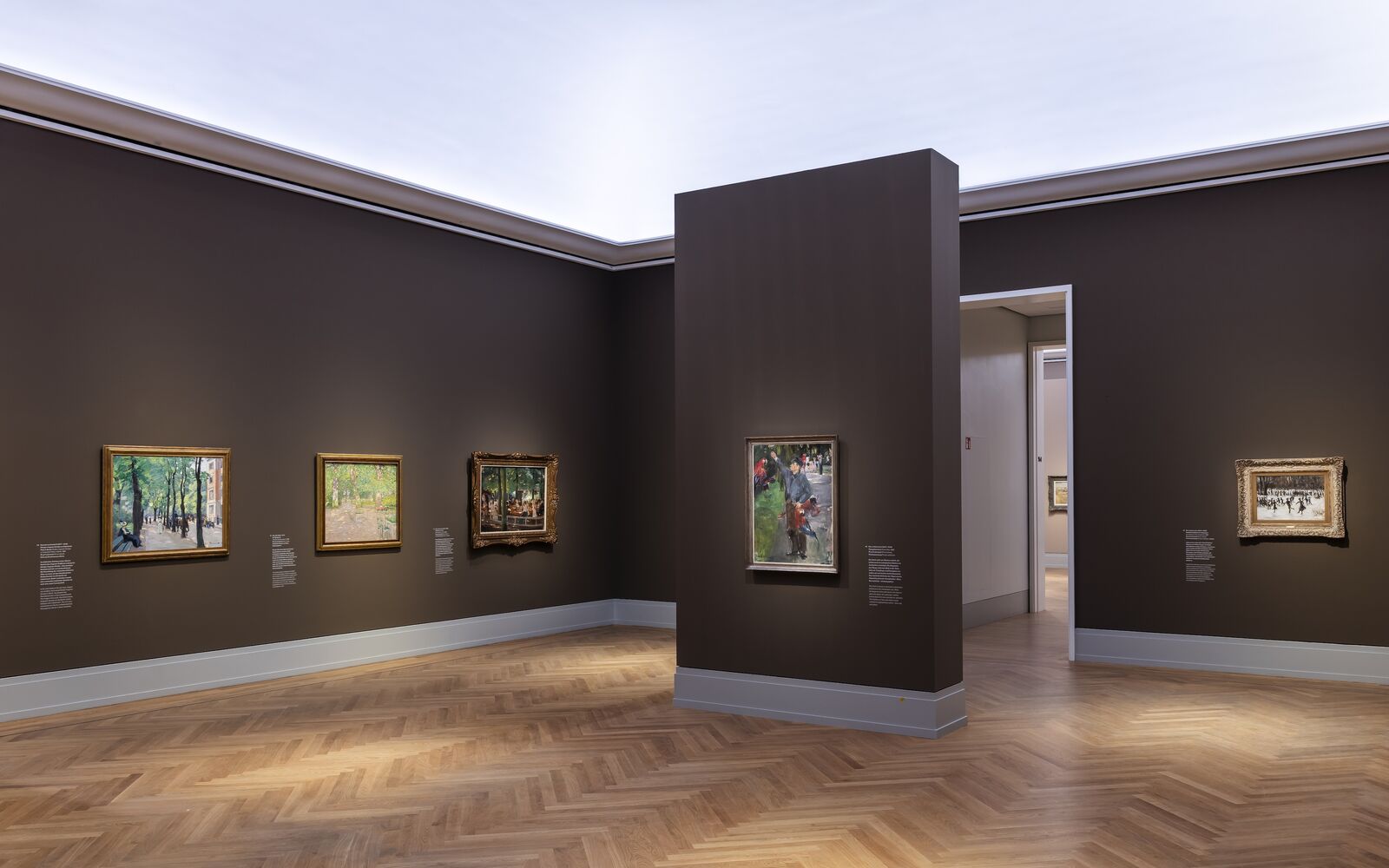
Impressionism was not always victorious from the start. Even against the old academic tradition, the outcome was often a stalemate, for it continued to persist. The political powers of the newly founded German Empire favored the outdated, representational historicism exemplified by Anton von Werner.
And within the new movement, undercurrents and countercurrents were brewing. Liebermann, for example, fell out with Lesser Ury. Expressionism was peeking around the corner. Reality was complex; in retrospect, people spoke of an era of “stylistic pluralism.” From 1890 onward, Impressionism established itself more rapidly in Germany. By 1892, a split had formed from the Munich Artists’ Association around Franz von Stuck and Max Liebermann with the Munich Secession. The goal was to devote themselves to the new art—just as, beginning in 1898, the Berlin Secession would do under Walter Leistikow, Liebermann, and Lovis Corinth.
“The founding of the Secession coincides with the ever-more triumphant rise of Impressionism. But Impressionism is not—as one constantly hears or reads—a mere style; it is a worldview. Within it, anyone can find fulfillment according to their own talent.”
Max Liebermann was both a mediator and a manager of Impressionism in Germany. He was also a collector himself—alongside collectors such as Carl Bernstein and Felicie Bernstein, art dealers like Paul Cassirer, and museum directors such as Hugo von Tschudi. Other artists contributed as well, including Max Slevogt, Lovis Corinth, and Walter Leistikow.
The 1890s marked a clear shift toward the new style. Liebermann lightened his palette, and his brushwork became looser. After depicting everyday scenes of the common people, he increasingly turned to bourgeois culture. Even The Pig Market in Haarlem already demonstrates this shift in focus—from detailed genre painting to shimmering atmospherics. The soft, diffuse light dissolves the forms. Or, as it was once described, “light painting” prevailed.
Kunsthalle Mannheim
Single Figures as Luminous Painterly Ornament: Liebermann’s Pig Market in Haarlem (1894)
Impressionism established itself not only in Berlin and Munich but also in Weimar, Stuttgart, and Dresden. These regional centers created Germany’s very first avant-garde. Although somewhat later than in France, there was a strong plurality of voices, in which everyone could find fulfillment “according to their talent,” as Liebermann put it.
In 1889, the art critic Emil Heilbut gave a lecture in Weimar. He presented three works by Monet—marking the first encounter with French Impressionism for the artist Christian Rohlfs. Inspired by this, Rohlfs created Star Bridge, part of a series. Like Monet with many of his subjects, Rohlfs painted them repeatedly, capturing different times of day and lighting conditions.
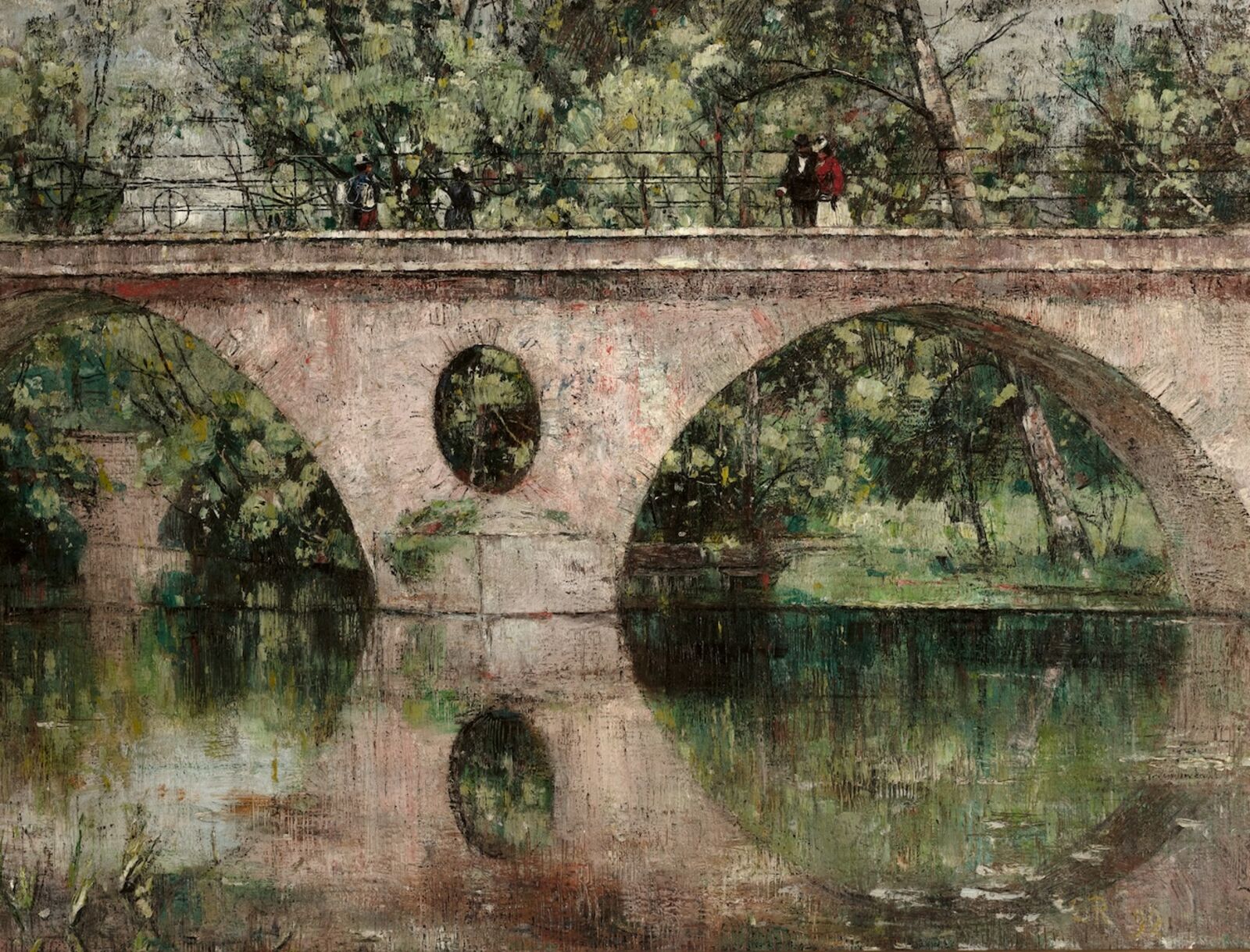
State Museums of Schleswig-Holstein, on loan from the Museum of Art and Cultural History, Schloss Gottorf
Christian Rohlfs, The Star Bridge in Weimar, 1892
By around 1890, museums had acquired works by Max Liebermann, including the National Gallery in Berlin and the Hamburger Kunsthalle. He was firmly established—and painting with even greater freedom, in an increasingly Impressionist manner.
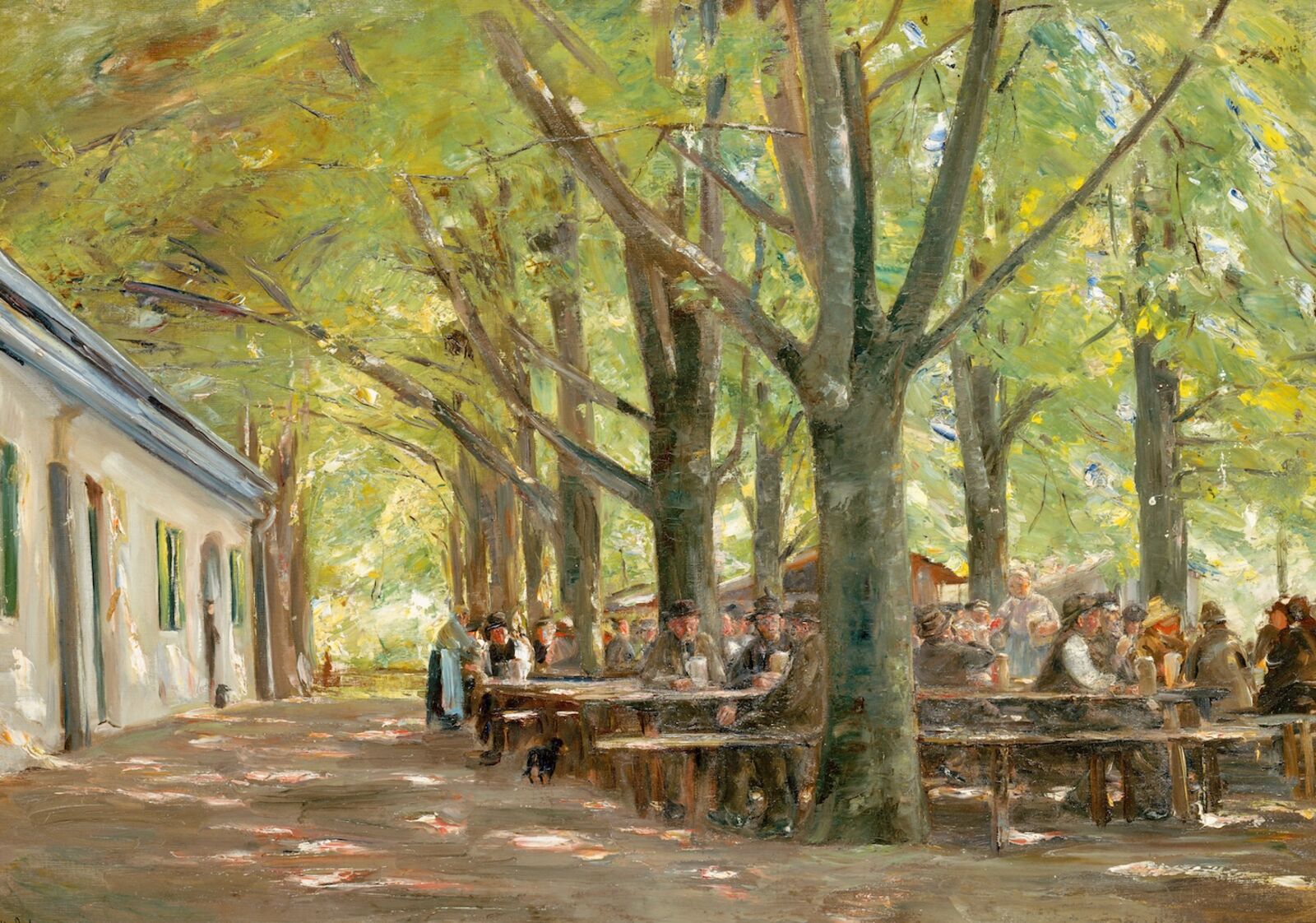
Musée d’Orsay, Paris, Acquired from Max Liebermann 1894, bpk/GrandPalaisRmn/Hervé Lewandowski
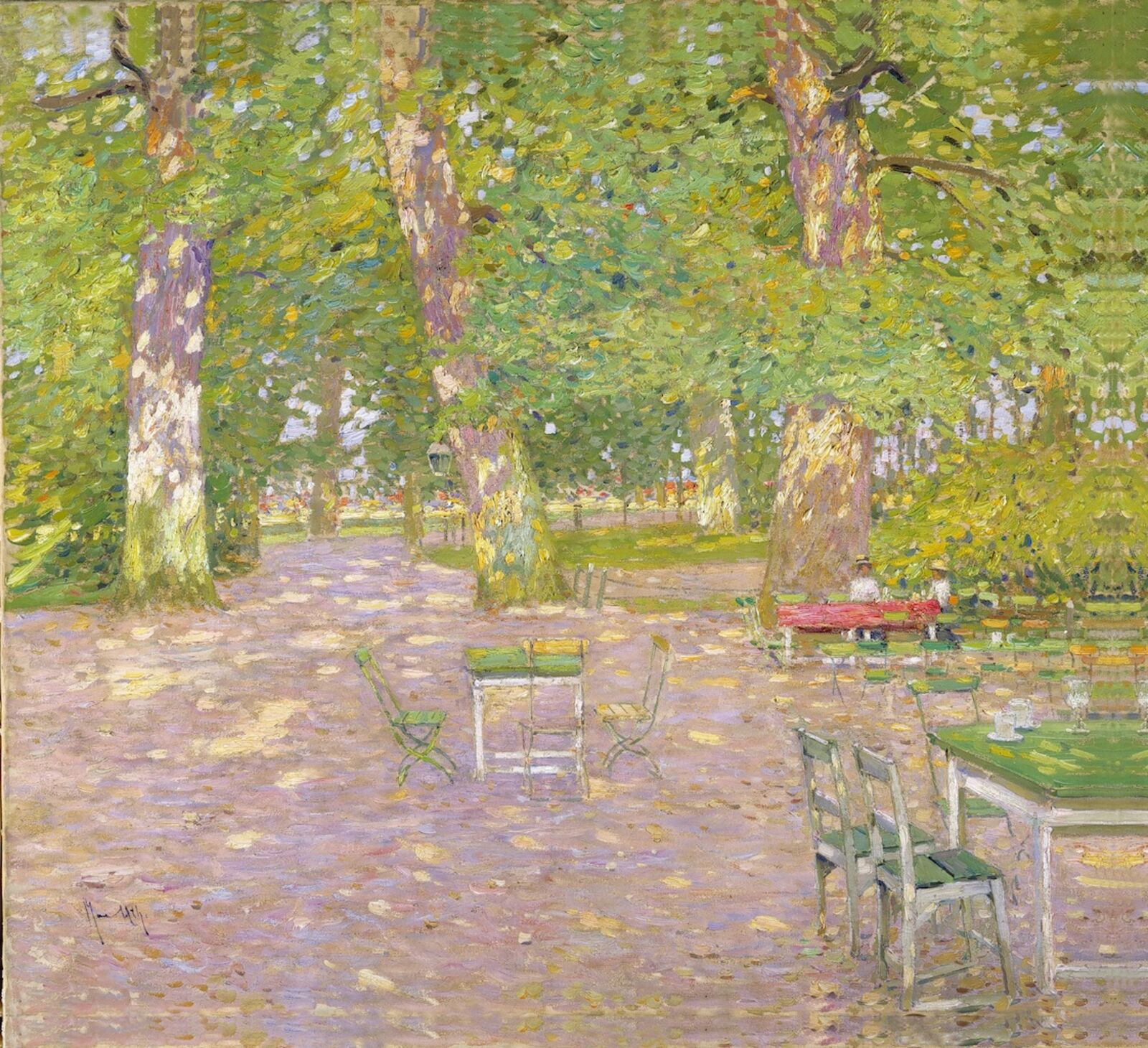
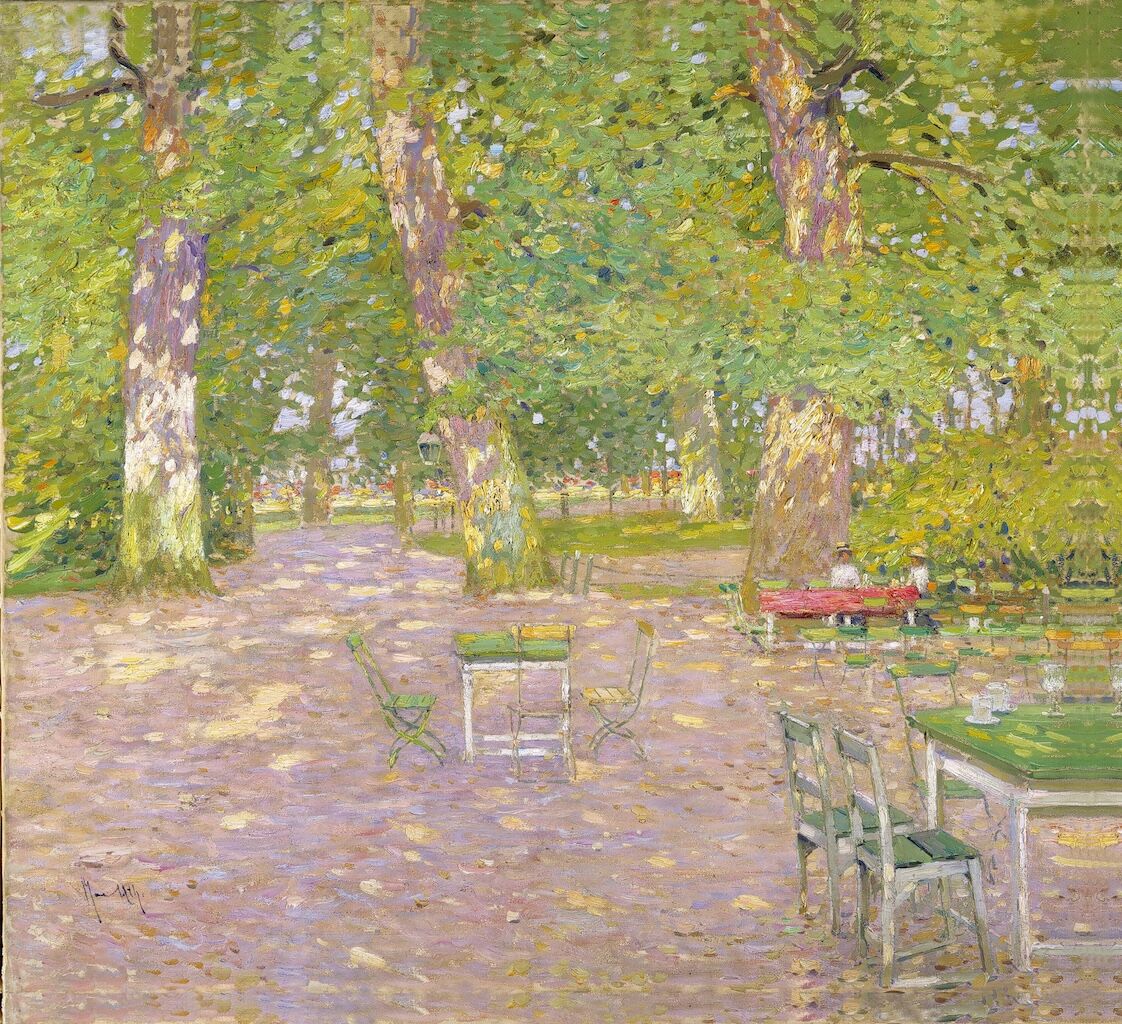
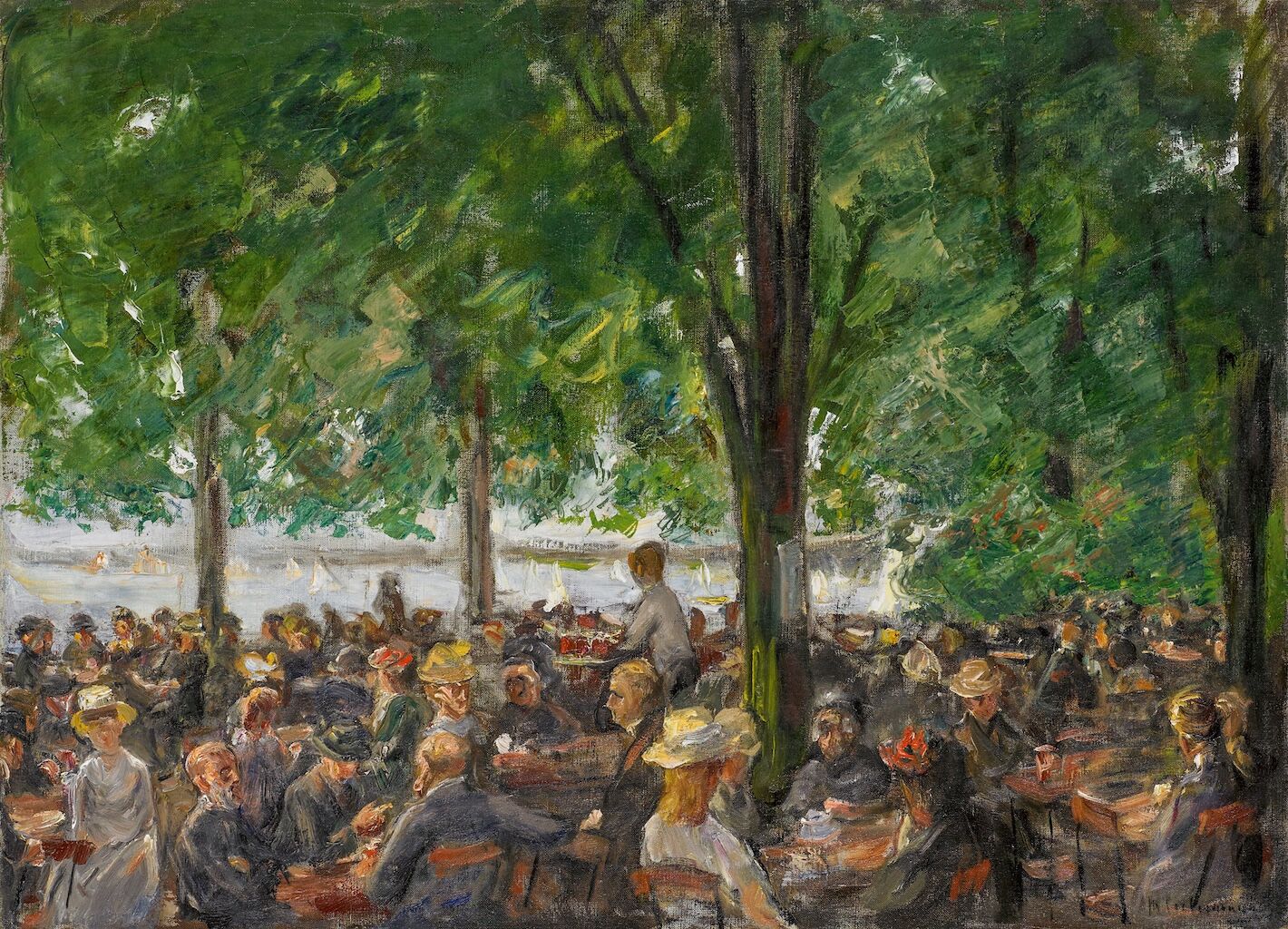
Max Liebermann, Beer Garden in Brannenburg, 1893
Max Liebermann’s Beer Garden (1893) showcases this in radiant brightness. Fittingly, the painting has made its way to Paris, the birthplace of Impressionism, where it is preserved in the Musée d'Orsay.
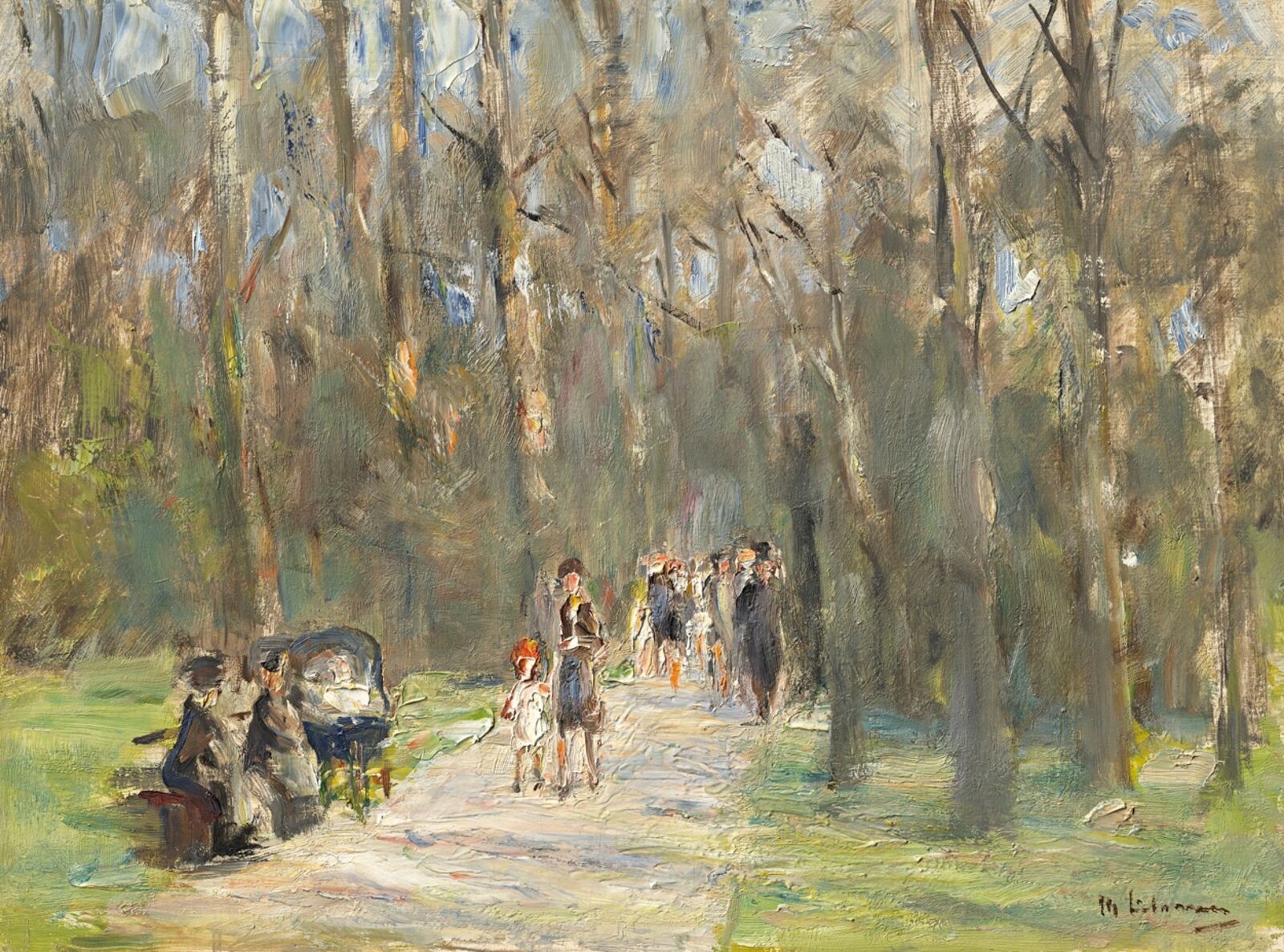
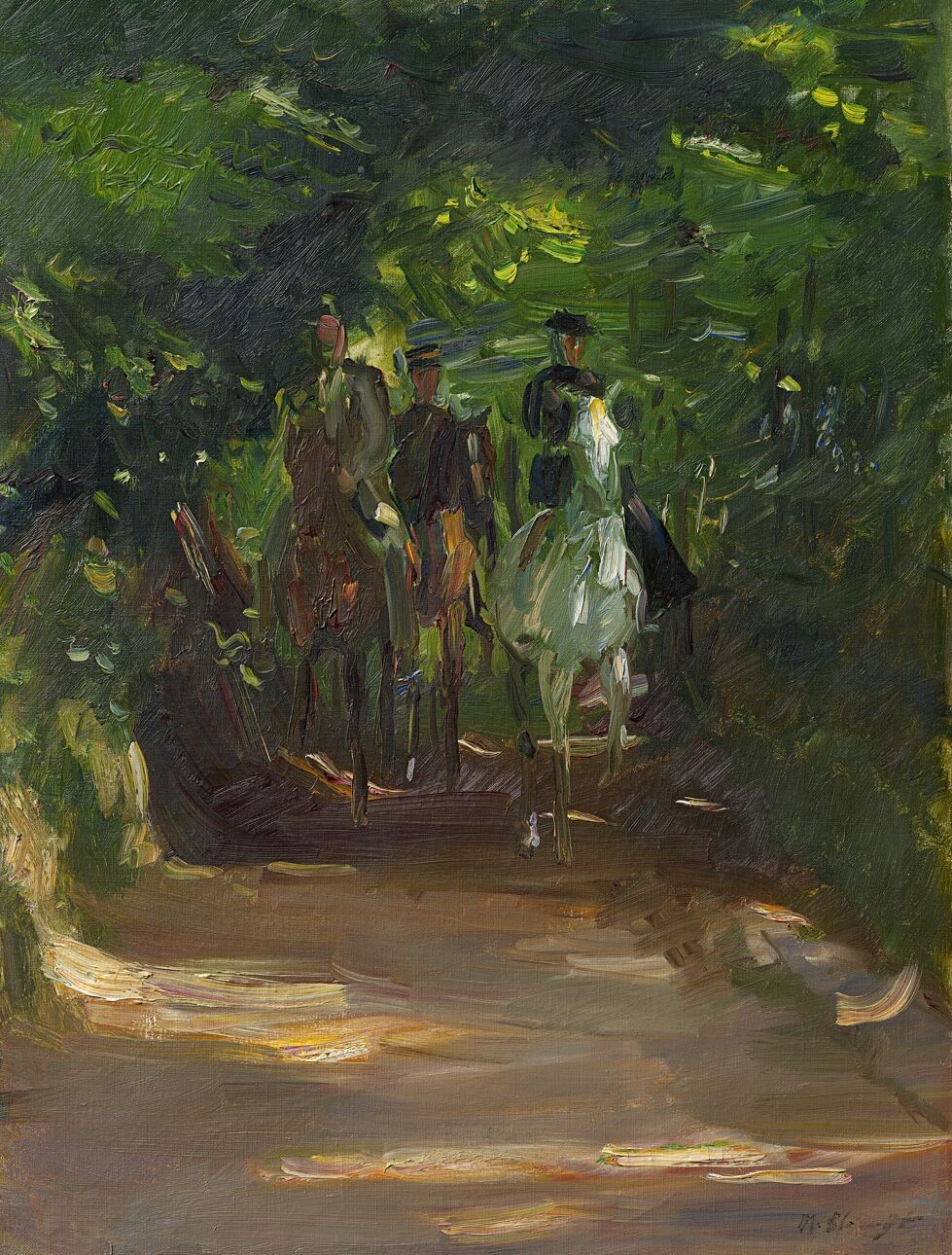
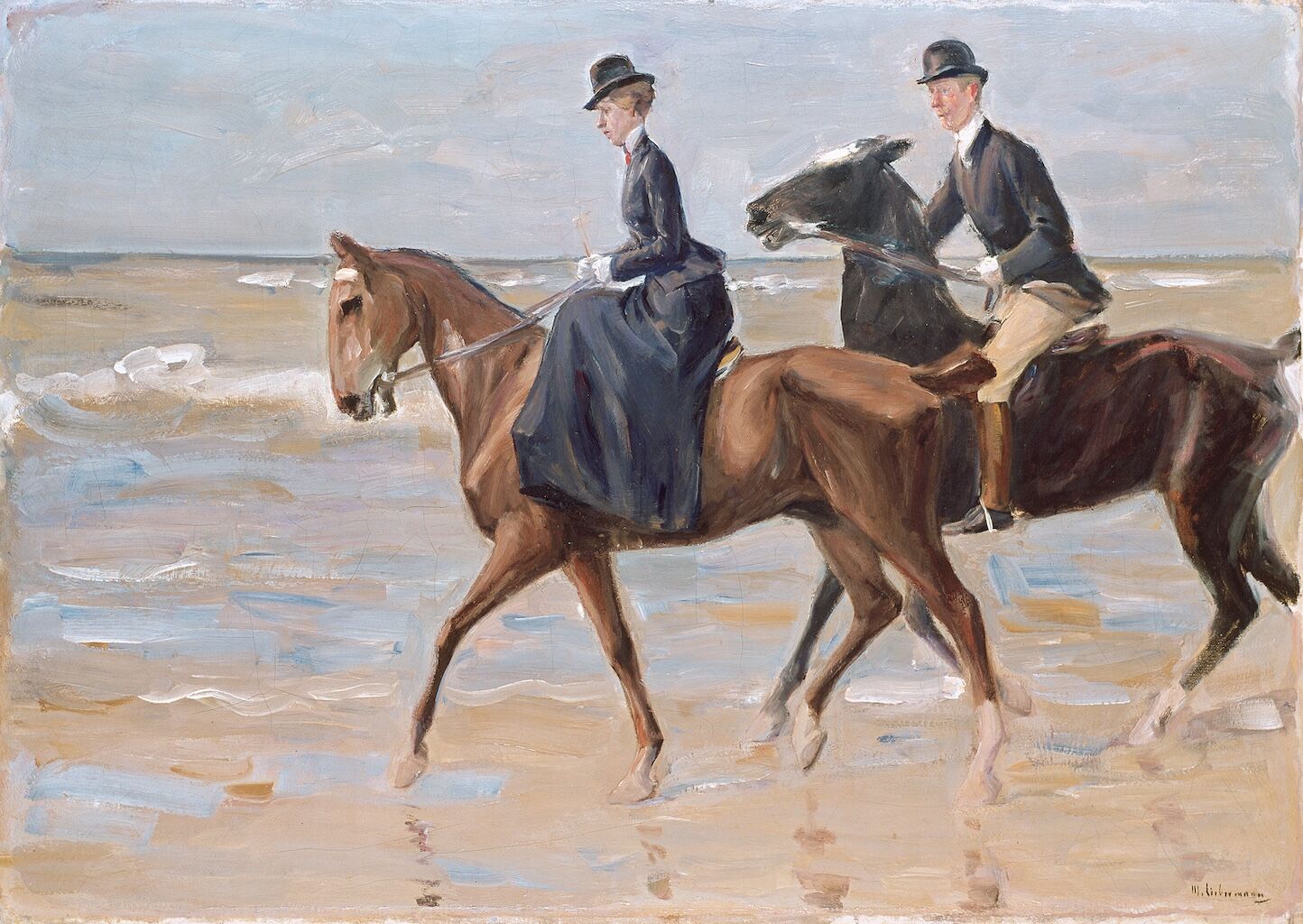
The shift toward Impressionist taste also touched leisure activities. Strolling became fashionable for well-dressed citizens—not just, as half a century earlier, for gnarled romantics like Caspar David Friedrich and his circle. Berlin’s Tiergarten was no longer a royal hunting ground but a public landscape park and promenade.
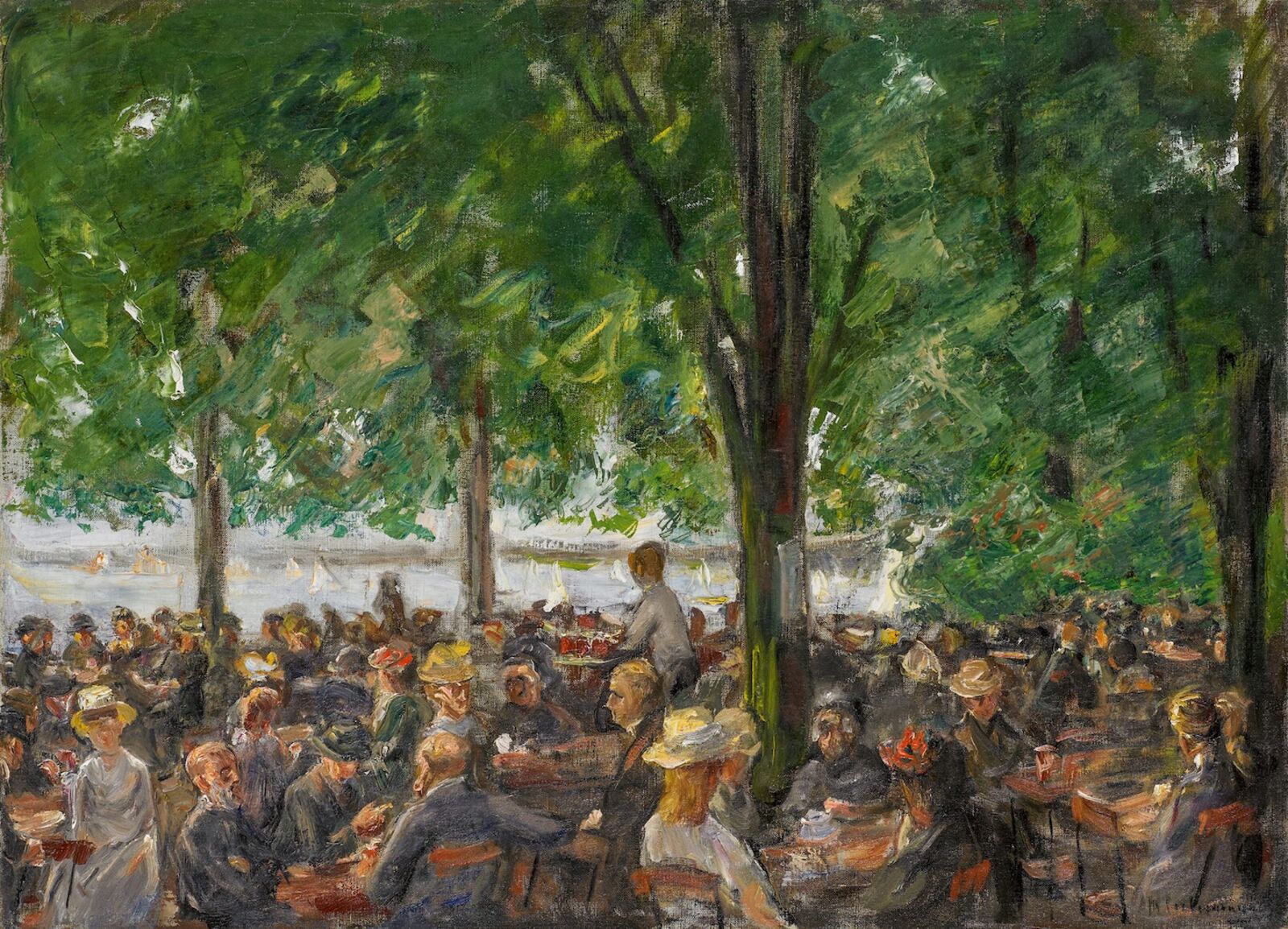
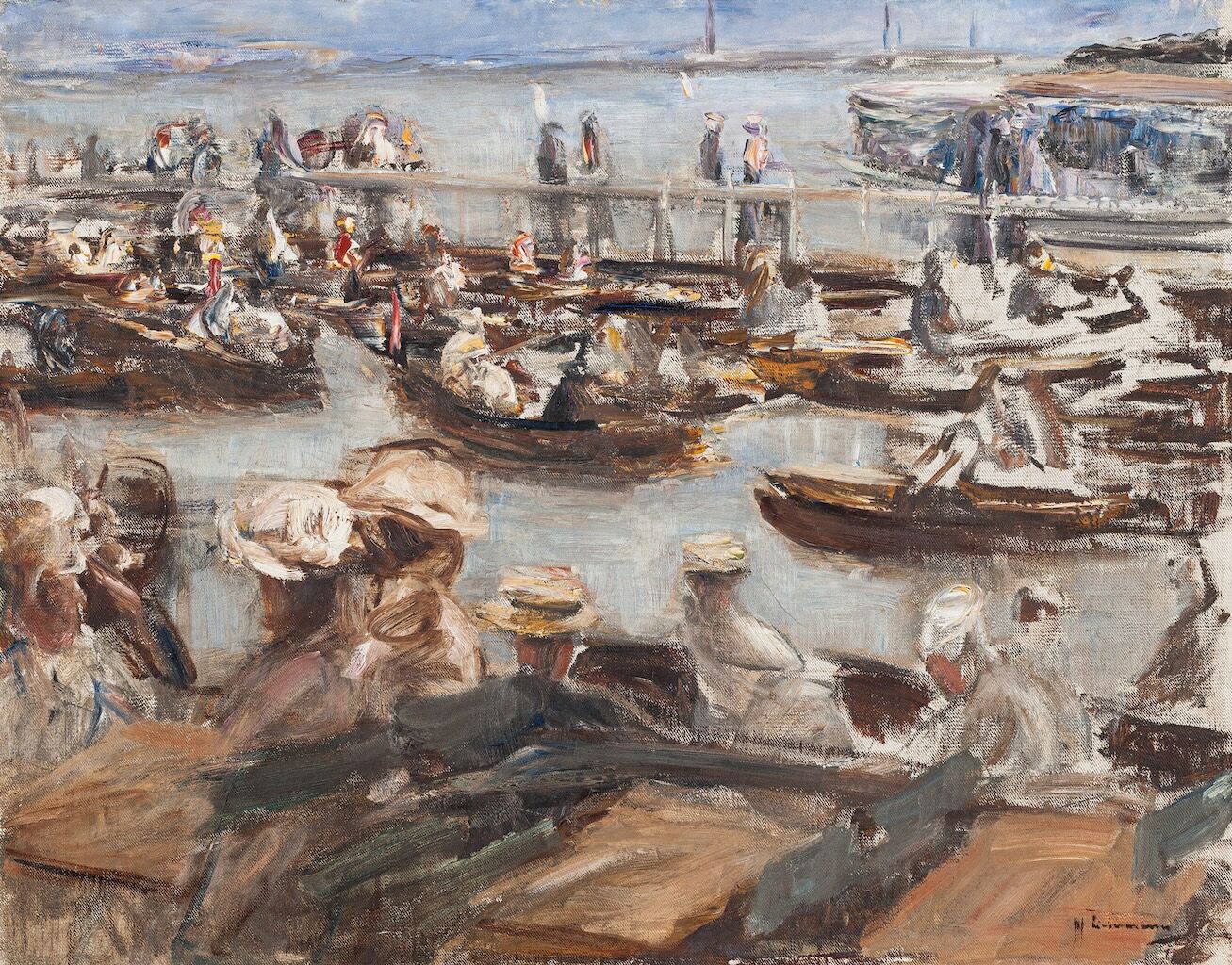
Riding and other pastimes were added to the repertoire, and people now cherished lingering by rivers and lakes—ideally accompanied by a charming riverside inn or café.
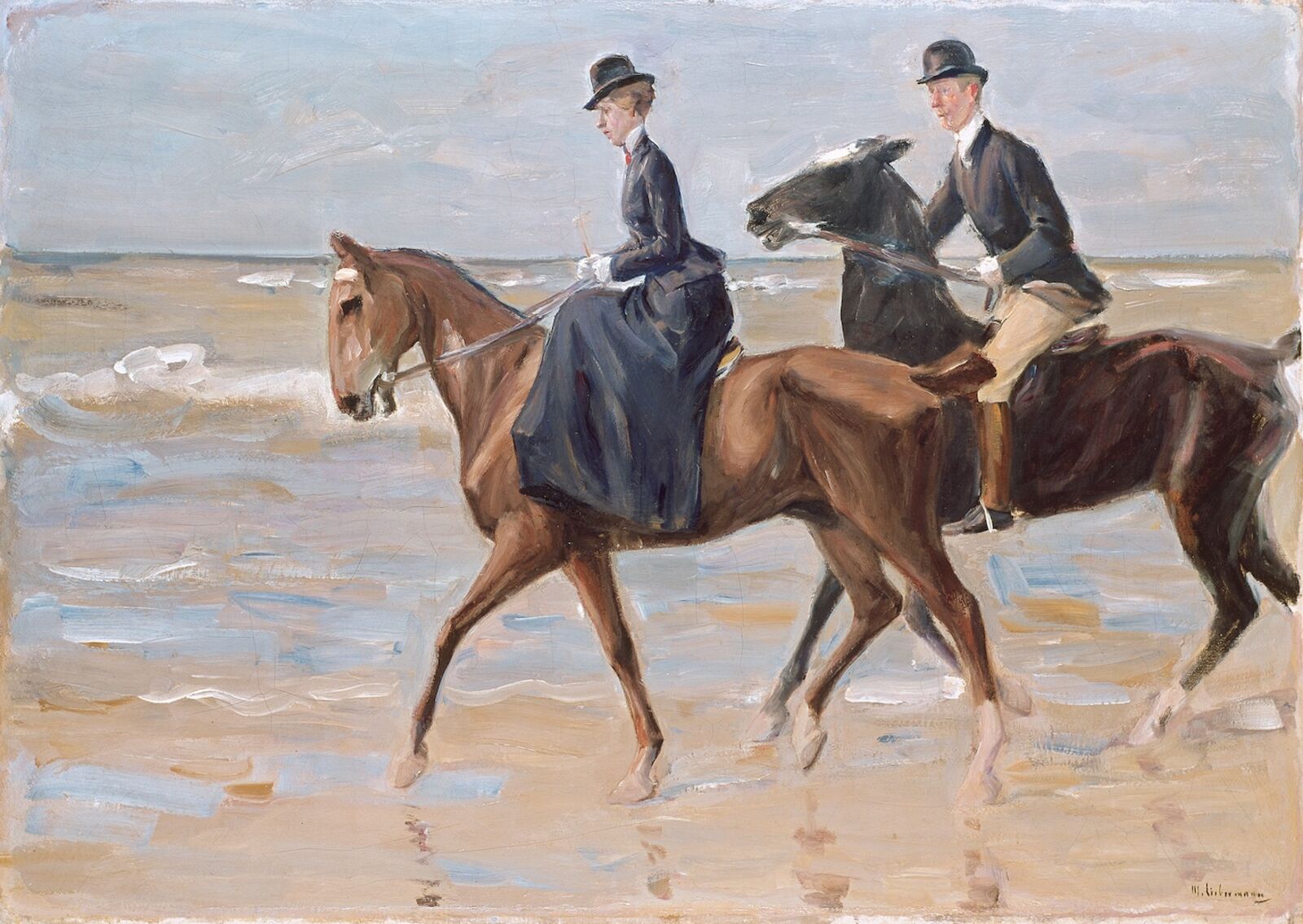
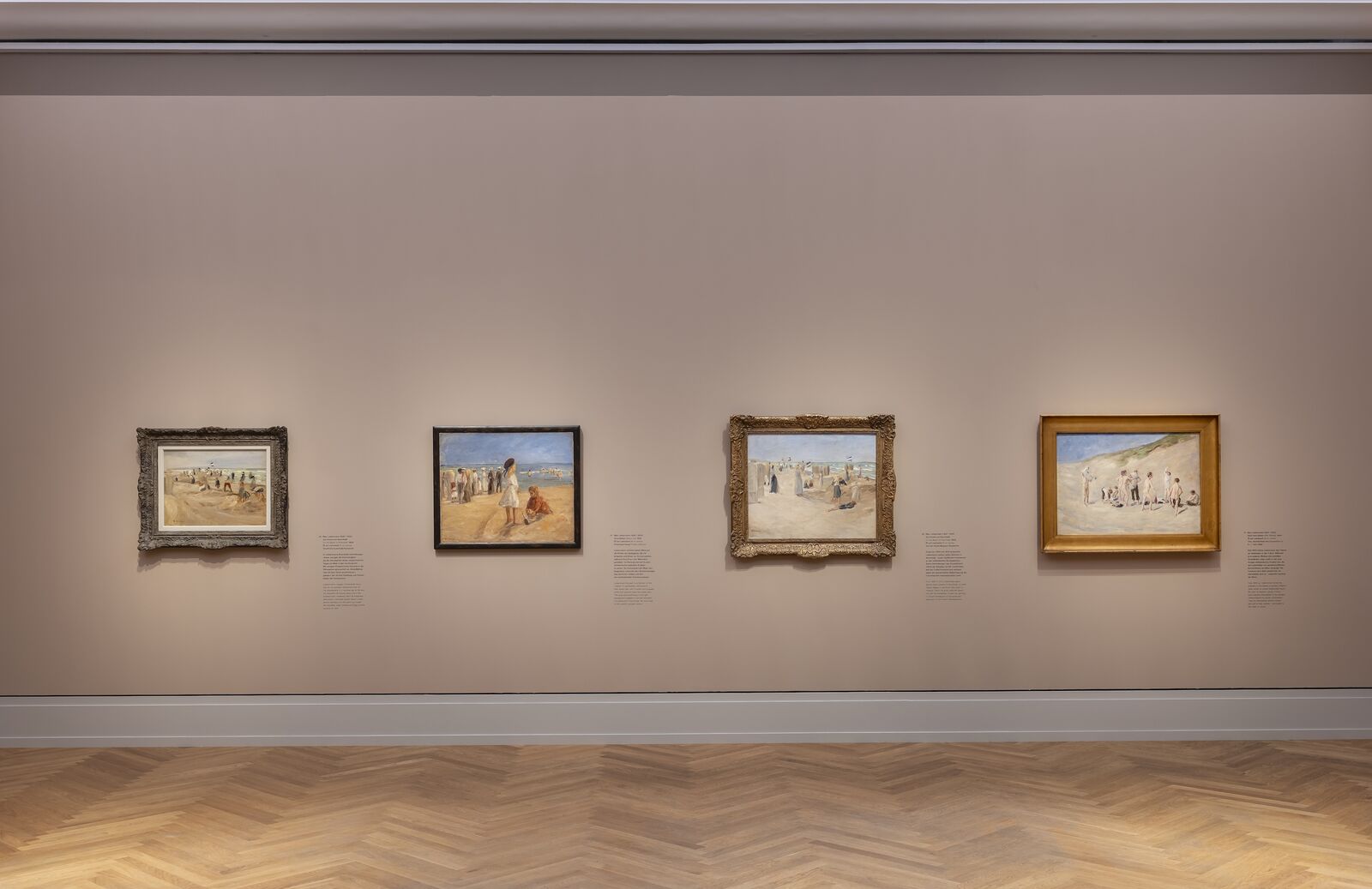
Max Liebermann, Horseman and Horsewoman on the Beach, 1903
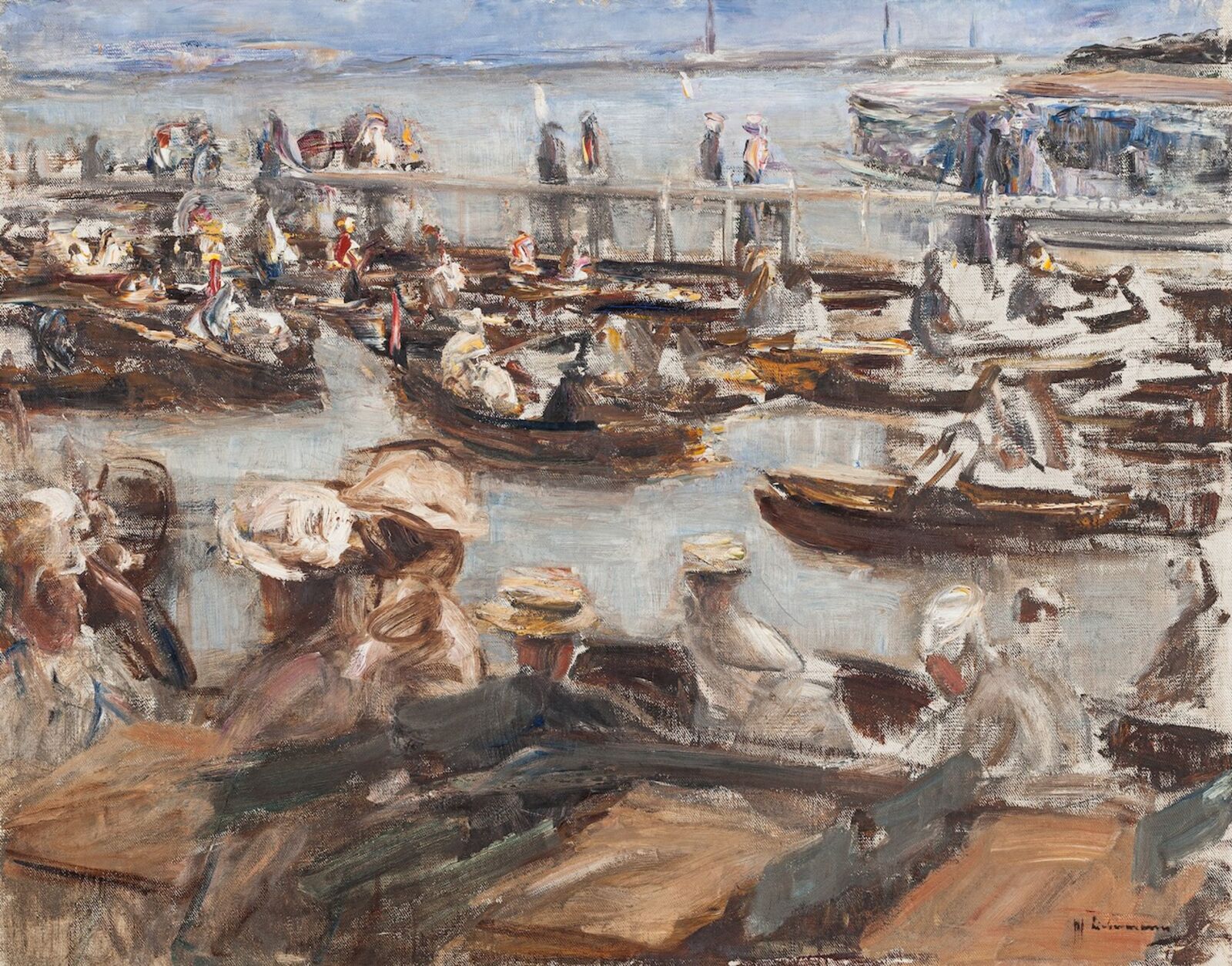
Max Liebermann, Summer Evening on the Alster, 1909
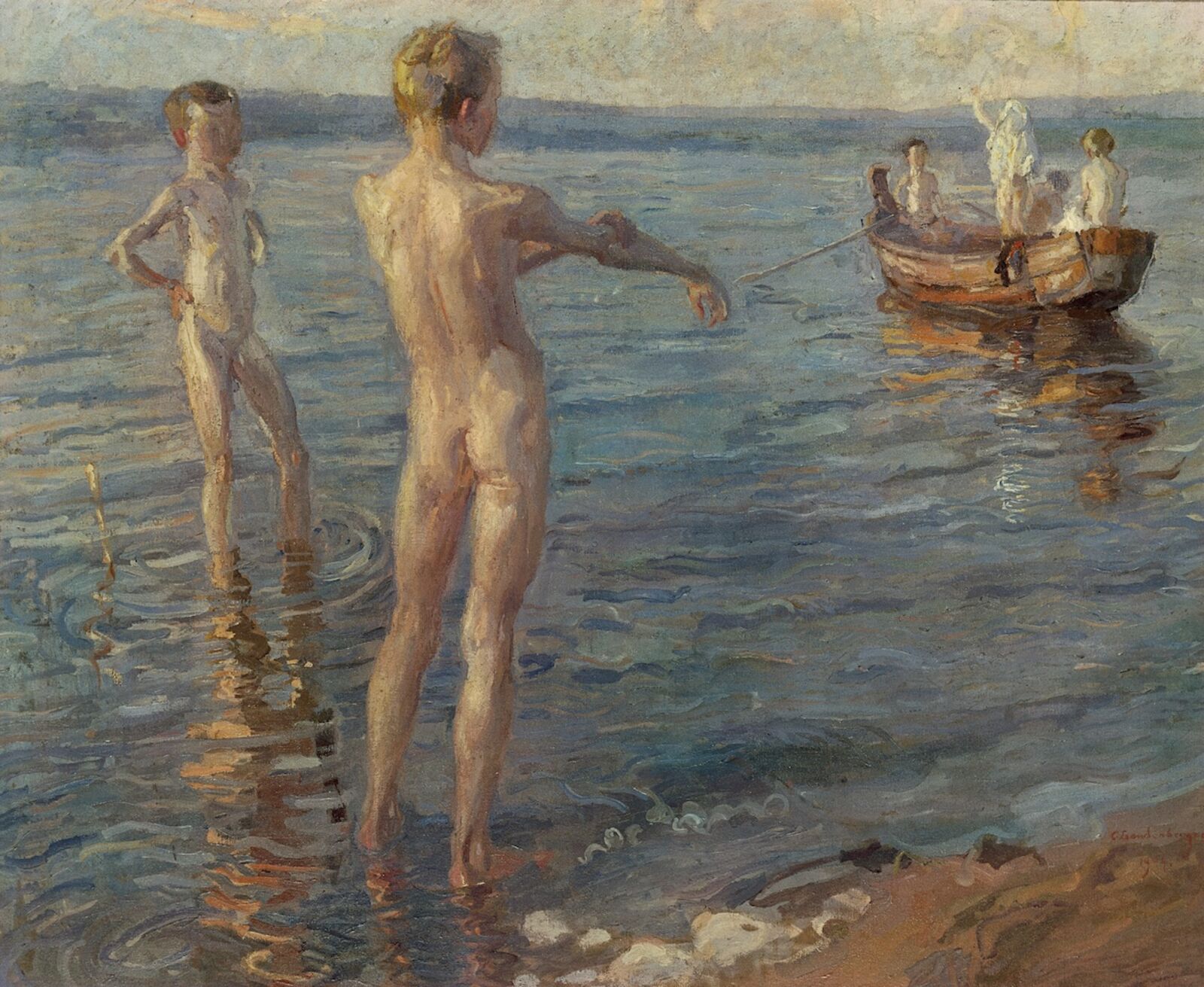
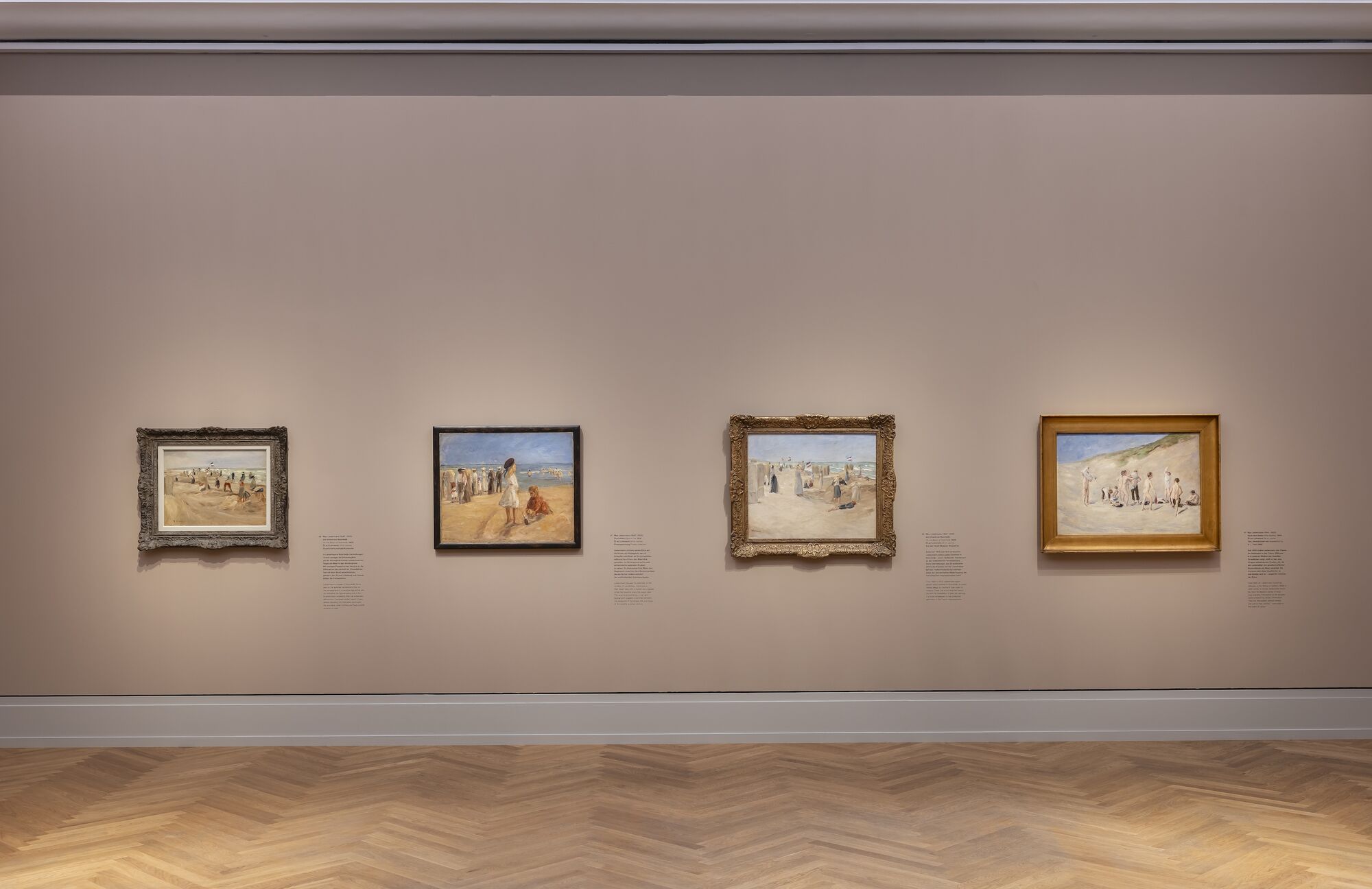
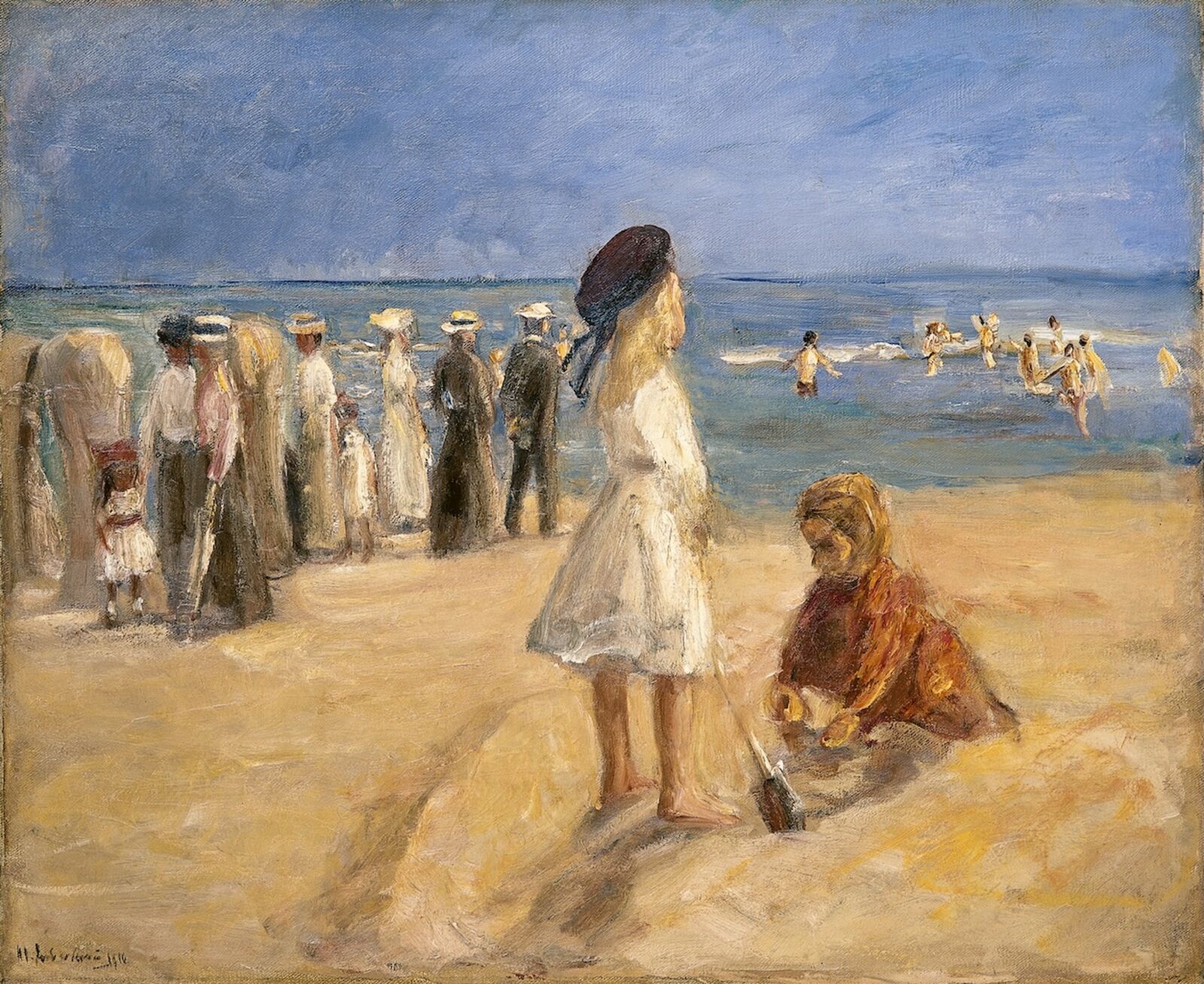
With the expansion of the railway, the Baltic and North Sea resorts became accessible to many. The beaches, previously inhospitable and even uncanny places, transformed into extensions of bourgeois promenades. Being there was considered both fashionable and healthy.
Private collection
Max Liebermann, Beach Life, 1916
Max Liebermann, whose social standing as a Jewish German always remained precarious, possessed a keen awareness of social realities. Impressionism, moreover, opened itself to everyday life—to the play of light, to the rhythms of ordinary people, and to the landscape itself.
All of this formed part of a broader development in art, literature, and theater, in which people and situations were granted pictorial—or representational—dignity. One need only think of Max Liebermann’s once notorious, later celebrated Net Menders: figures who previously would have appeared, at most, at the margins of a painting—perhaps as incidental staffage within a biblical scene, an ancient myth, or the depiction of kings and emperors, mere accessories to world-historical events.
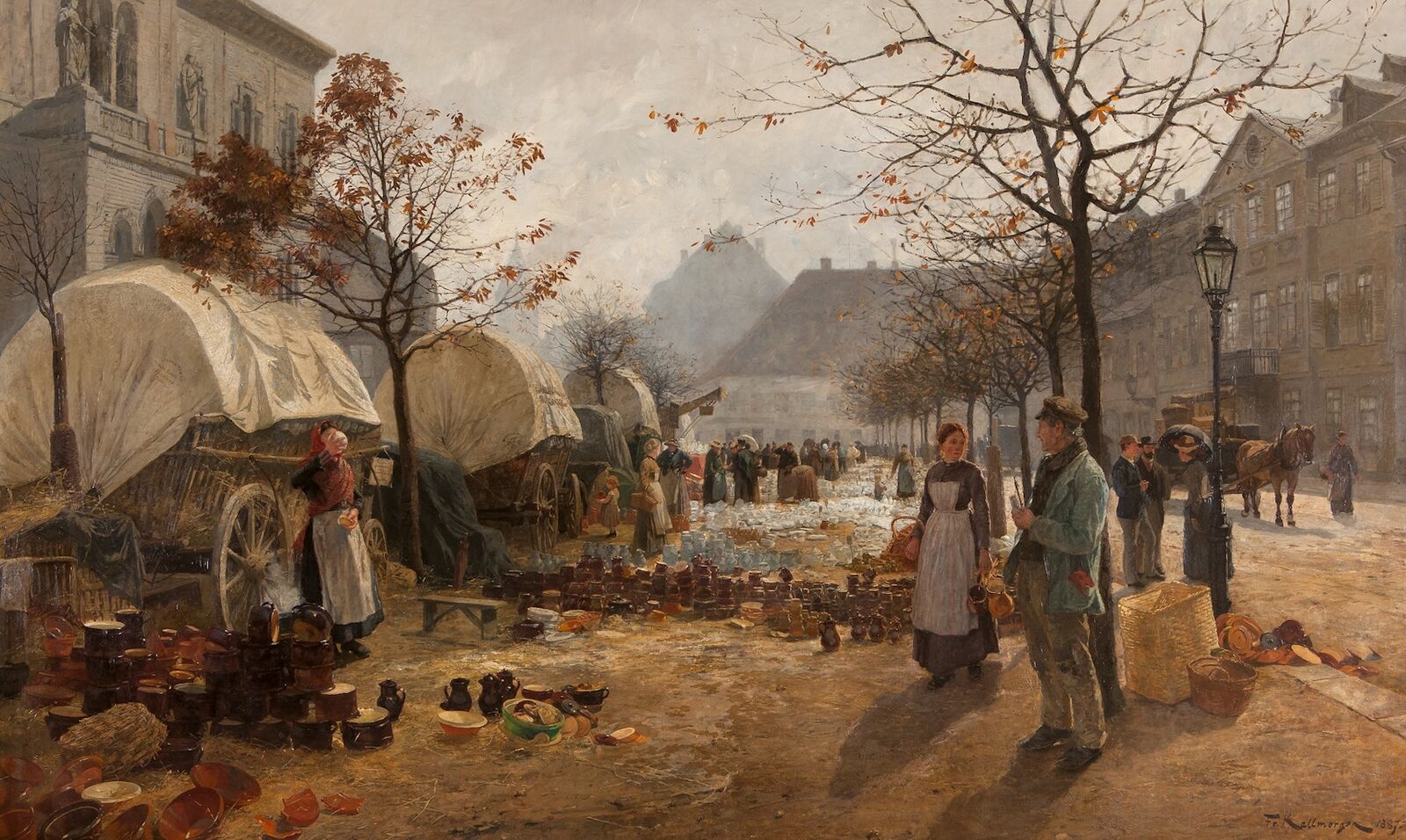
Now the small itself became historical—and monumental. The Net Menders span more than two meters in width. And in the current exhibition as well, there are striking examples of modest subjects rendered on a grand scale—formats once reserved for scenes of historical or mythological significance.
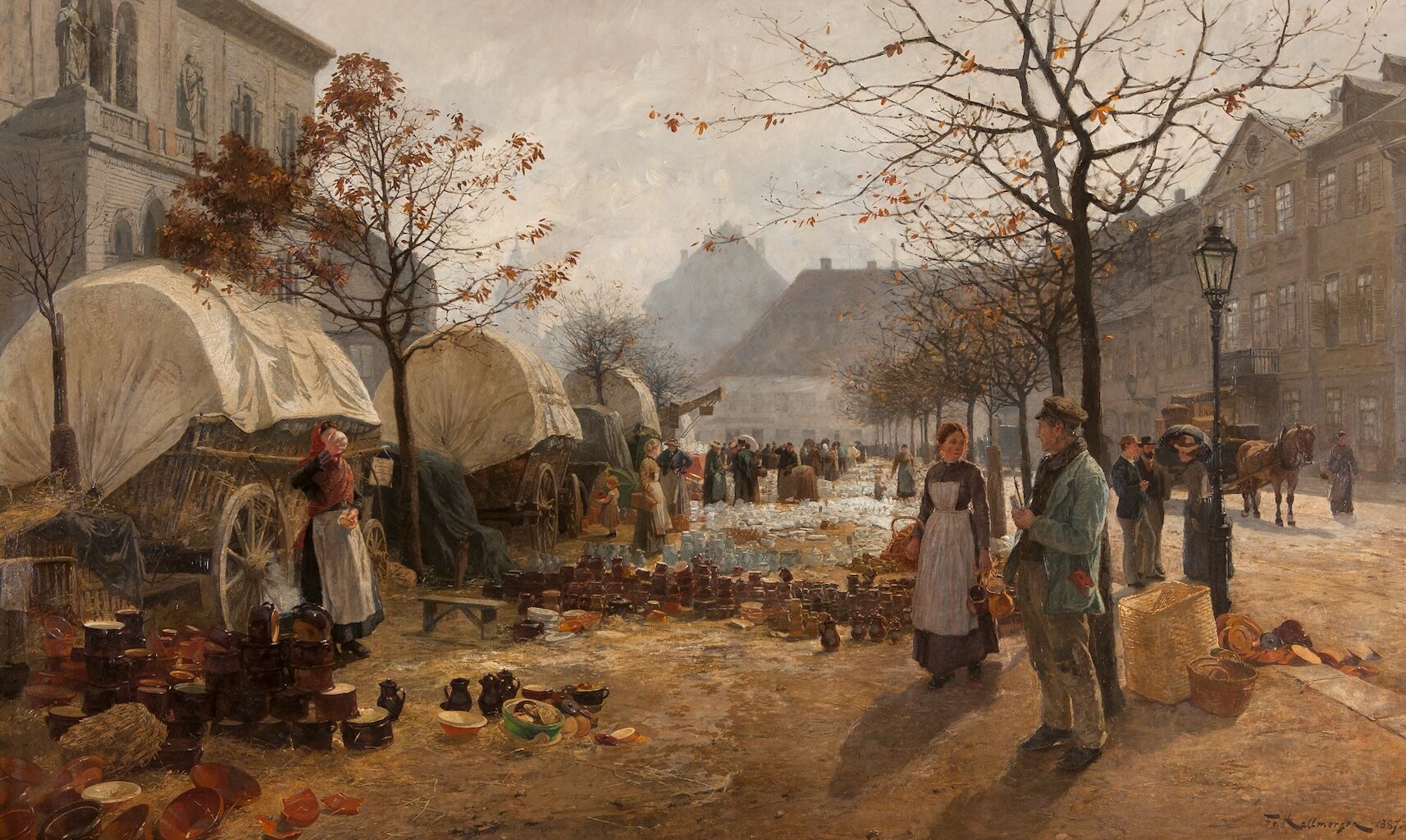
Friedrich Kallmorgen’s Crockery Market also measures more than two meters in width—and is a powerful work in every respect. In the foreground stand the working women selling their wares. In the background, almost as a secondary scene, rise the façades of grand bourgeois residences, a carriage passing by, and well-dressed citizens engaged in conversation.
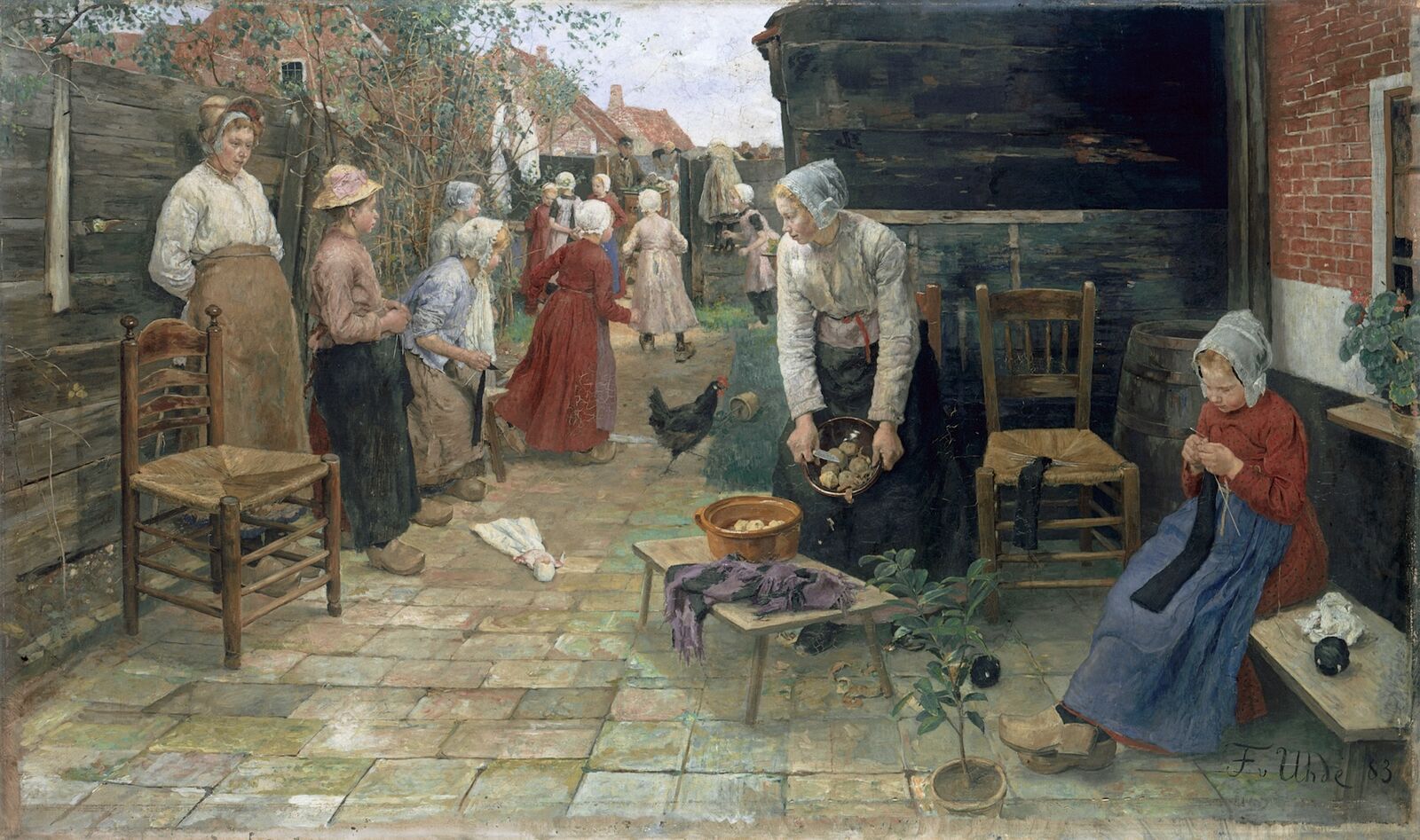
The great Adolph von Menzel—a Berlin professor of art and an exceptional painter—reportedly even dismissed Impressionist works from the important collection of the Bernsteins as “dirt.” And when the first exhibition of French Impressionists was shown at Fritz Gurlitt’s gallery in the 1880s, critics loudly complained that the painters chose the “most unappealing locales.” What they missed were the old heroic, spectacular landscapes.
Nevertheless, the Bernsteins are a good example: gradually, more and more collectors emerged who understood these paintings, loved them, and bought them. For it was no longer only about the subject or motif, but about the painting itself—about the increasingly liberated manner of painting. One can see this clearly in the works of Fritz von Uhde, a friend of Max Liebermann.
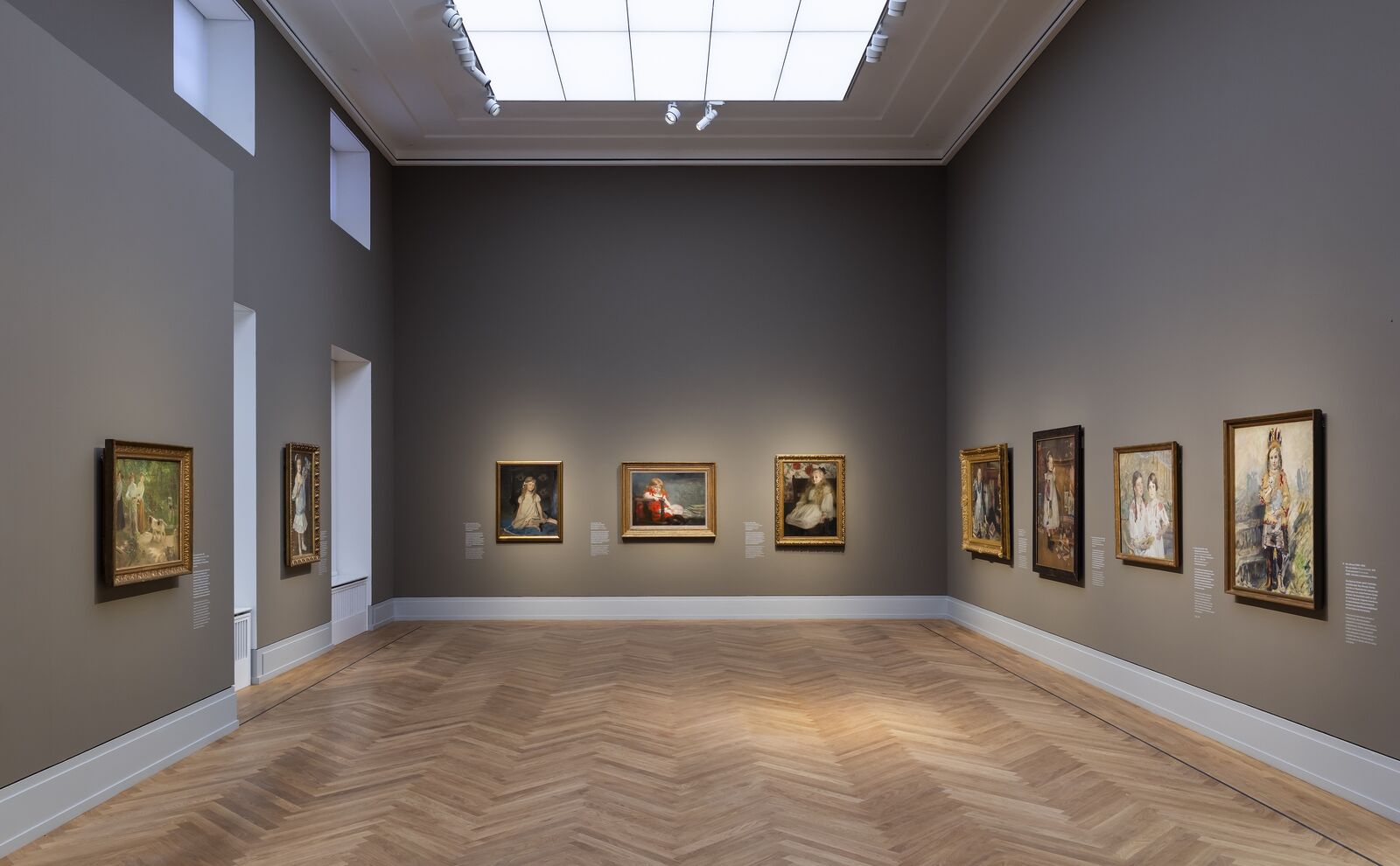
“Caught and painted like a bird in flight.”
David Ragusa Collection, Photo: Achim Kukulies, Düsseldorf
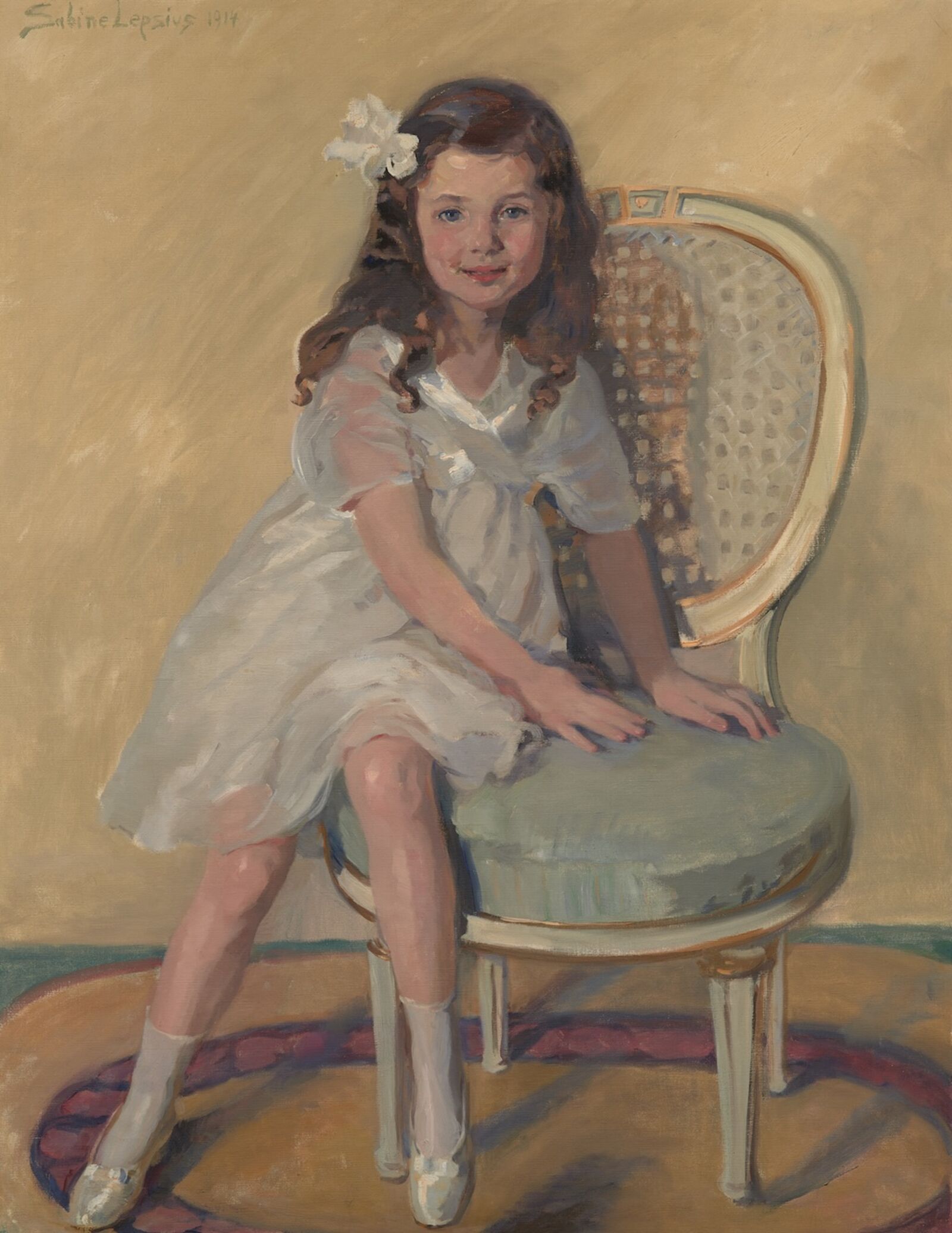
Sabine Lepsius, Girl in a Sunday Dress
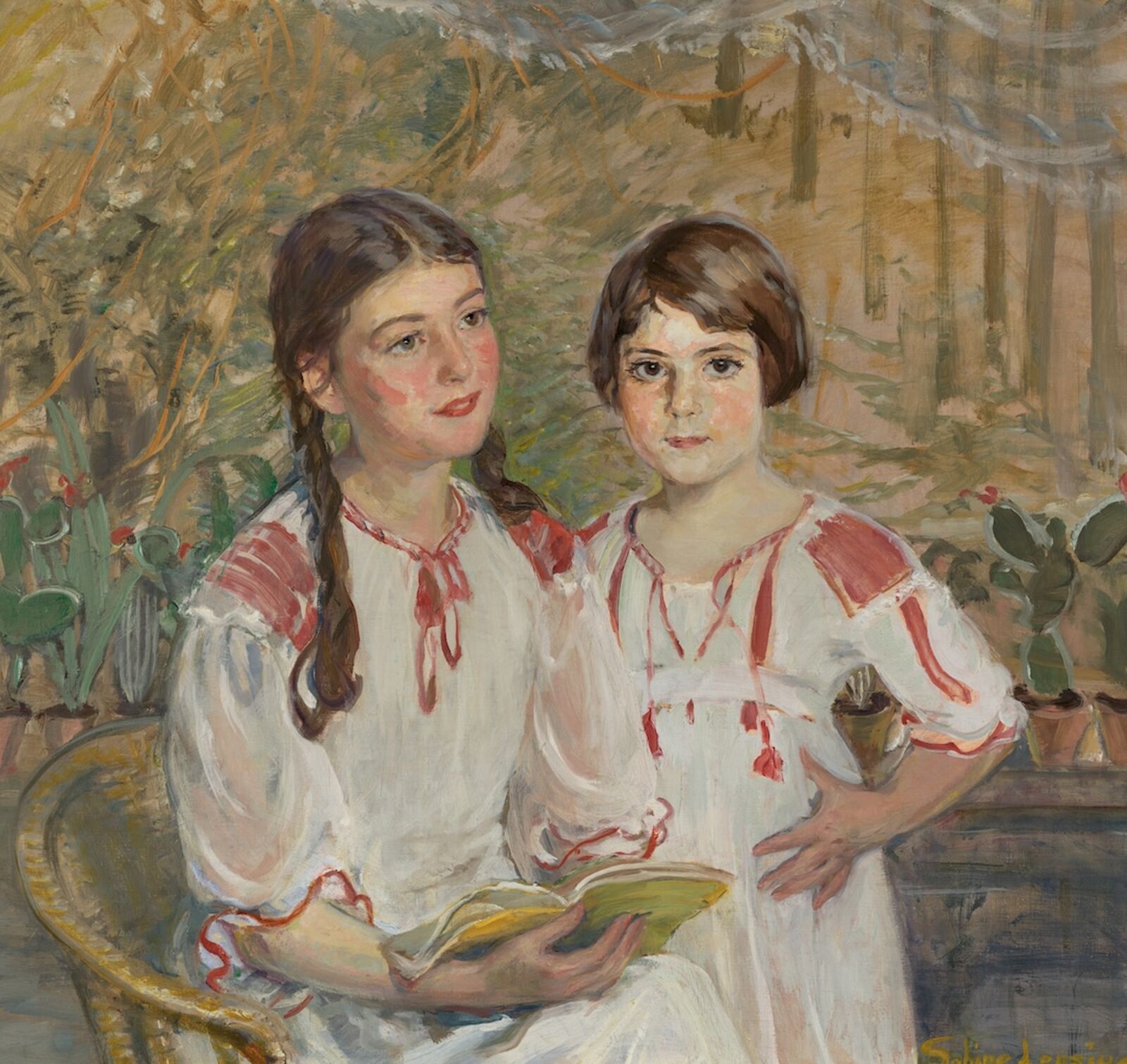
Jüdisches Museum Berlin, Photo: Jens Ziehe
Sabine Lepsius, Double Portrait of the Sisters Cornelia (Born in 1921) and Charlotte Hahn (Born in 1926)1932
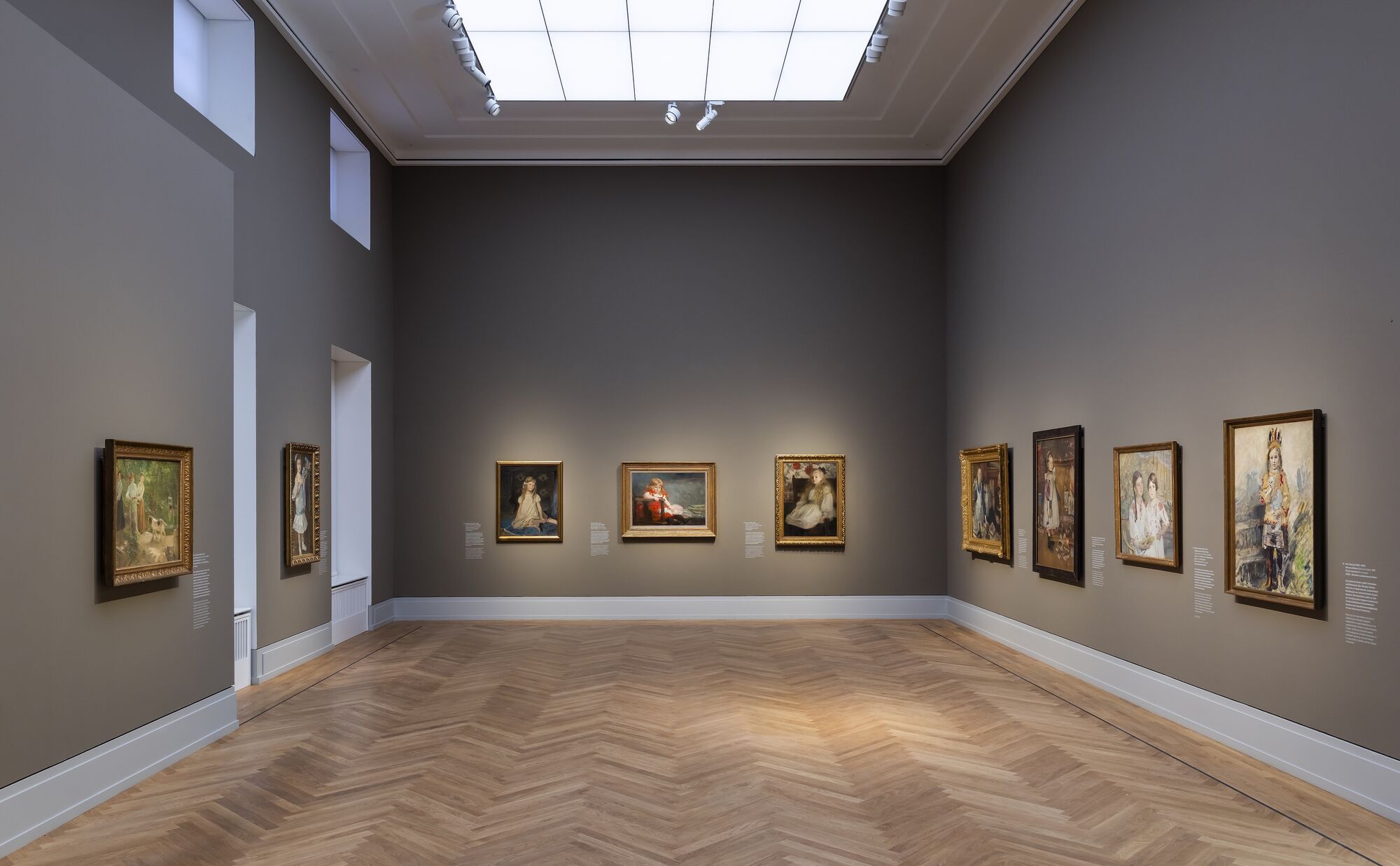
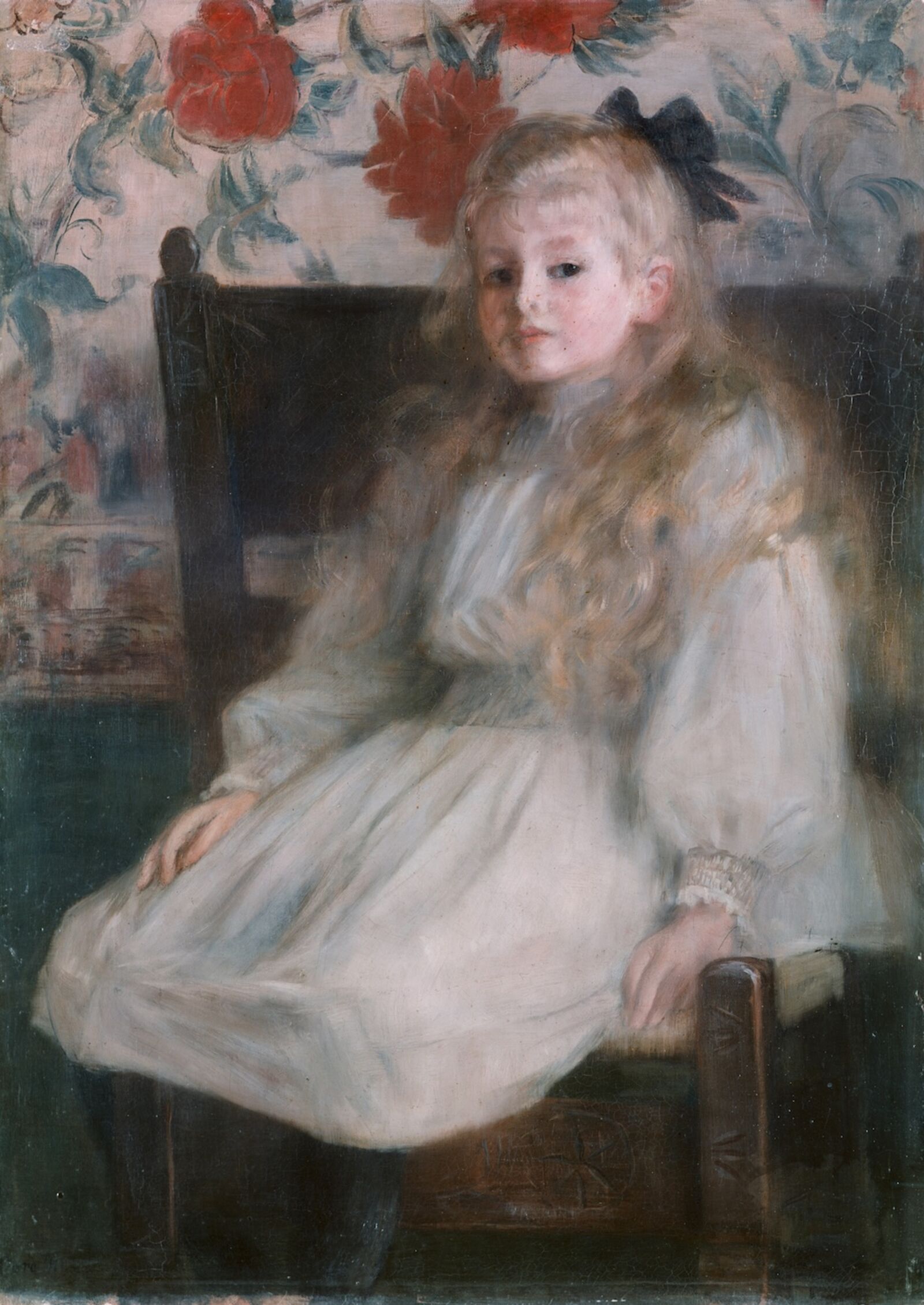
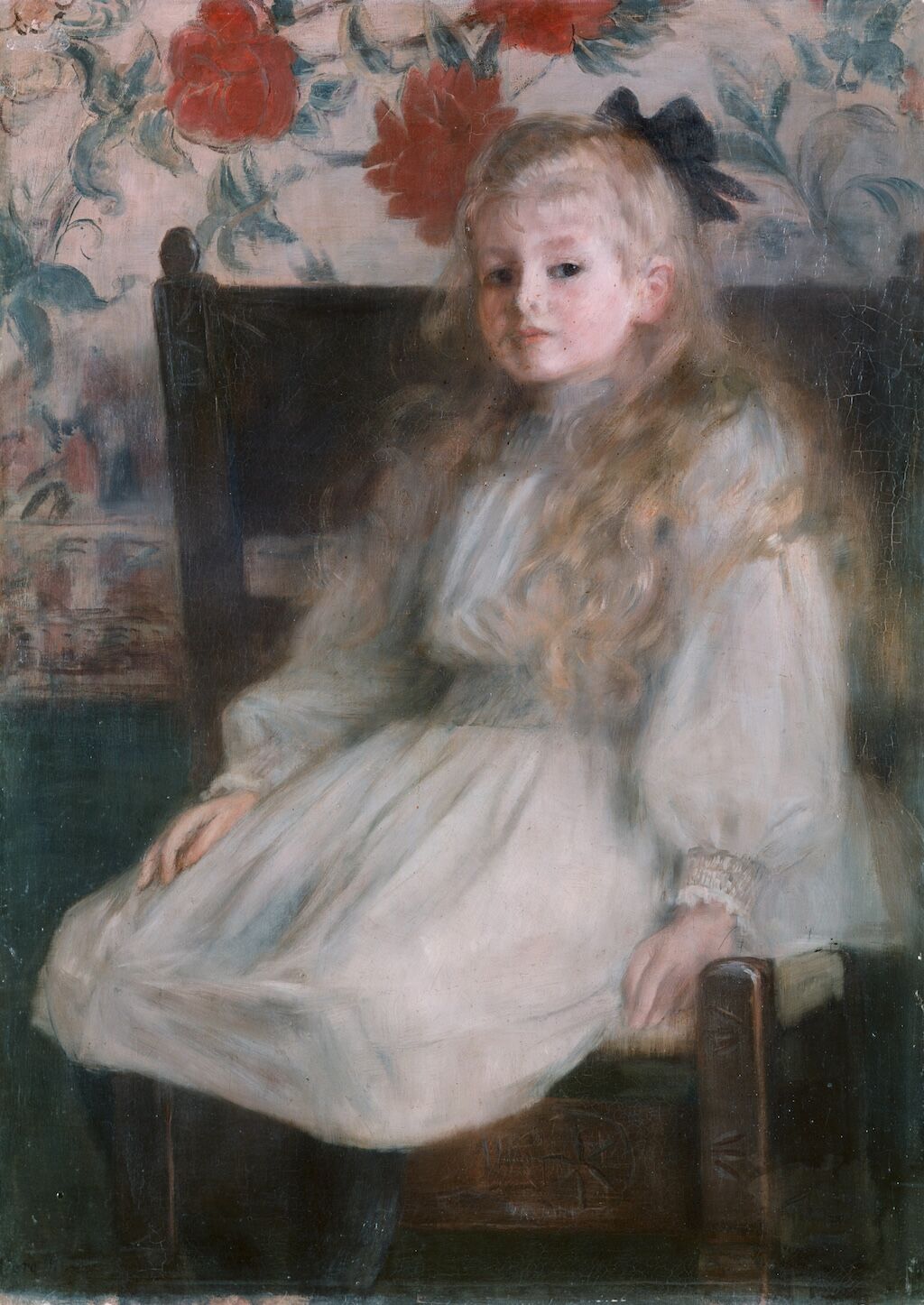
Sabine Lepsius’s Portrait of a Child: at nearly 140 centimeters in height, an imposing format for this little bourgeois girl. It speaks volumes about the changing sense of what was considered worthy of depiction in the German bourgeois society of the Gründerzeit. After all, two hundred years earlier, Diego Velázquez had painted his aristocratic princesses—the Infantas—at hardly a larger scale.
Sabine Lepsius developed a remarkable mastery in capturing the expressions of children in her paintings—while at the same time enlivening the brushwork in an Impressionist manner, open and improvisational.
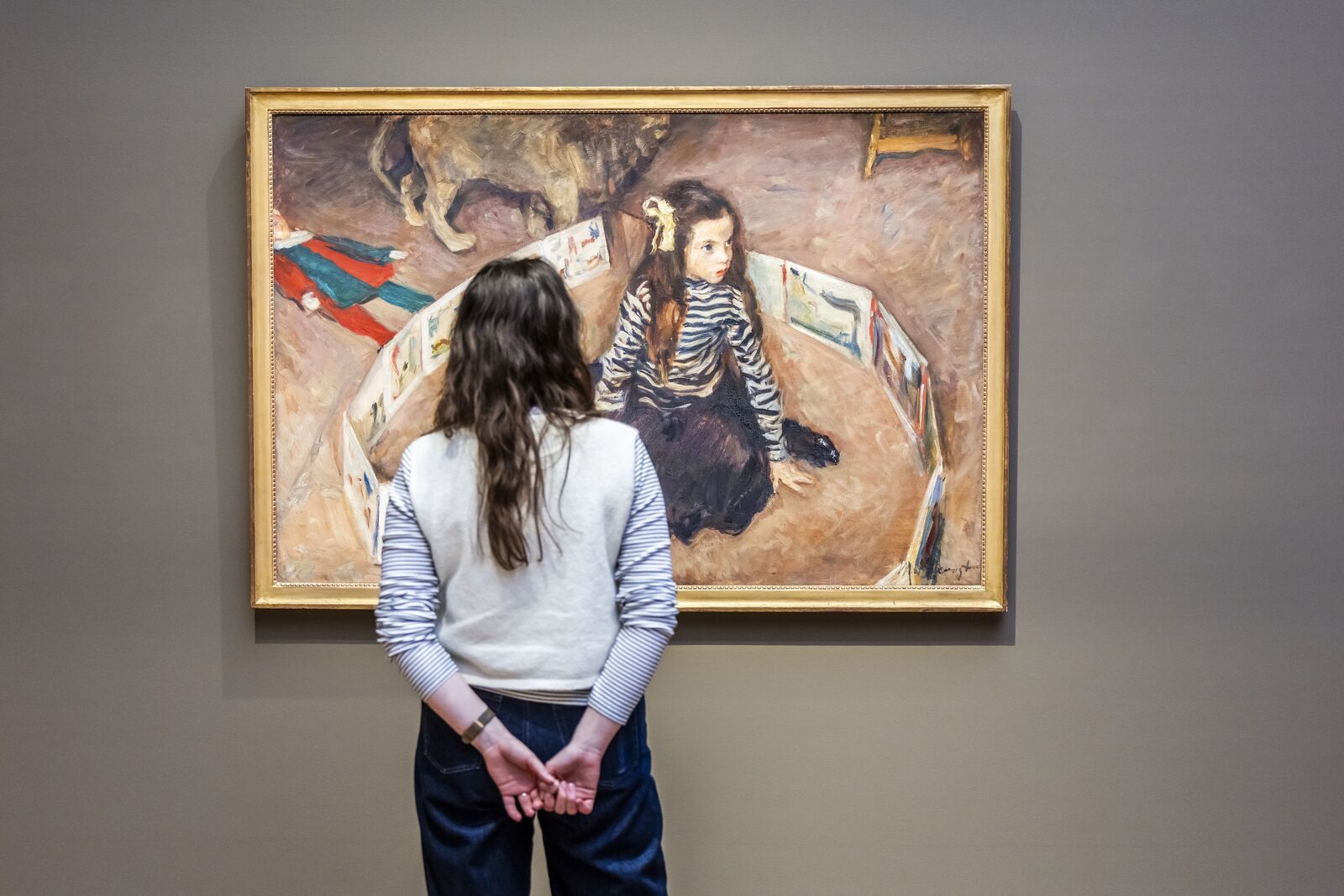
In the Century of the Child, as proclaimed by the evocative book title of the Swedish feminist Ellen Key in 1902, children came to occupy a new place in the world. Paintings show them with toys in their living rooms; children’s leporello picture books become little ring castles—the child creating its own imaginative space. See, for example, the portrait of Suzanne Cassirer by Max Slevogt, the first child of the legendary art dealer Paul Cassirer.rn can be gently ironic, surreal, or even completely abstract.
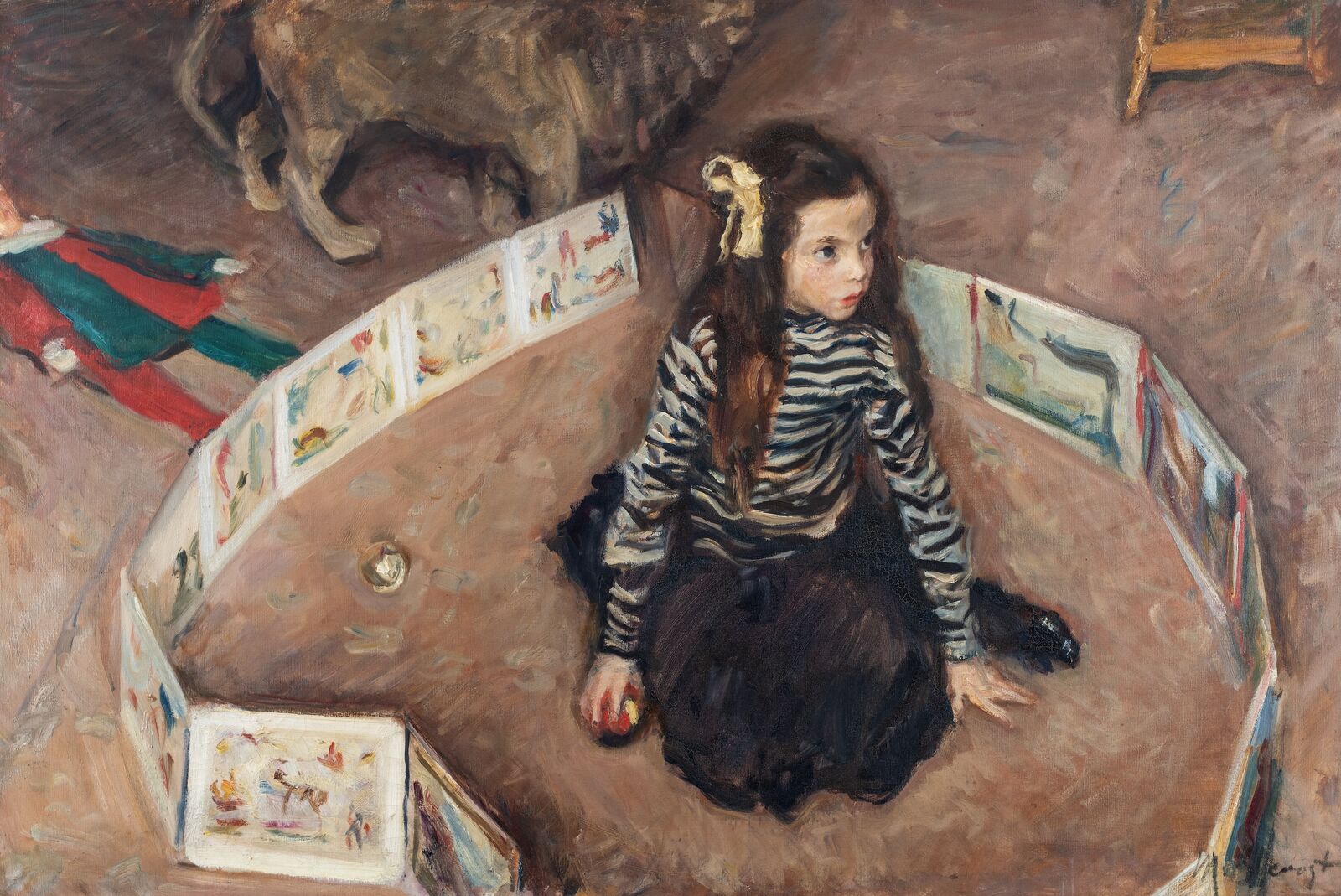
Private collection, photo: Oliver Ziebe
The Child as a Monument of the Avant-Garde: Max Slevogt’s Portrait of Suzanne Aimée Cassirer, 1901
Key’s book was a bestseller in the German Empire. She focused on the bourgeois parent–child relationship, urging a responsible approach to the next generation.
With her critique of corporal punishment and religious instruction, and with her vision against the “murder of the soul,” aiming to transform schools into places of inspiration, Ellen Key inspired both female and male artists alike.
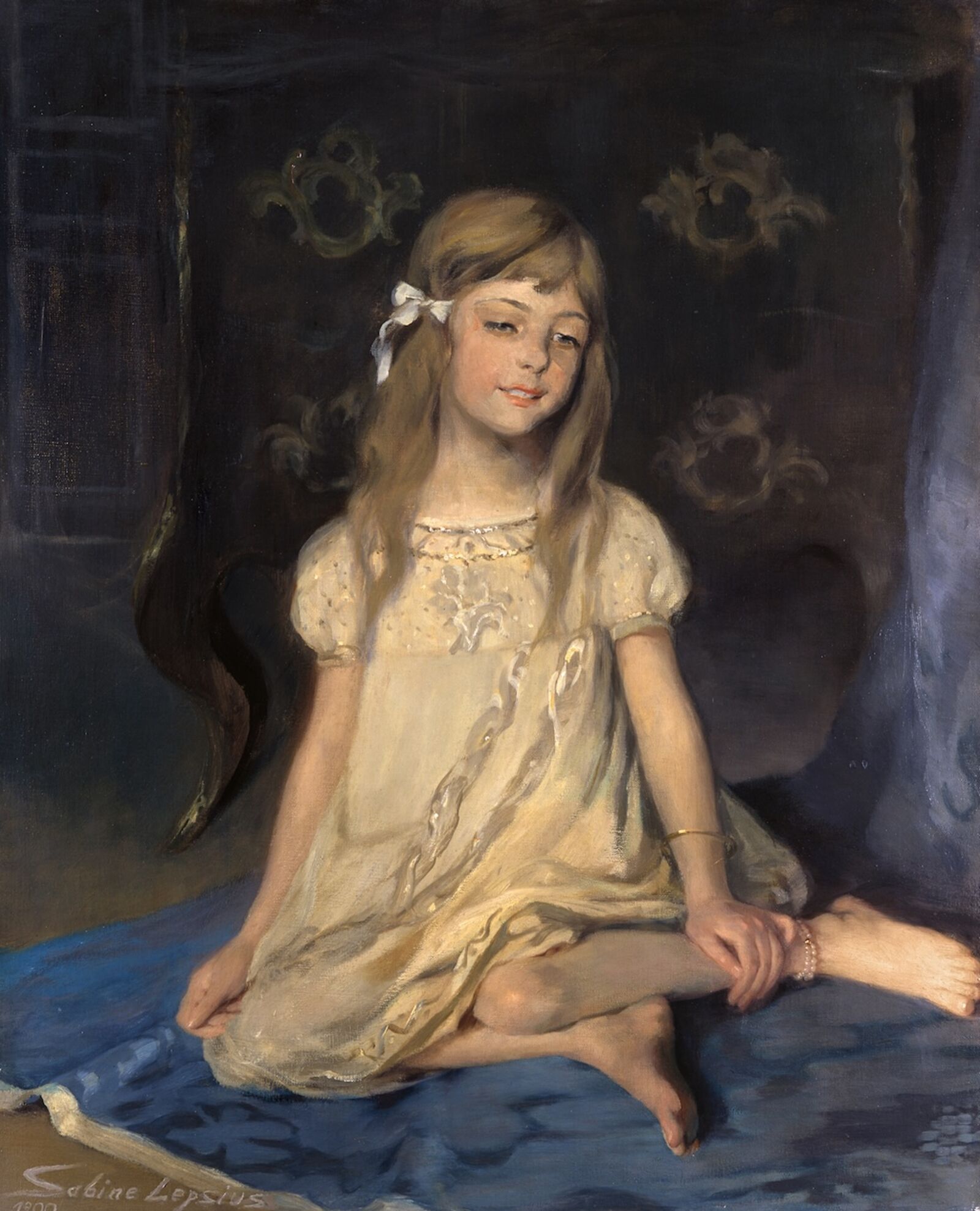
Staatliche Museen zu Berlin, Nationalgalerie, bpk/Nationalgalerie, SMB/Andres Kilger
Sabine Lepsius, Monica, the Artist’s Daughter, 1900
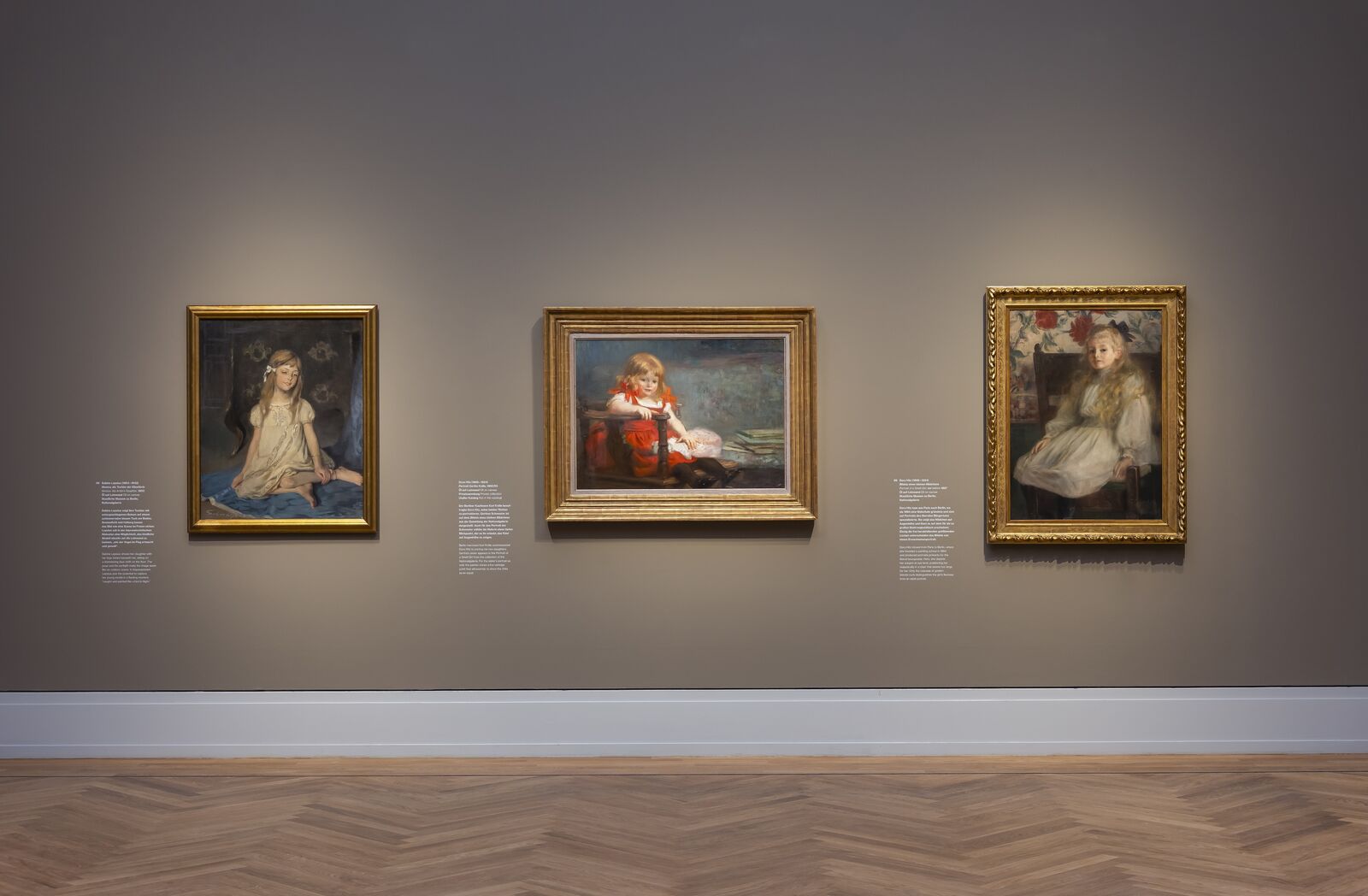
Should our digression on women painters in Impressionism—ranging from children’s portraits to domestic and garden scenes—be included? Well, realistically, this intimate sphere was indeed the living environment of relatively independent women at the time.
Their portraits of children, garden and floral studies, and still lifes continue to captivate today. Yet their work went far beyond these subjects. Although women were barred from formal study, they nonetheless made decisive contributions to the German avant-garde and were represented in major exhibitions of the period.
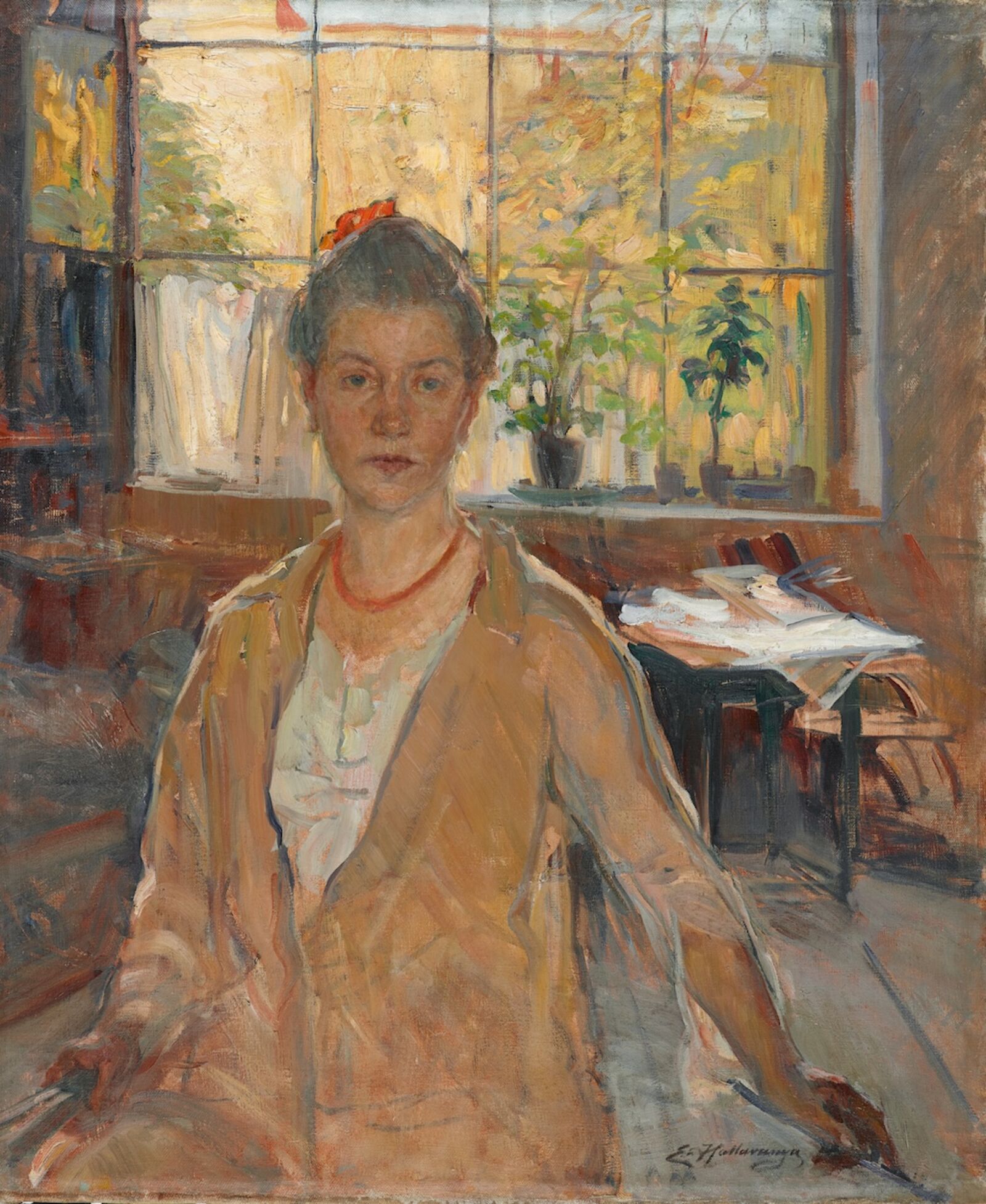
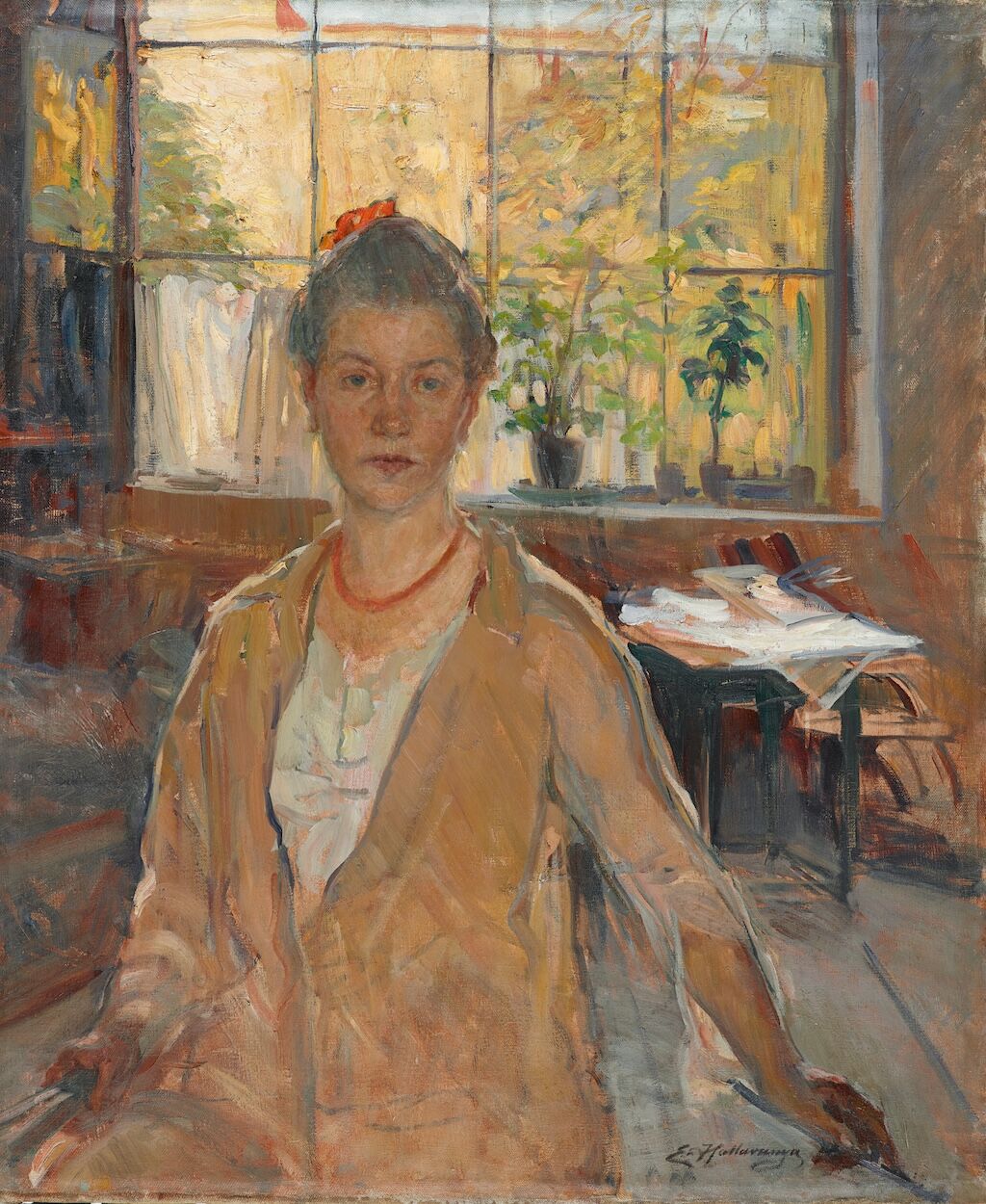
Lepsius was by no means the only accomplished painter of children’s portraits; consider also Dora Hitz, the first court painter of Romania, who settled in Berlin in 1892. Yet works such as Emilie von Hallavanya’s self-portrait or Maria Slavona’s small landscape on wood can hold their own—just as Paula Modersohn-Becker’s contemporaneous paintings in Worpswede do—matching the brilliance and daring of the Parisian avant-garde.
A compelling example of the era’s emerging female emancipation is the art historian Grete Ring, born in 1887. Her mother was the sister-in-law of Max Liebermann. Beginning in the 1920s, Ring rose to become arguably the most influential gallerist in Germany, directing the Kunstsalon Cassirer together with Walter Feilchenfeldt.
Ring was an exceptional figure in whom a profound understanding of both historical and contemporary art was combined with remarkable commercial acumen. She also represents a quintessential example of the impact of Liebermann’s first German avant-garde. For this movement broadened horizons—toward France, toward Europe more broadly, and toward new aesthetic techniques. ✨
“The nineteenth century, more than any other, was obsessed with dwelling. It conceived of the home as the human being’s protective case.”
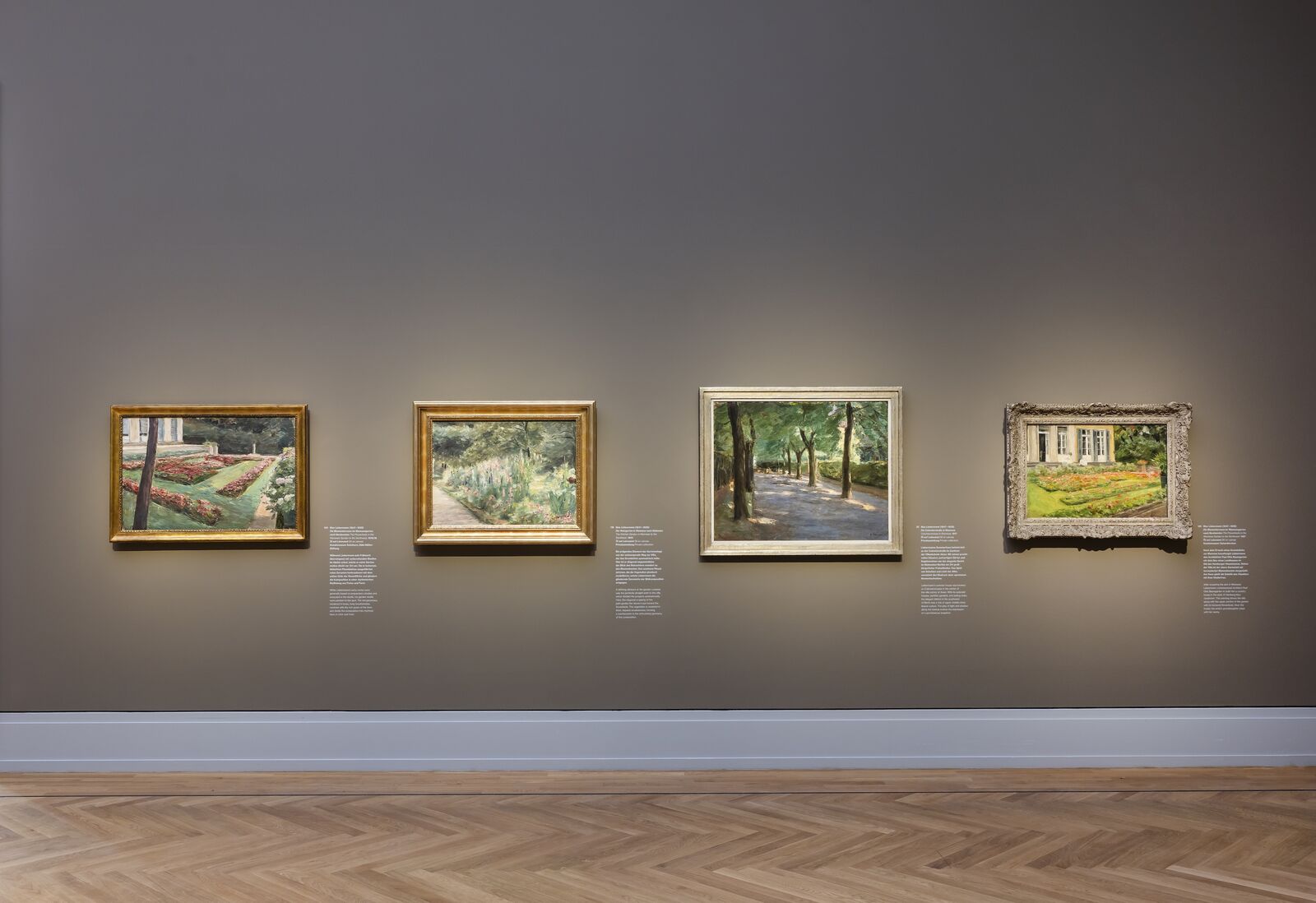
In his unfinished The Arcades Project, the philosopher Walter Benjamin described the nineteenth century as “obsessed with dwelling.” The rapid ascent of the bourgeoisie fostered an intensified focus on the private sphere—on the home and its garden as the center of bourgeois life.
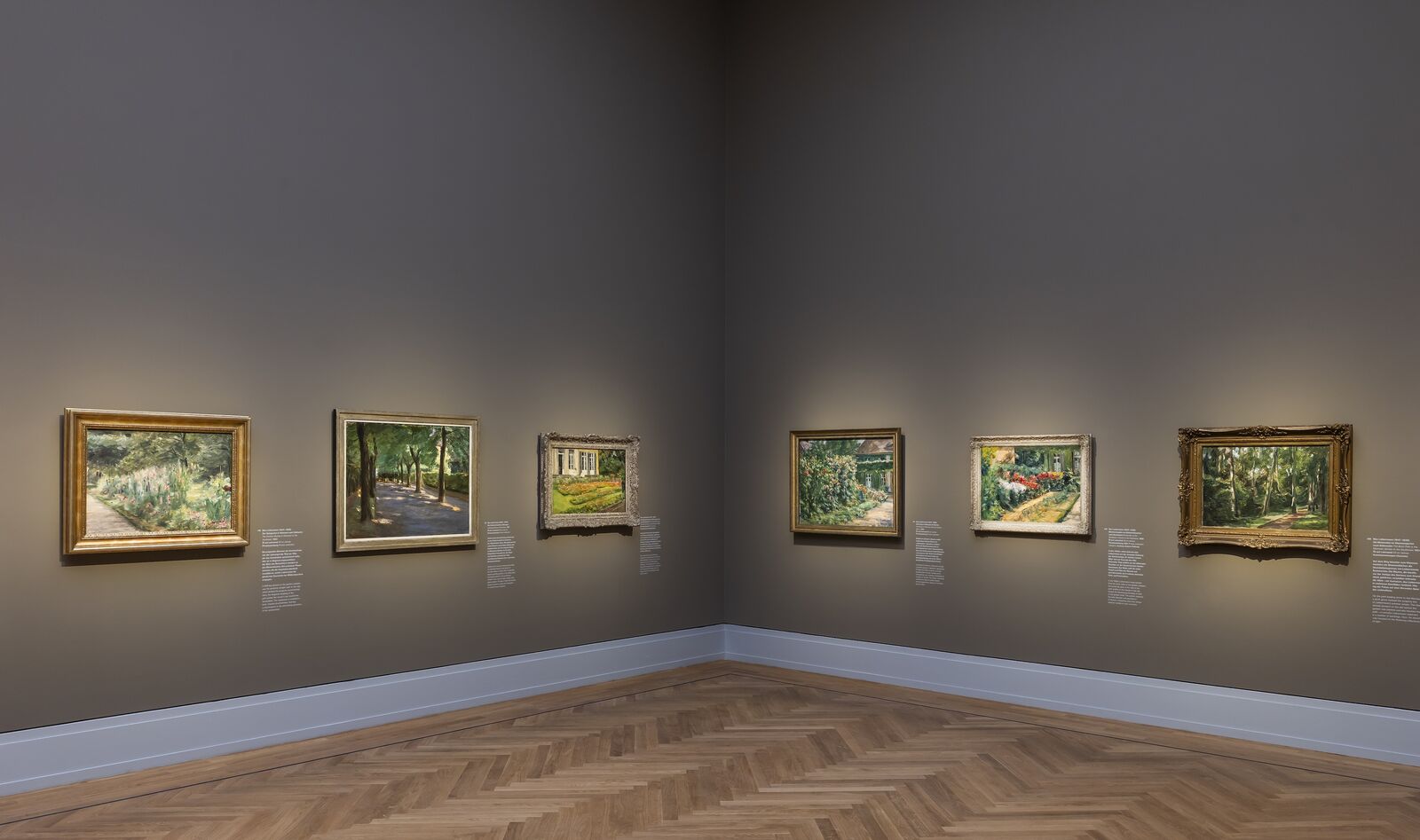
These bourgeois homes—first discovered by the French Impressionists and soon followed by their German counterparts—became the principal sites of the new art. The everyday lives of the artists themselves, members of the bourgeoisie, likewise came to be considered worthy subjects of representation. One need only look to the villa of Max Liebermann at Liebermann Villa am Wannsee: from the house and its adjoining reform garden—developed together with Alfred Lichtwark—approximately two hundred paintings survive.
Private Collection
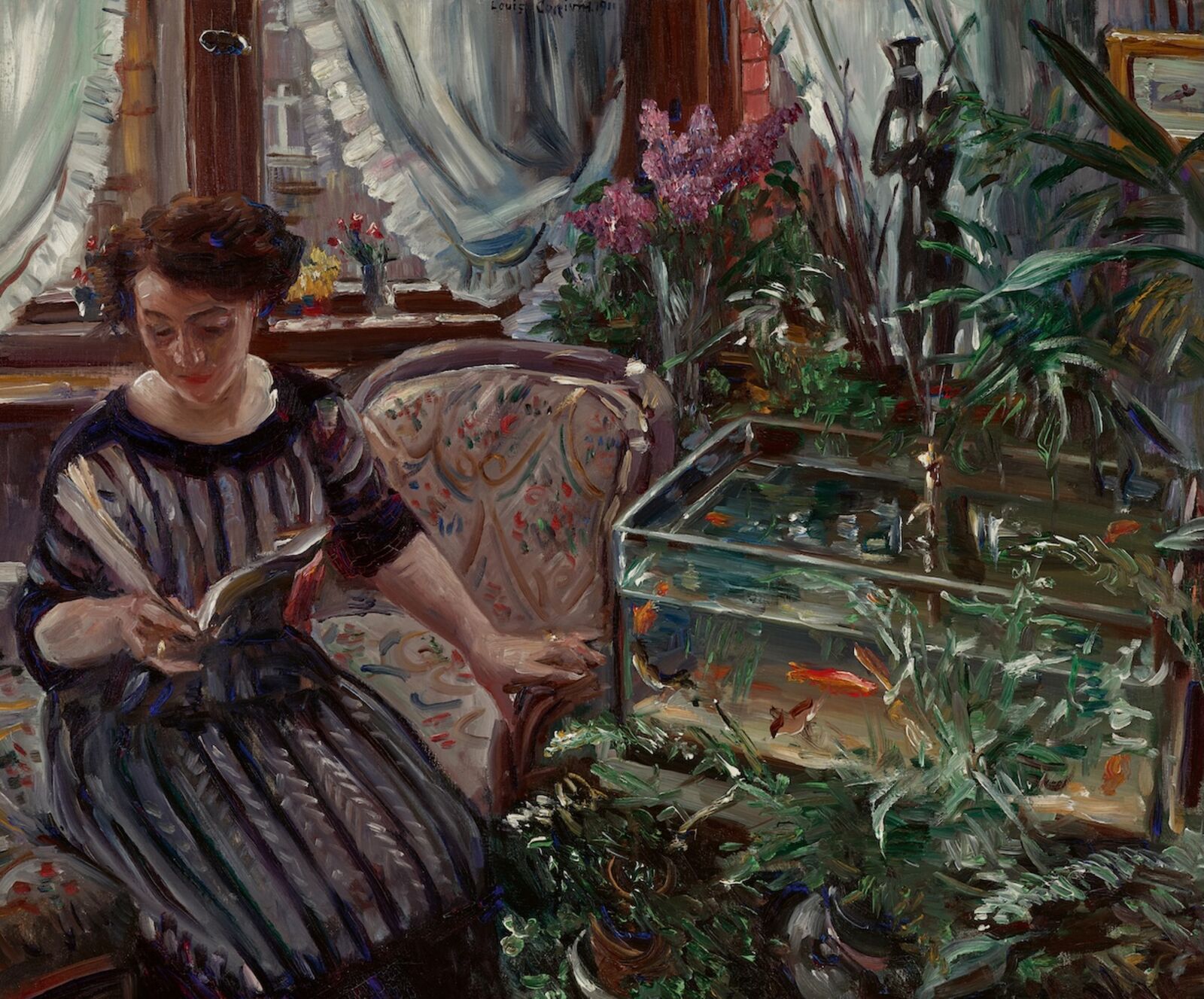
Scenes of private domestic happiness played a central role in the work of Lovis Corinth. In 1904 he married his student Charlotte Berend-Corinth, who frequently served as his model. During a four-day painting session in 1911 he created the interior Lady by the Goldfish Basin: Charlotte seated in a bay window adorned with lush green plants, absorbed in reading. The entire interior is animated by a playful, shimmering light.
Belvedere, Vienna/Johannes Stoll
Lovis Corinth, Woman at the Goldfish Tank, 1911
Scenes of private family happiness played a prominent role in the work of Lovis Corinth. In 1904, he married his student Charlotte Berend-Corinth, who frequently served as his model. During a four-day painting session in 1911, he created the interior Lady by the Goldfish Basin: Charlotte seated in a bay window adorned with lush green plants, absorbed in reading. The entire interior is enlivened by a playful, shimmering light.
Hessisches Landesmuseum Darmstadt, photo: Wolfgang Fuhrmannek
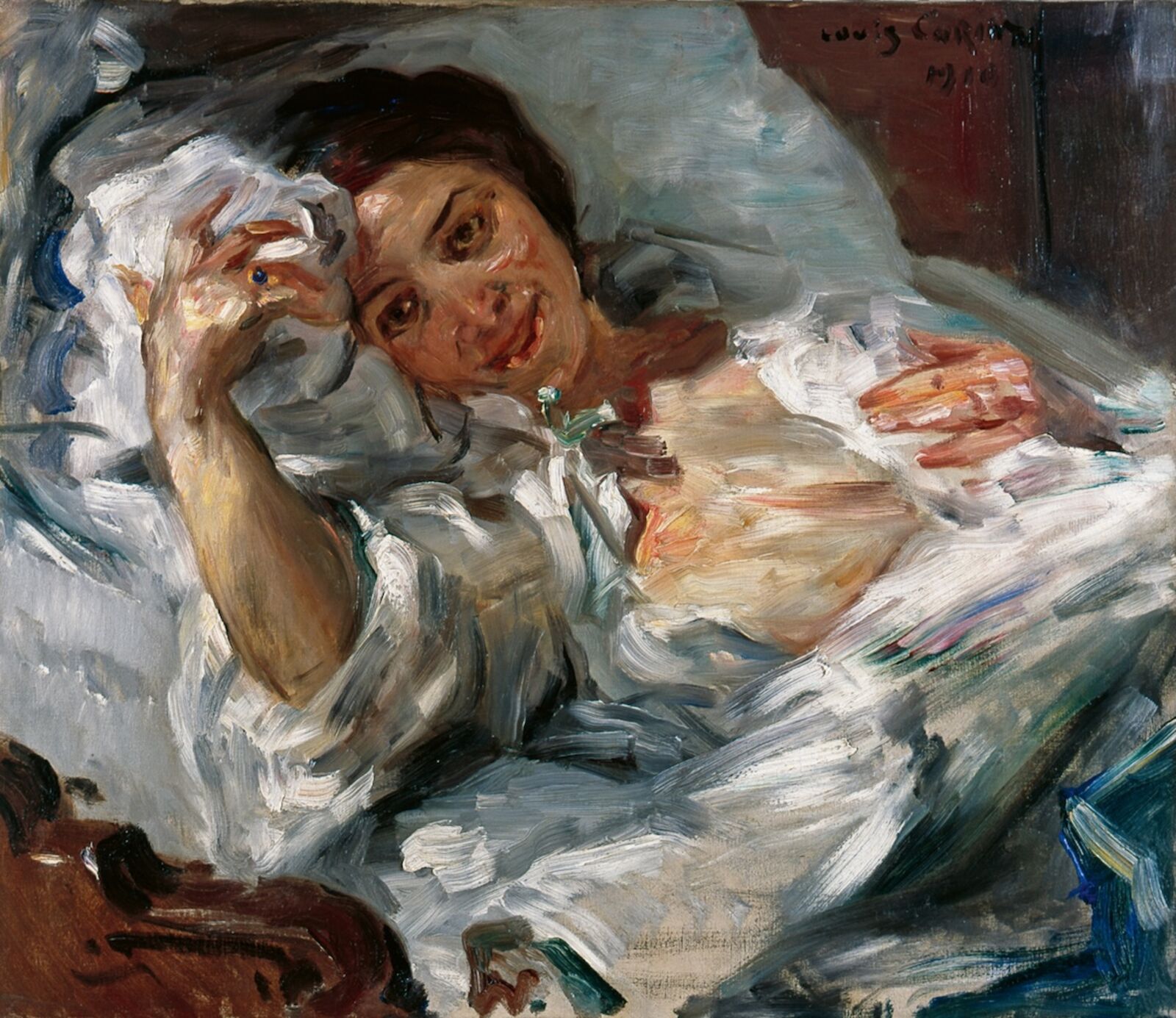
Lovis Corinth, Morning Sun, 1910
In Corinth’s marital idyll Morning Sun, Charlotte smiles at us, reclining in the morning light. If love could be translated into brushstrokes, it is here—in the radiant countenance of the woman portrayed. The painting preserves the intimate presence of its subject.
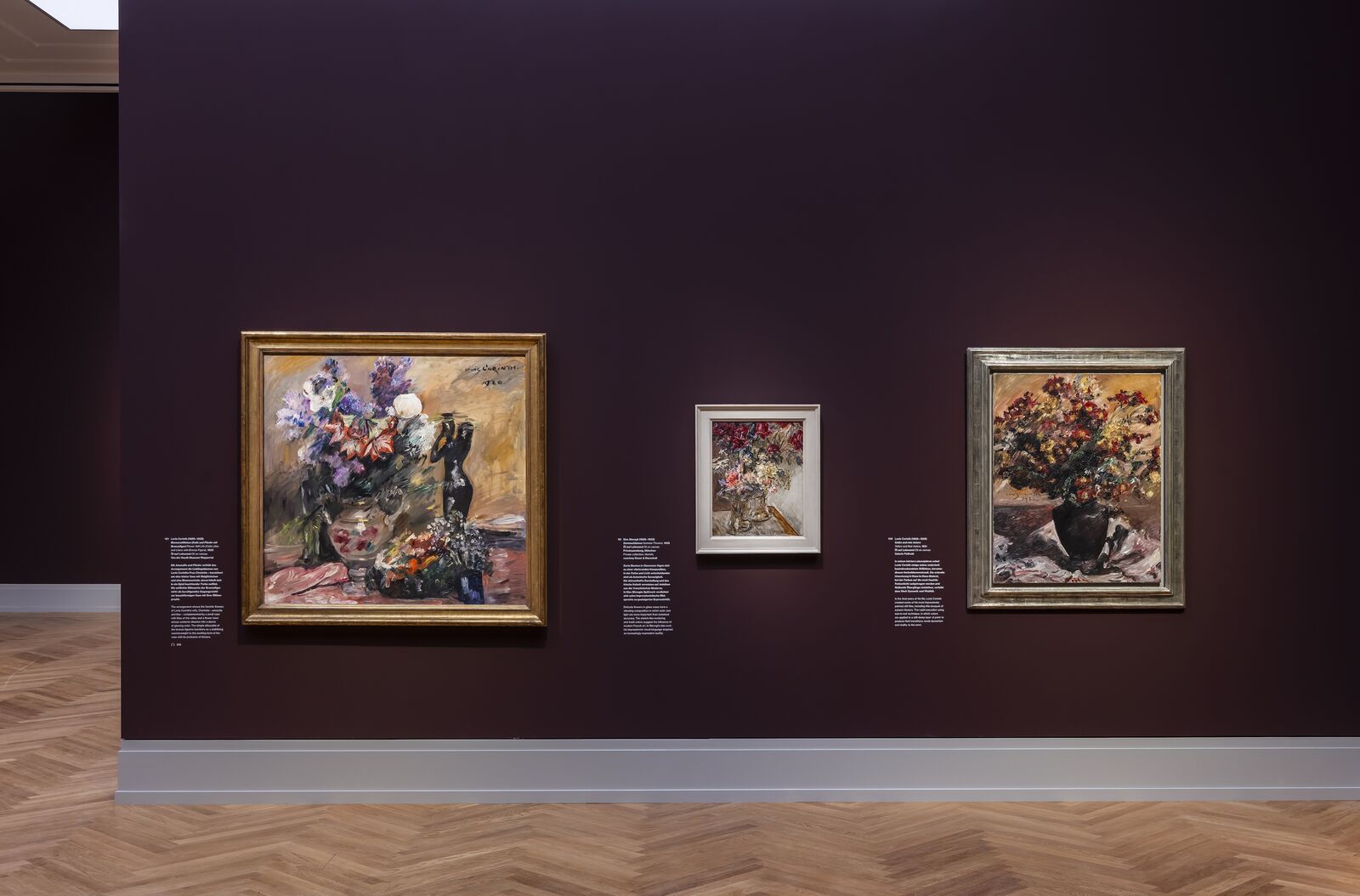
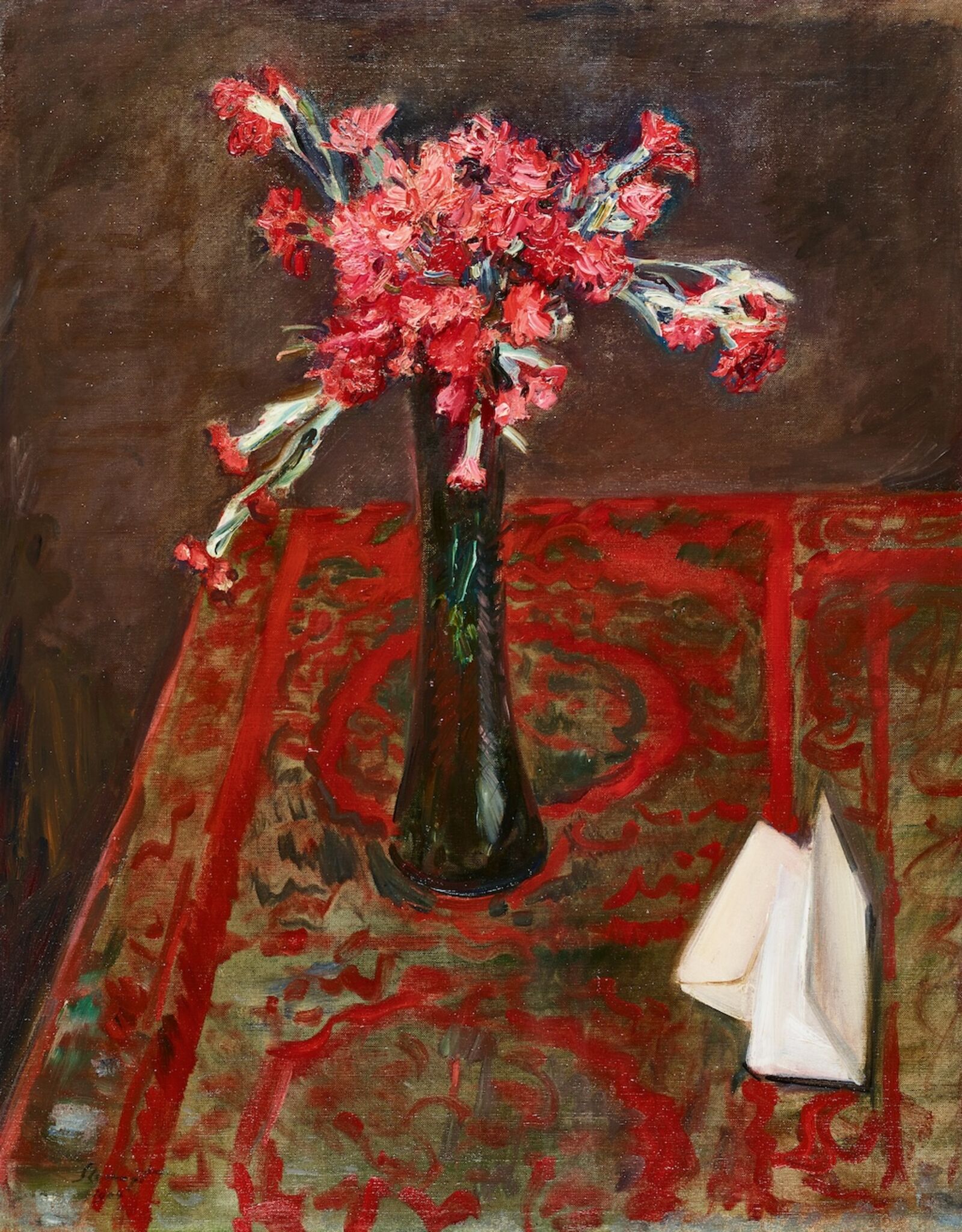
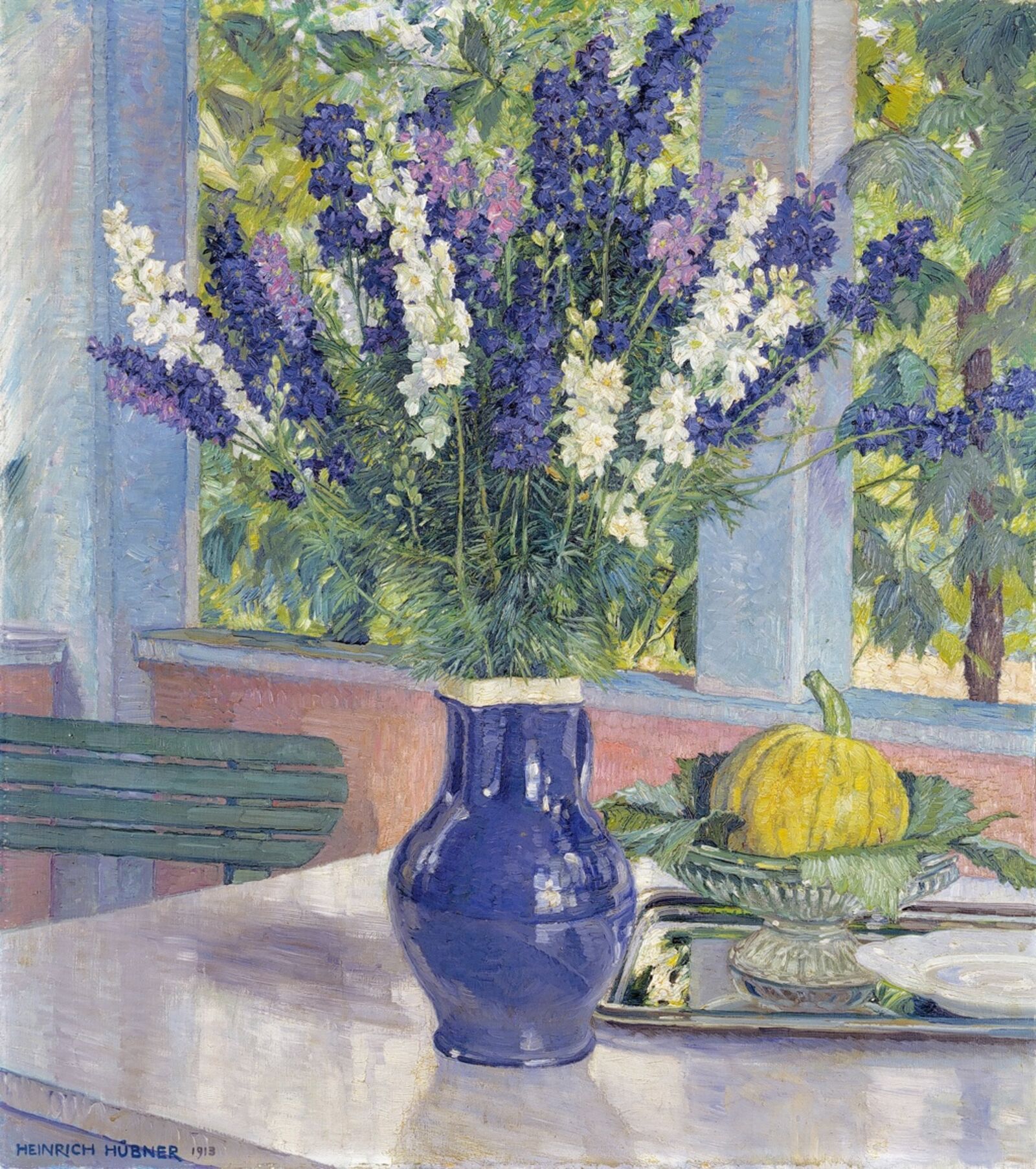
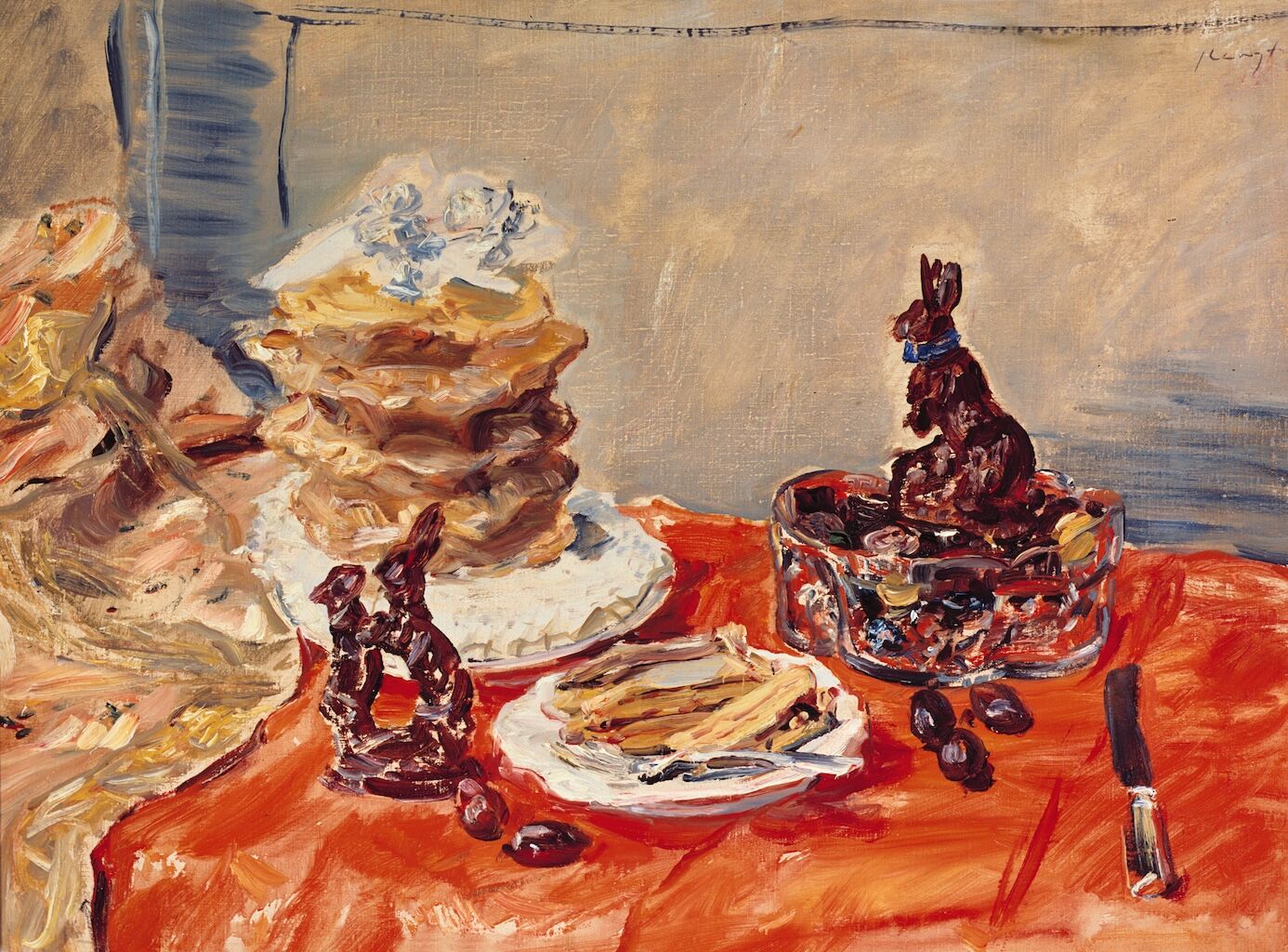
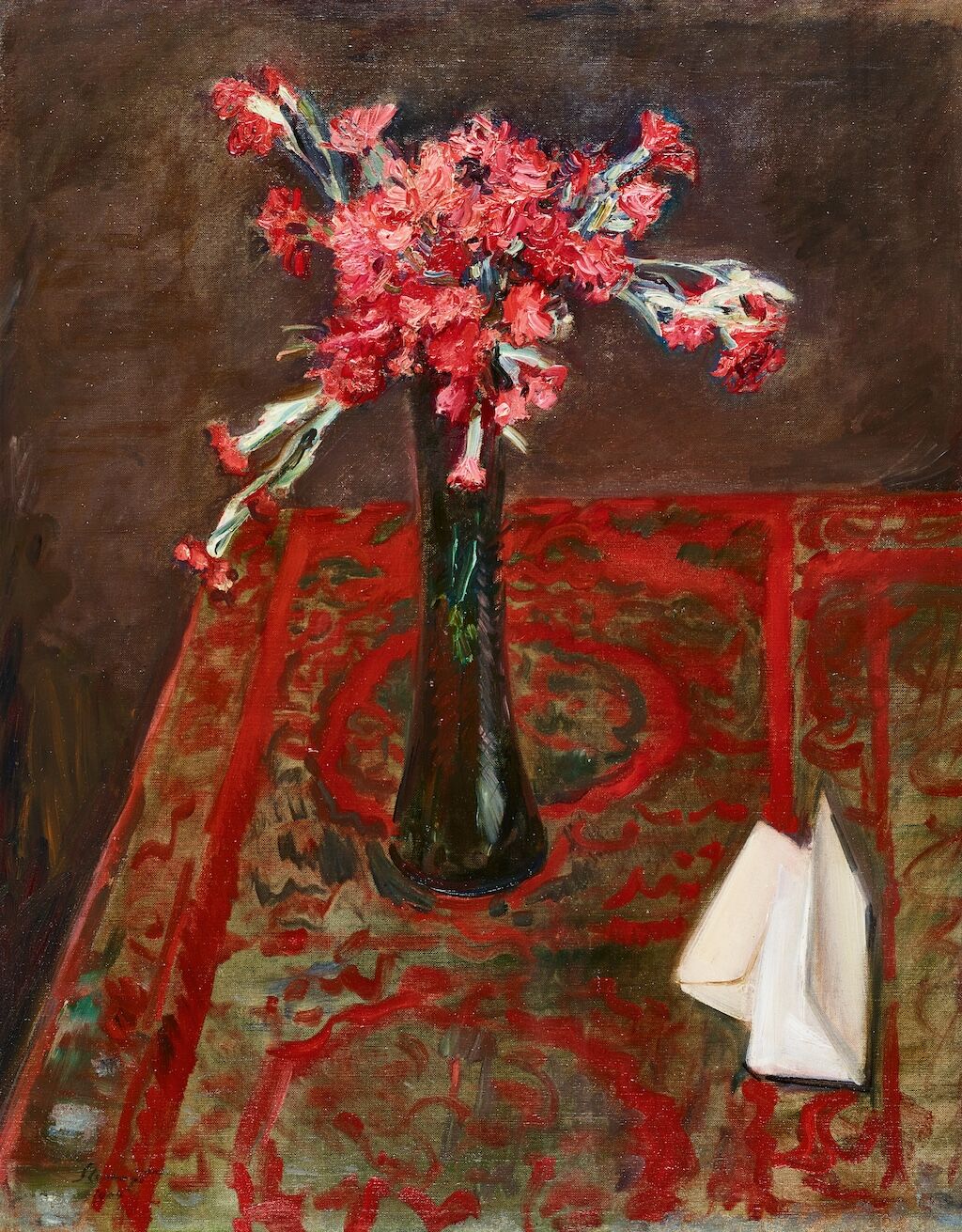
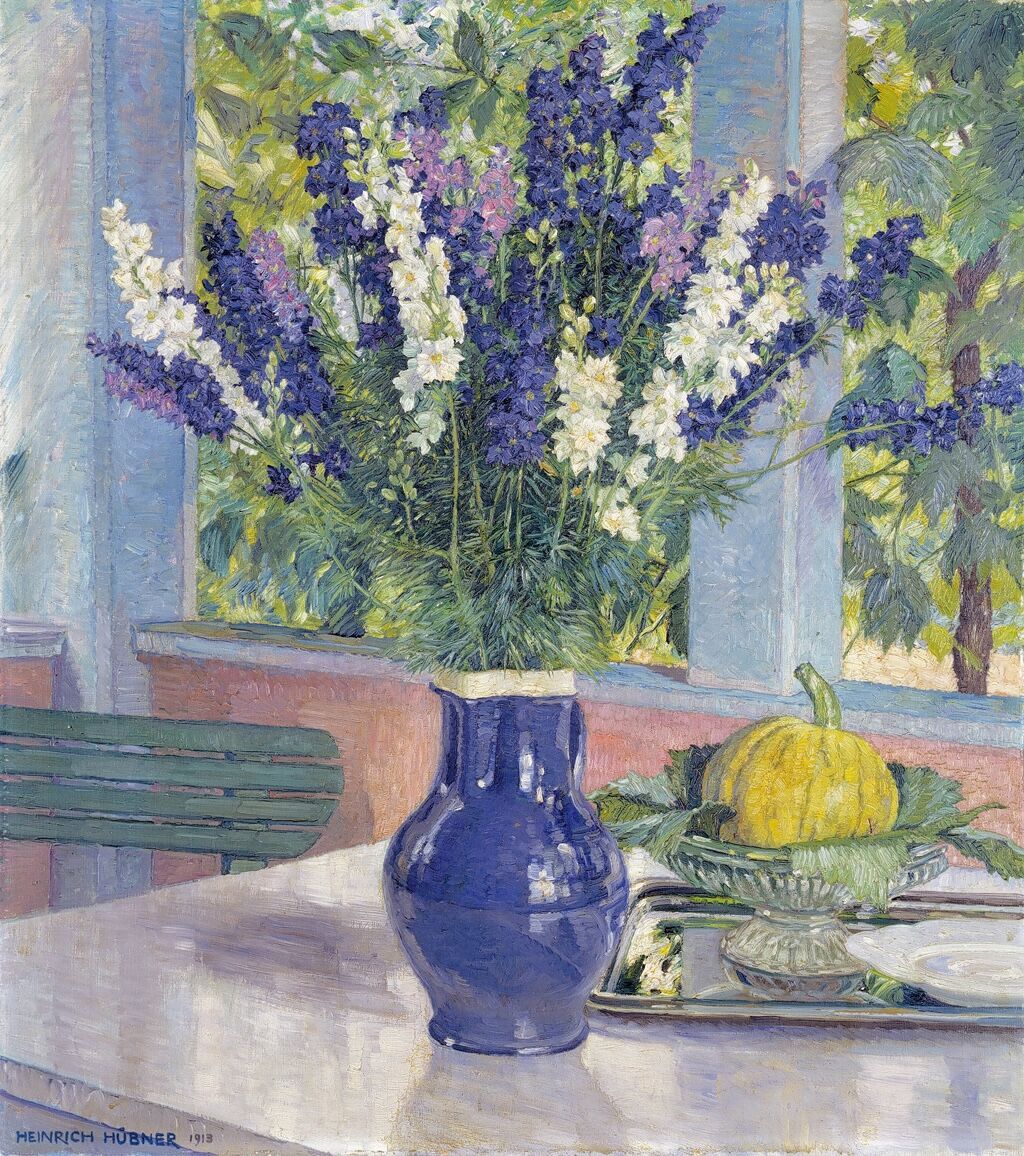
The liberation of color is particularly evident in the Impressionist reinterpretation of the still life—a genre originally imbued with symbolic-Christian meaning and established by the Dutch in the seventeenth century. Yet the avant-garde transformed it into a playground: Corinth’s wildly painted chocolate rabbits, Max Slevogt’s vividly red carnations, Slavona’s joyful arrangements. Even in these years, however, color could retain a classical elegance, as seen in Heinrich Hübner’s charming bouquet.
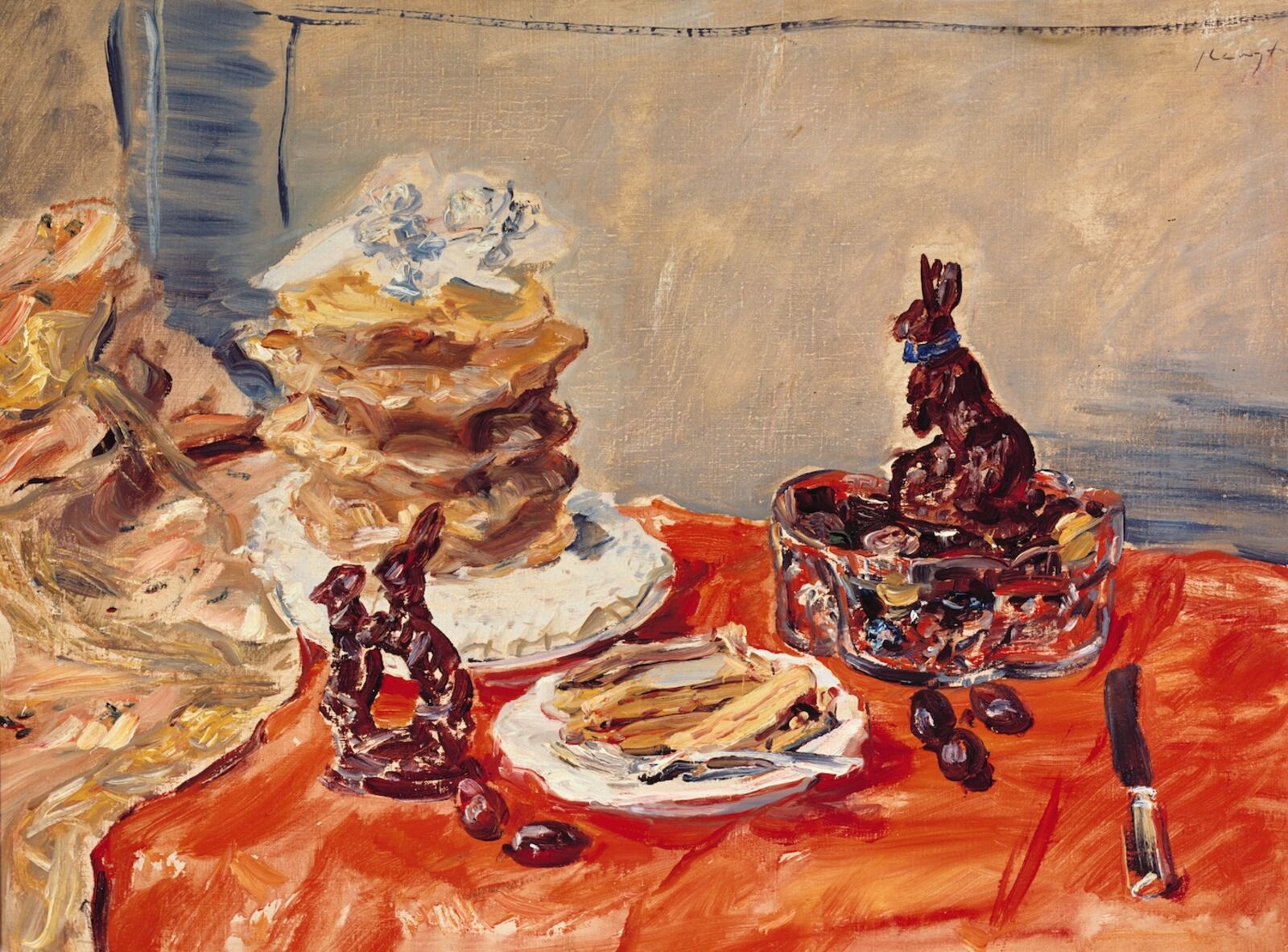
Max Slevogt, Still Life with Chocolate Rabbits, 1923
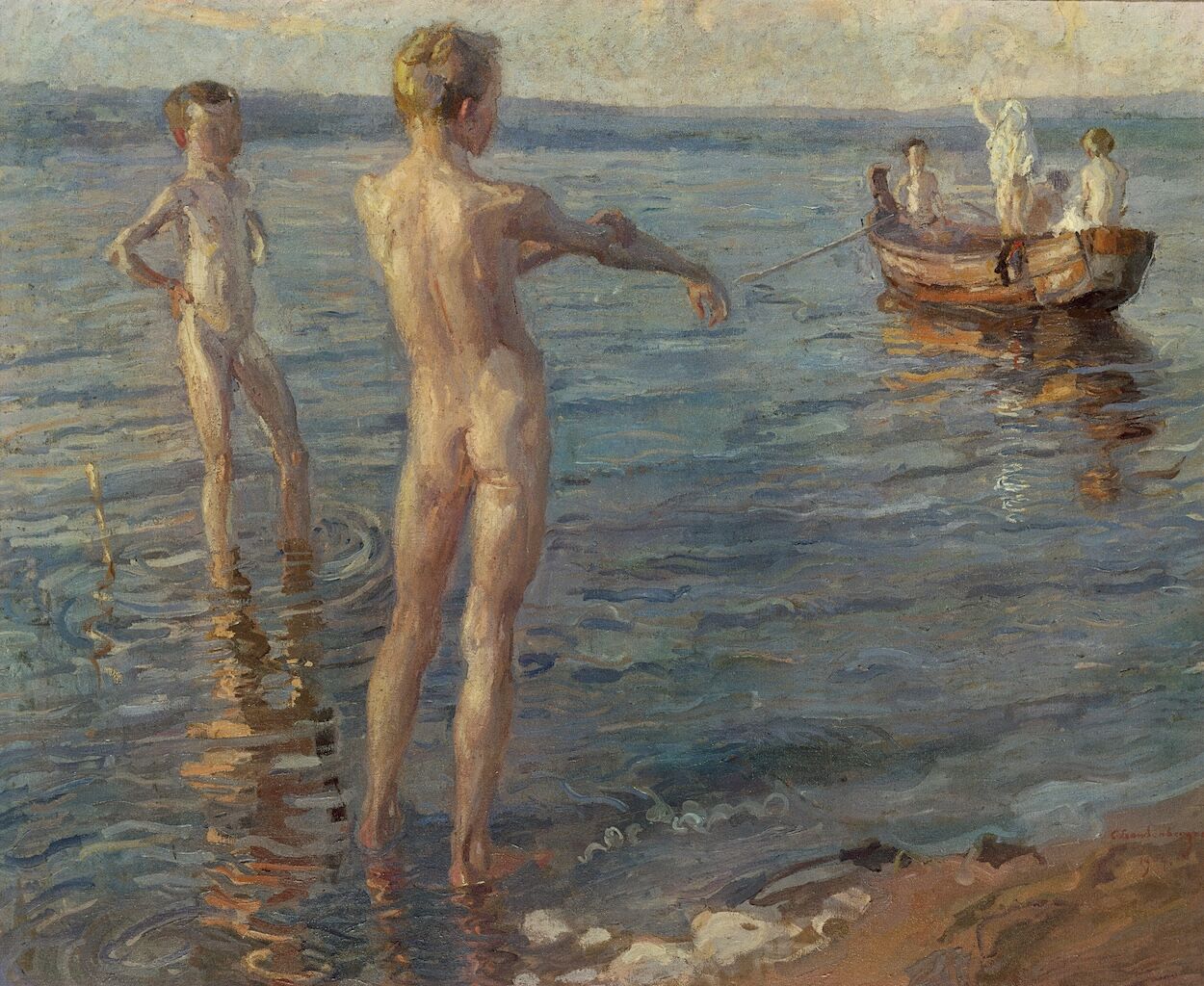
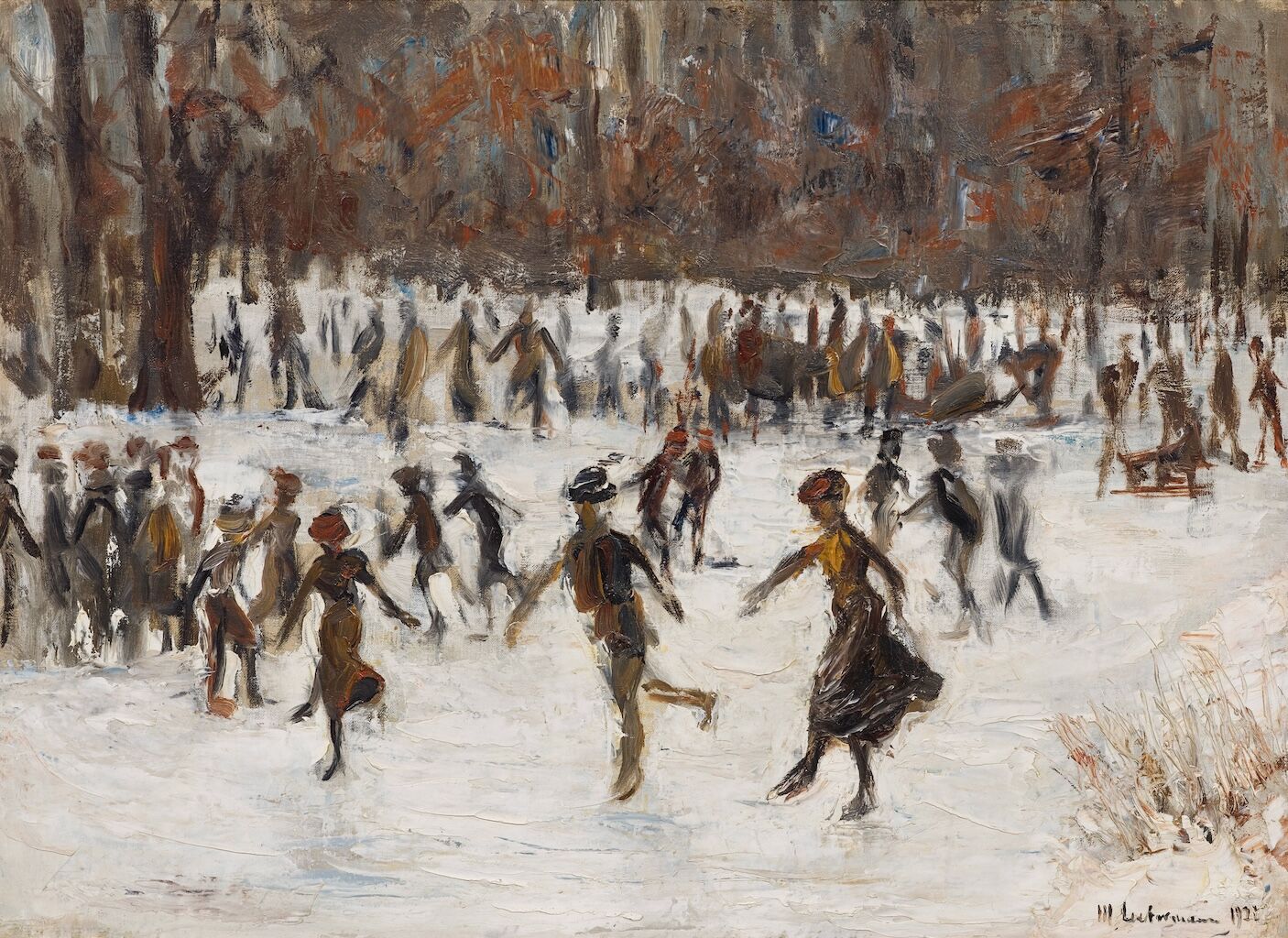
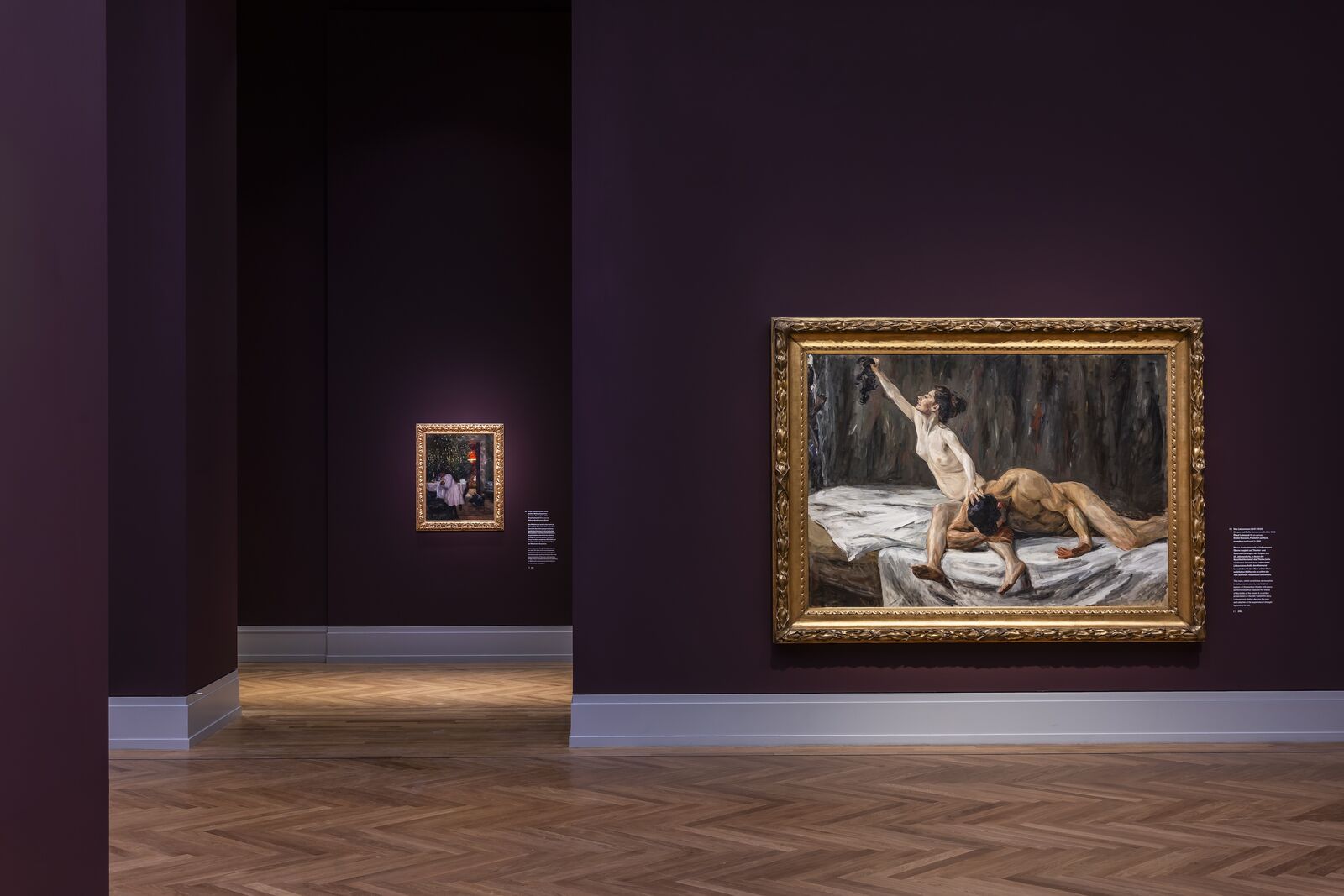
The motif of Max Slevogt’s Abduction of a Woman appears almost traditional—one might think of Peter Paul Rubens’s The Rape of the Sabine Women. Yet Slevogt ultimately approaches the subject quite differently: his female figure seems less defenseless than faintly amused, while the straining man appears almost a little ridiculous.
What is striking is the almost two-meter force of the composition. All the more so since the background of this burlesque—set within a palm house—is rendered in only a few energetic brushstrokes, indeed veritable slashes of the brush. Max Slevogt was a man of the theater, working among other projects for the Kammerspiele Berlin of Max Reinhardt in Berlin. One senses that his painting would still command attention from the very last row of a stage.
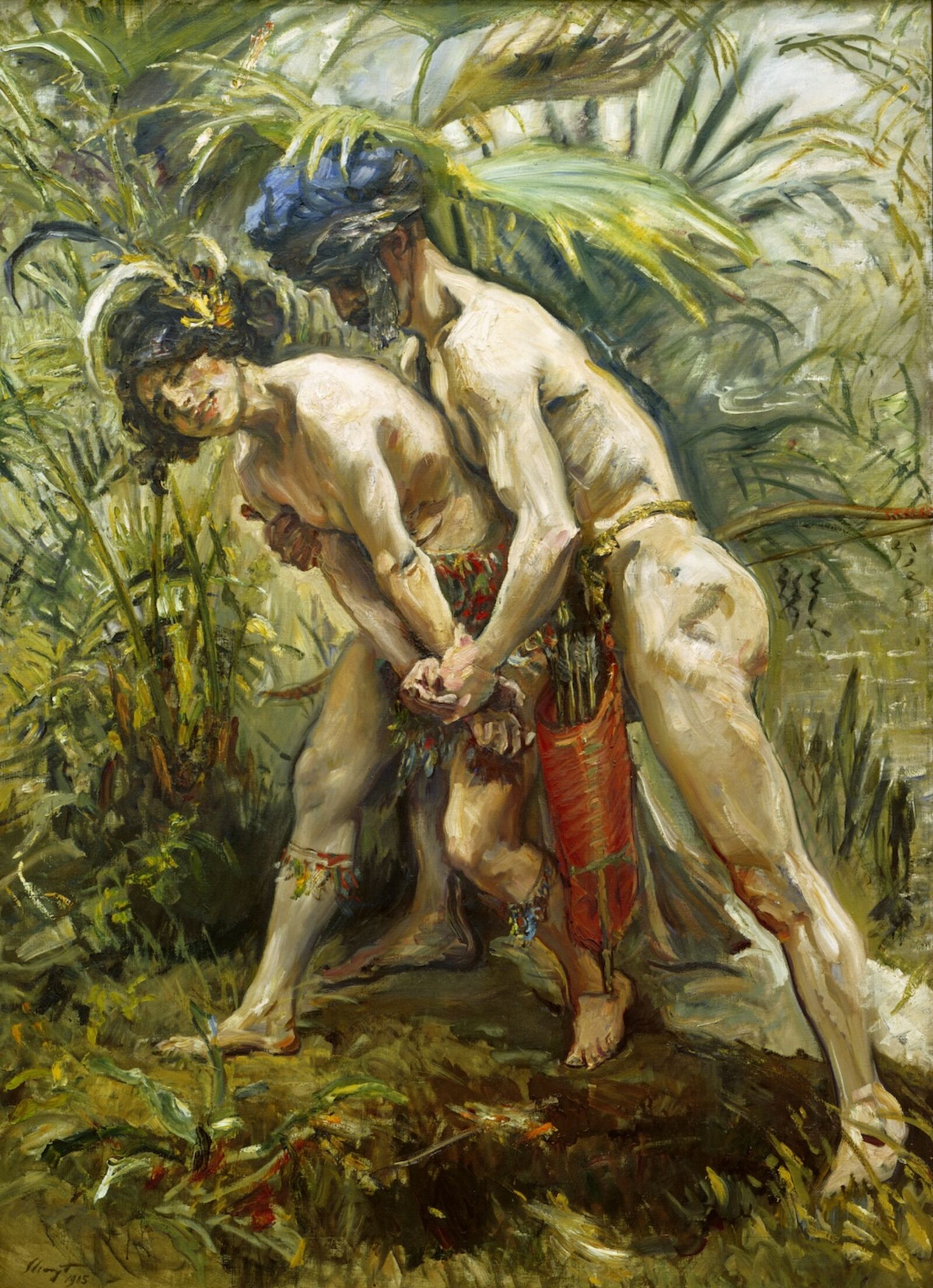
Niedersächsisches Landesmuseum Hannover, Landesmuseum Hannover/ARTOTHEK
Max Slevogt, Abduction of a Woman, 1905
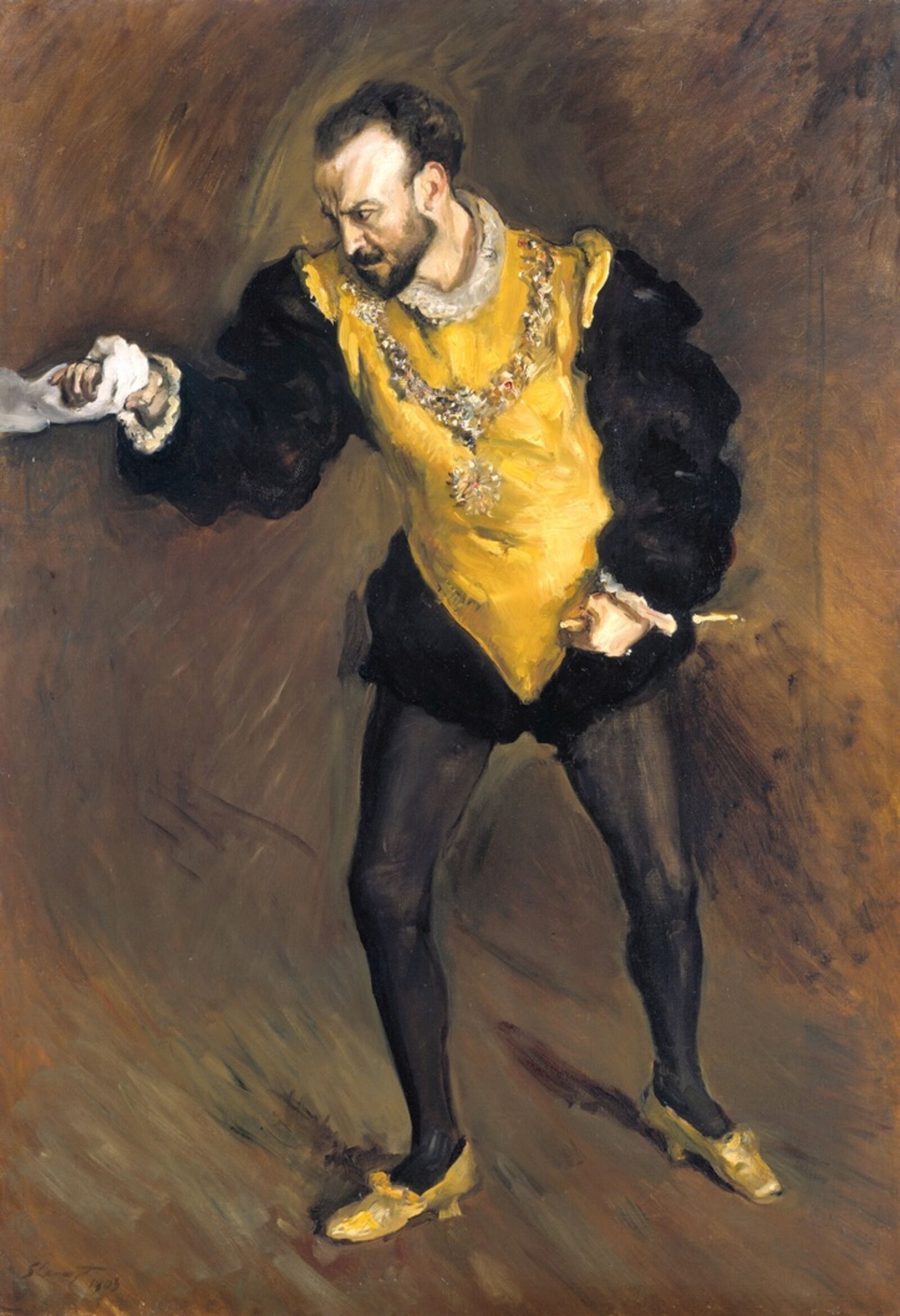
Hamburger Kunsthalle, bpk/Elke Walford
Max Slevogt, The Black d’Andrade, 1903
The theater—shaped in part by innovators such as Anton Chekhov and Henrik Ibsen—served at the time as a central arena of bourgeois self-representation. Film had already been invented, yet the age of cinema was still to come. In The Black d’Andrade, Max Slevogt depicts the final scene of Don Giovanni, in which Don Giovanni extends his hand to the stone spirit—clad in a brightly glowing yellow doublet. “d’Andrade” was the name of the celebrated opera singer Francisco d'Andrade.
Lovis Corinth had already begun exploring themes of the battle between the sexes in the 1890s. The biblical story of Salome—who demands the head of John the Baptist—became an emblem of the perceived threat posed by female sexuality. The motif gained further prominence through the play Salome by Oscar Wilde and the opera Salome by Richard Strauss. Corinth, in turn, rendered the subject with remarkable affinity, for instance in a version painted in 1903.
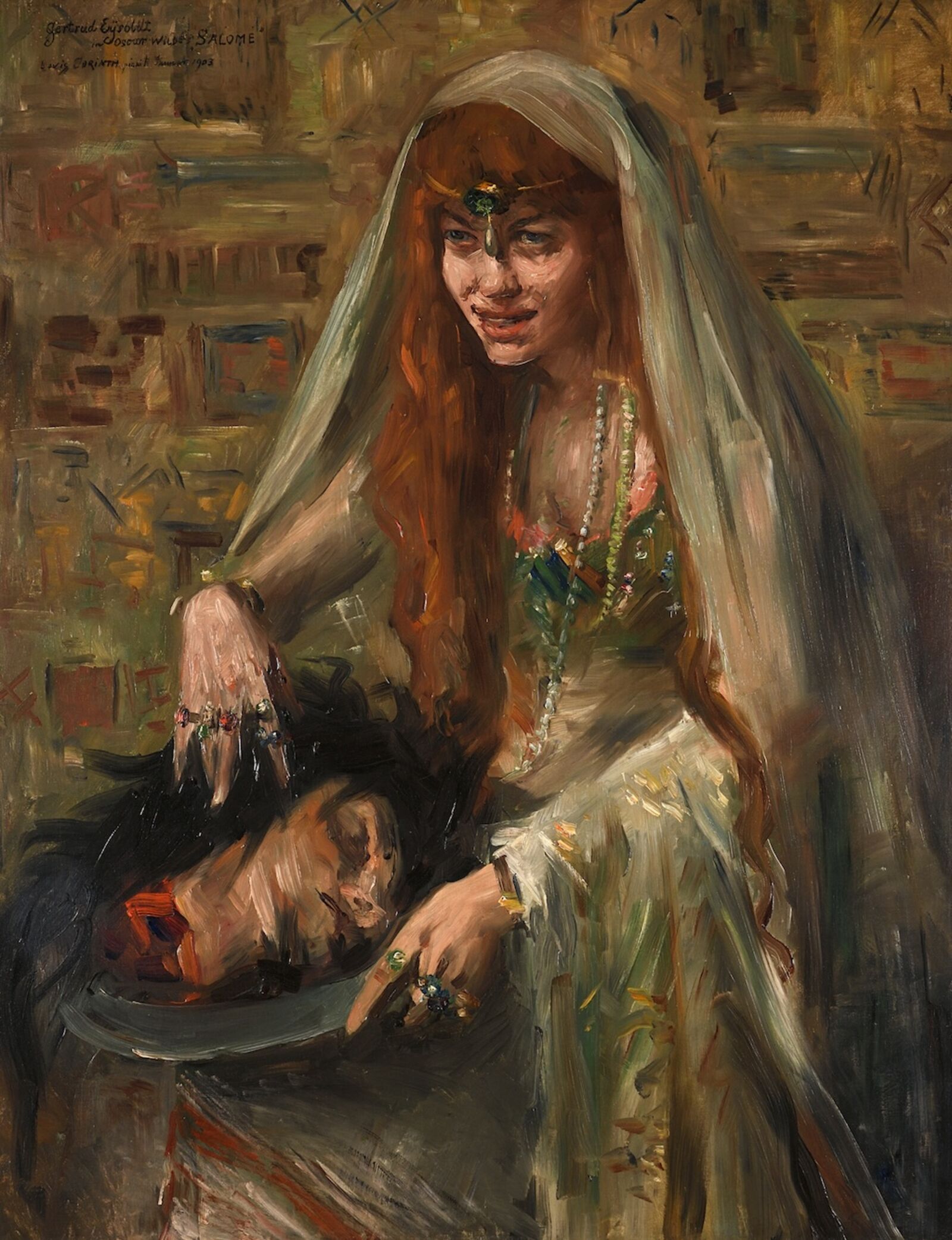
Klassik Stiftung Weimar
Lovis Corinth, Gertrud Eysoldt as Salome, 1903
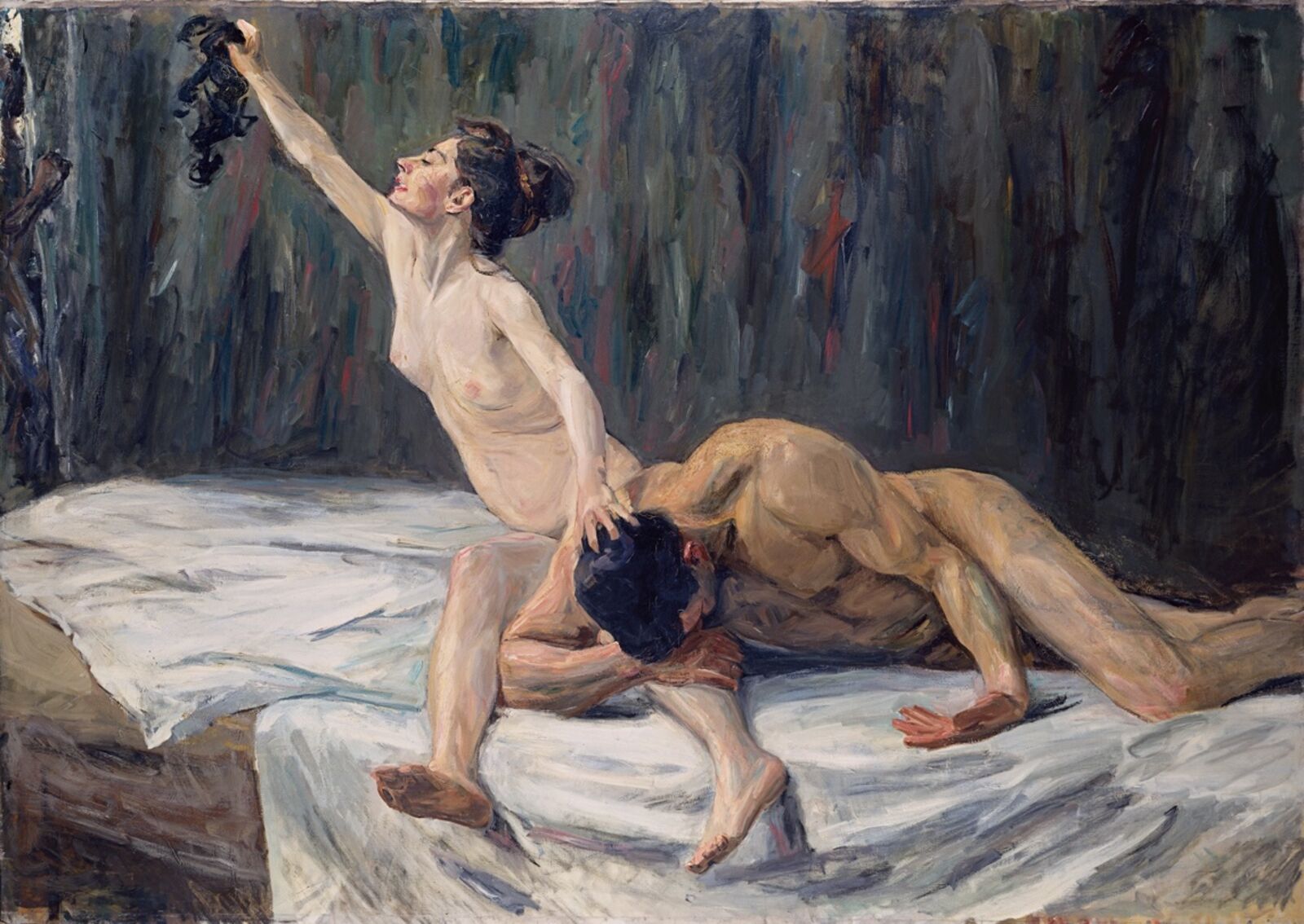
Städel Museum, Frankfurt am Main
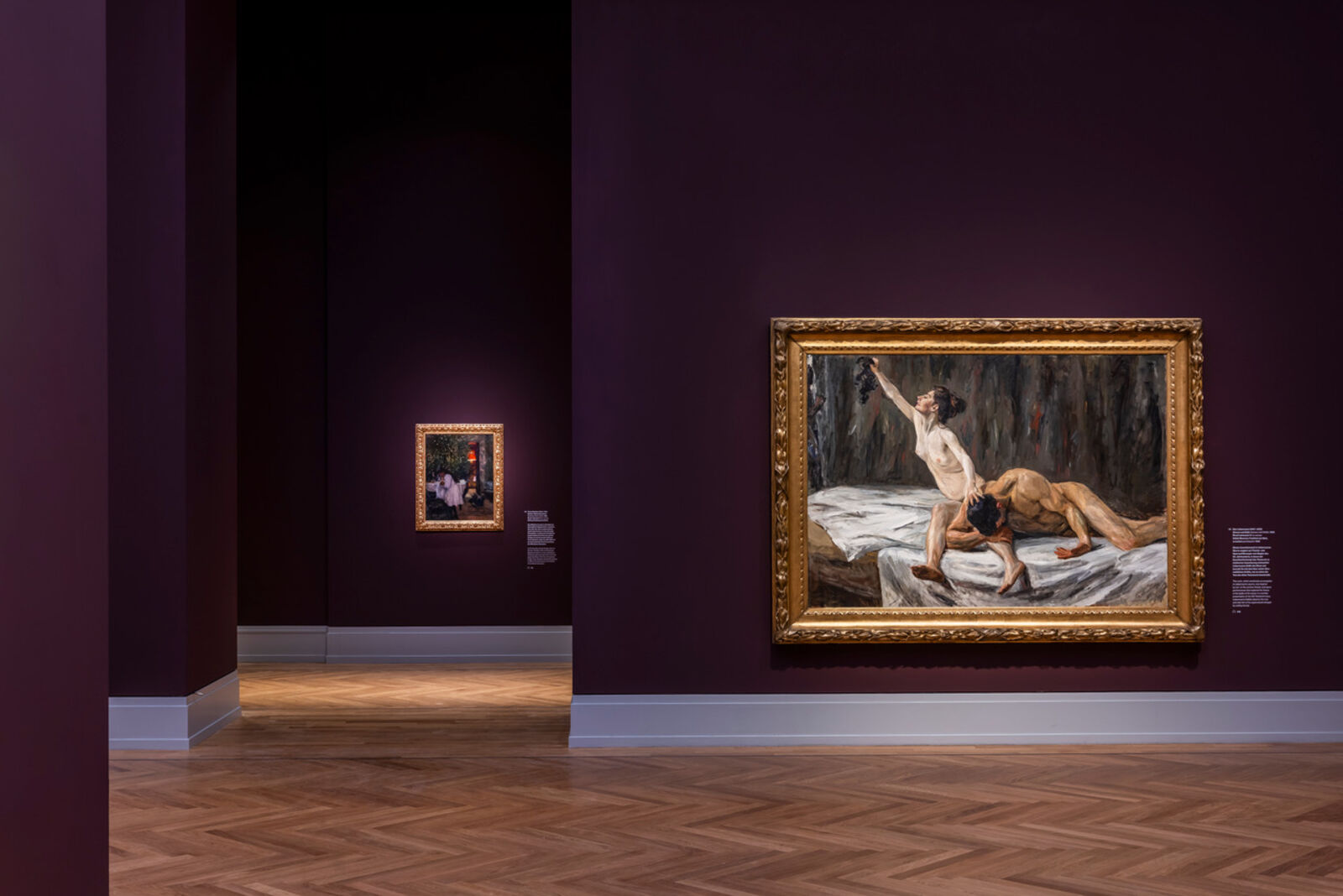
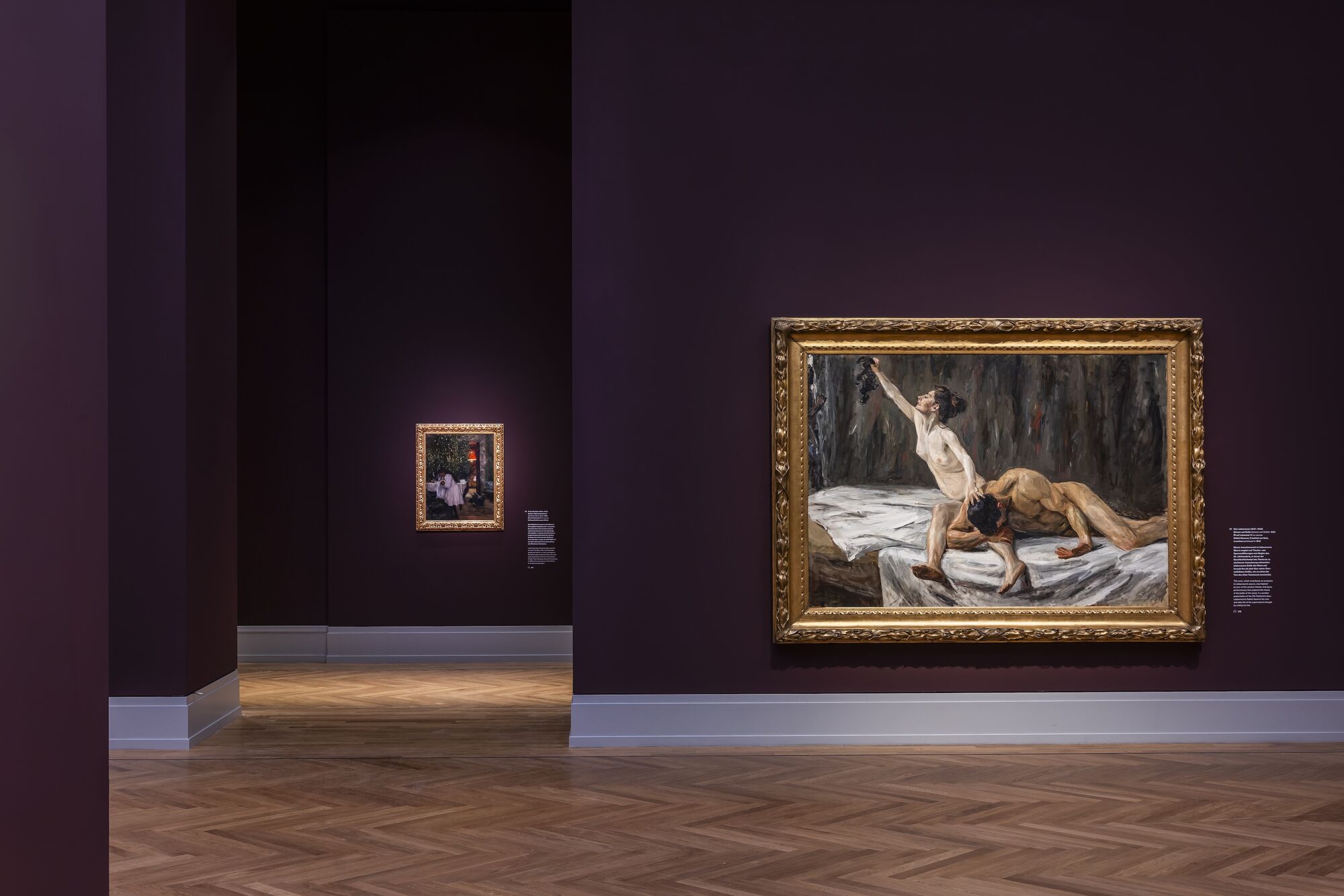
Max Liebermann, Simson and Delila, 1902
Max Liebermann’s painting Samson and Delilah remains sketchily open, as if the story of man and woman were still unfolding. Indeed, such works—and others like them—reflect the influence of the “new women” around the turn of the century, who were increasingly asserting their rights and demanding greater social and cultural agency.
“Of course, Impressionism is merely a catchword; I understand it to mean good painting, created for its own sake… free from any ulterior purpose.”
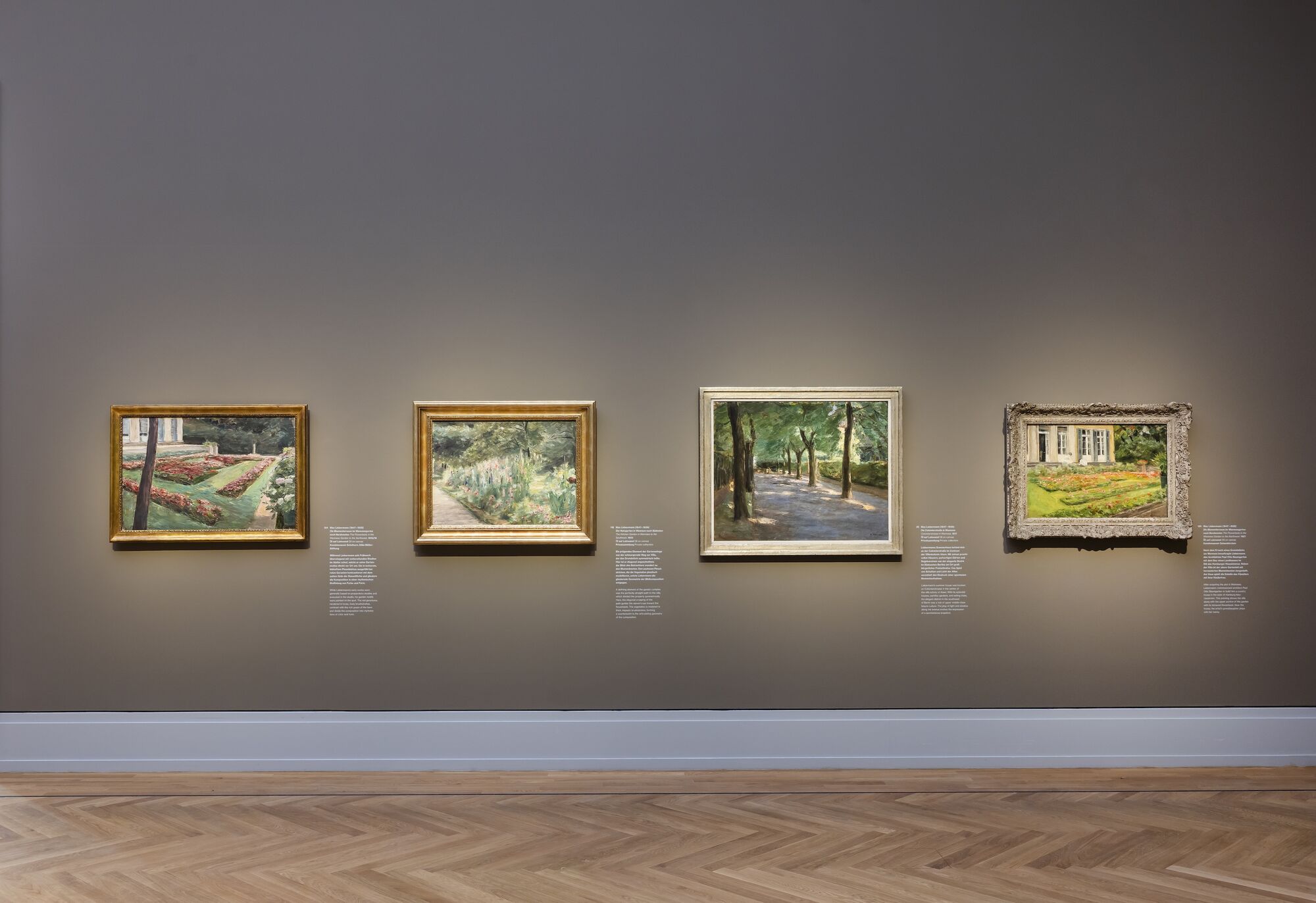
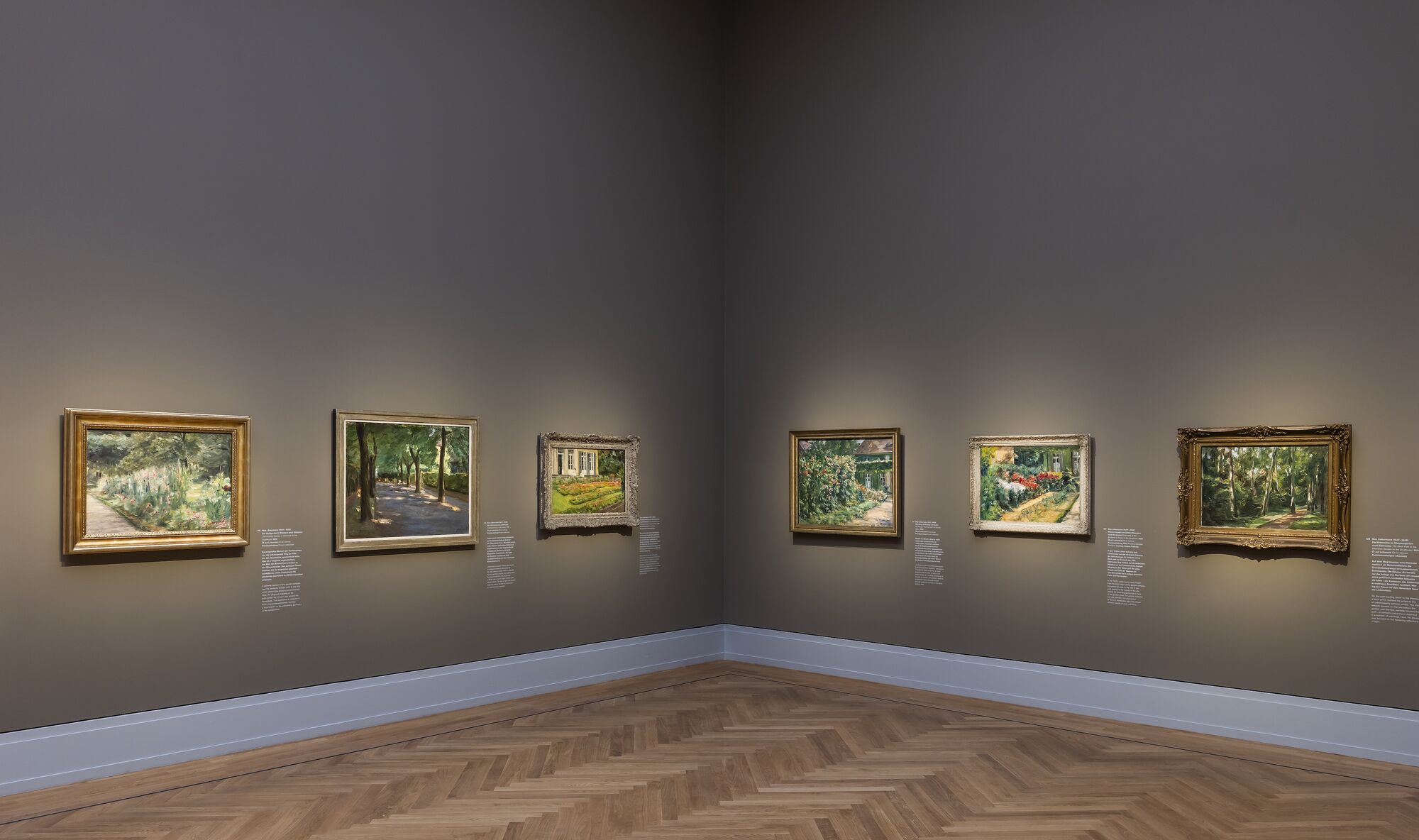
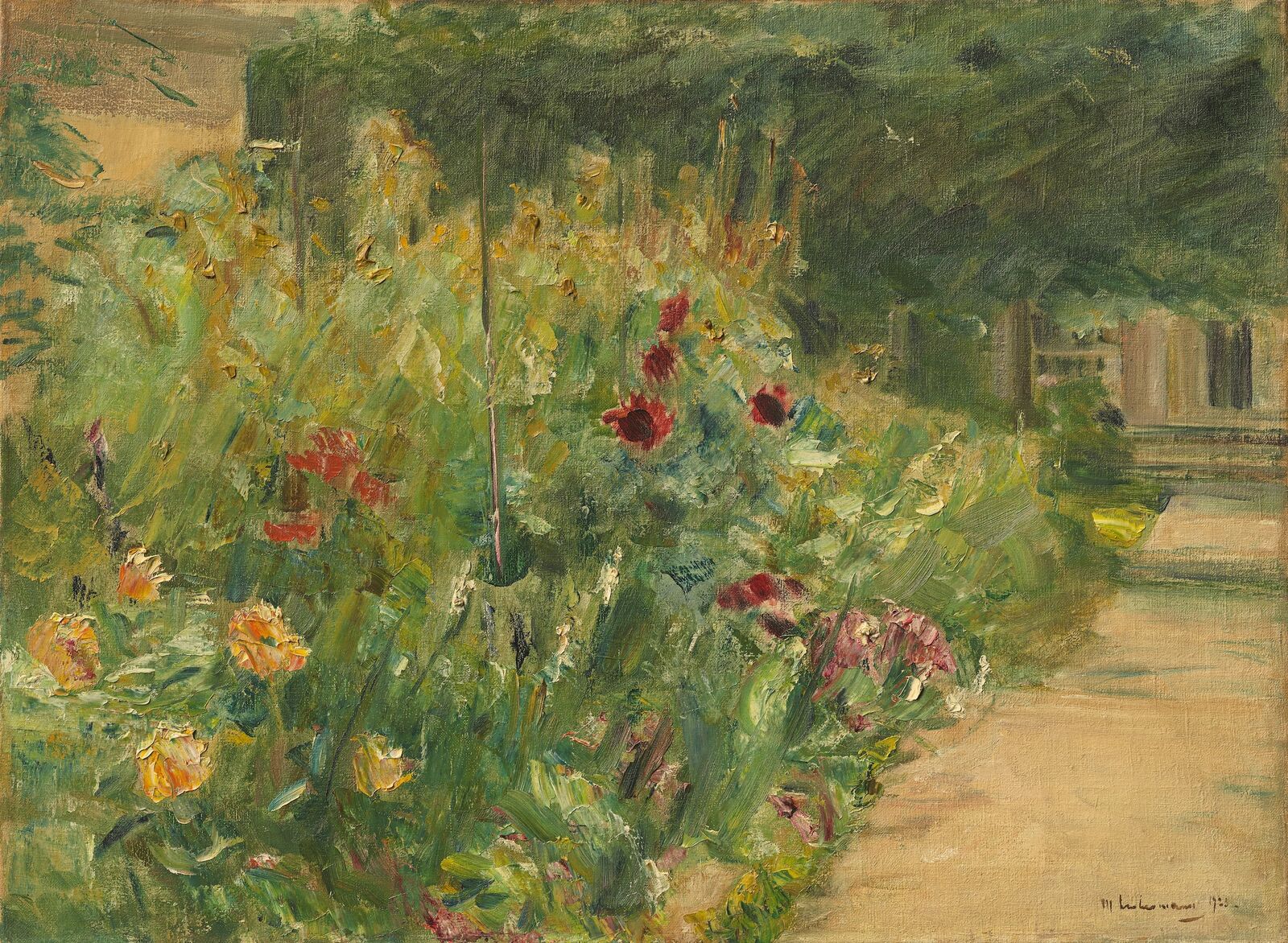
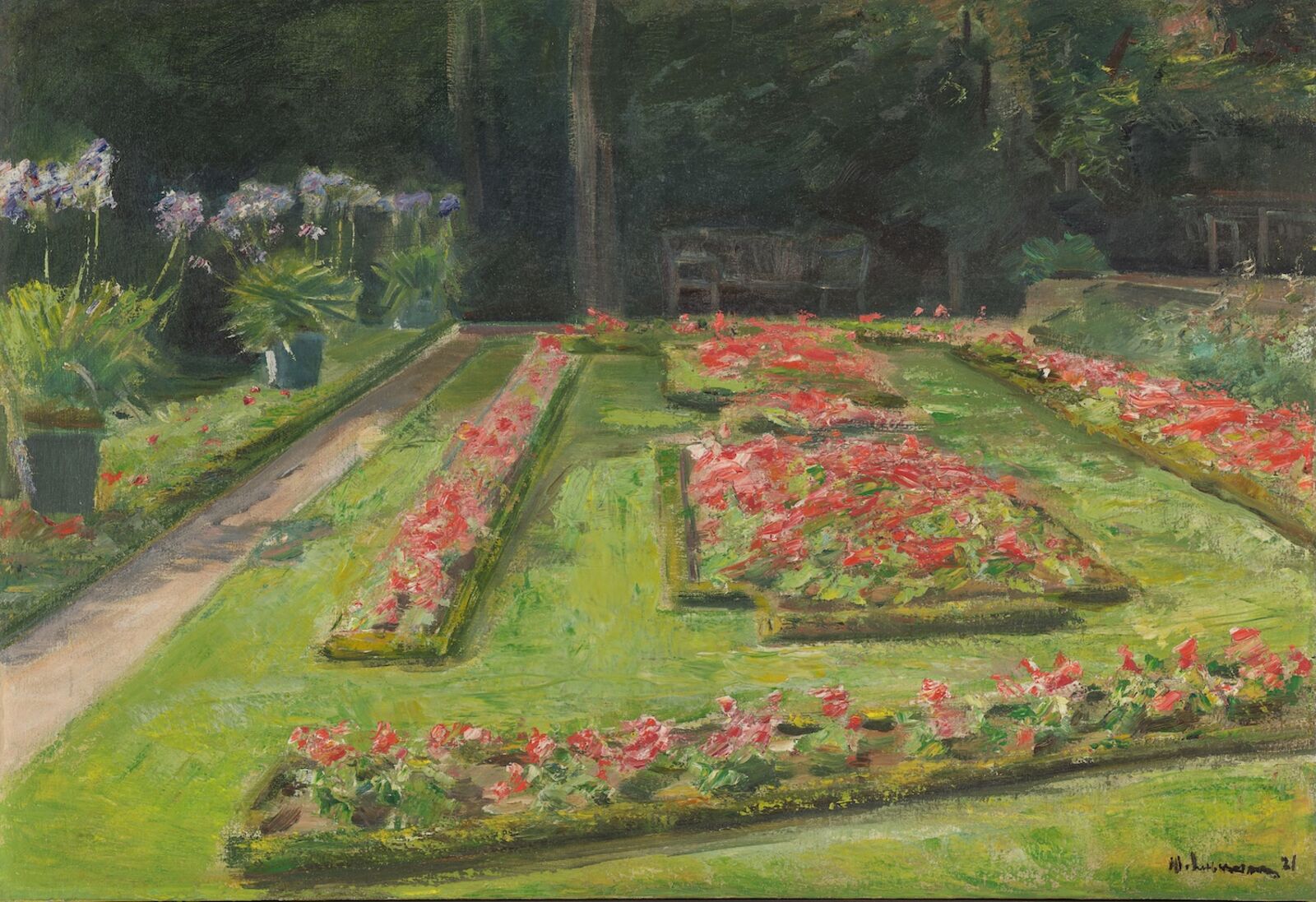
After the death of his father in 1894, Max Liebermann inherited financial independence. In 1909, he purchased a Neoclassical villa at Wannsee, where he created a magnificent garden. From 1915 onward, this garden became the primary subject of his painting: flower beds, kitchen gardens, gardener’s cottages, the Wannsee terrace, and stands of birch trees—rendered in some 200 canvases.
The series of individual motifs and the intense focus on his own garden recall Monet’s now world-famous water lily pond at Giverny and the paintings it inspired. For Liebermann, who was Jewish, his garden increasingly became a private refuge from the resurgent antisemitism from the 1920s onward.
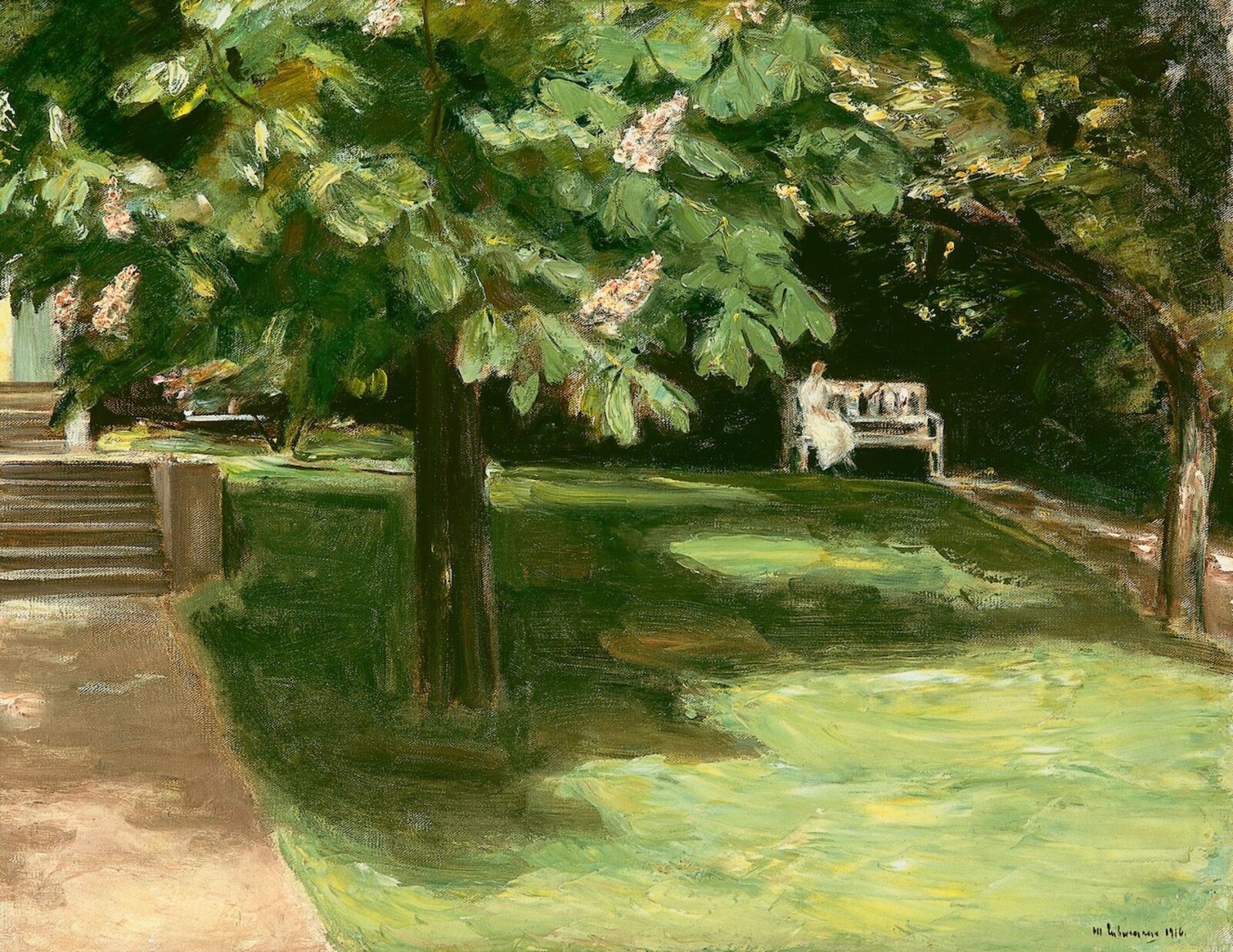
Private collection
Max Liebermann, Garden Bench beneath the Chestnut Tree – Blooming Chestnuts, 1916
With his garden paintings, Max Liebermann reached the pinnacle of his Impressionist development. The paint is applied fully—expressive yet serene—resulting in a masterful late work. This pursuit of painting for its own sake had he already proclaimed in 1903.
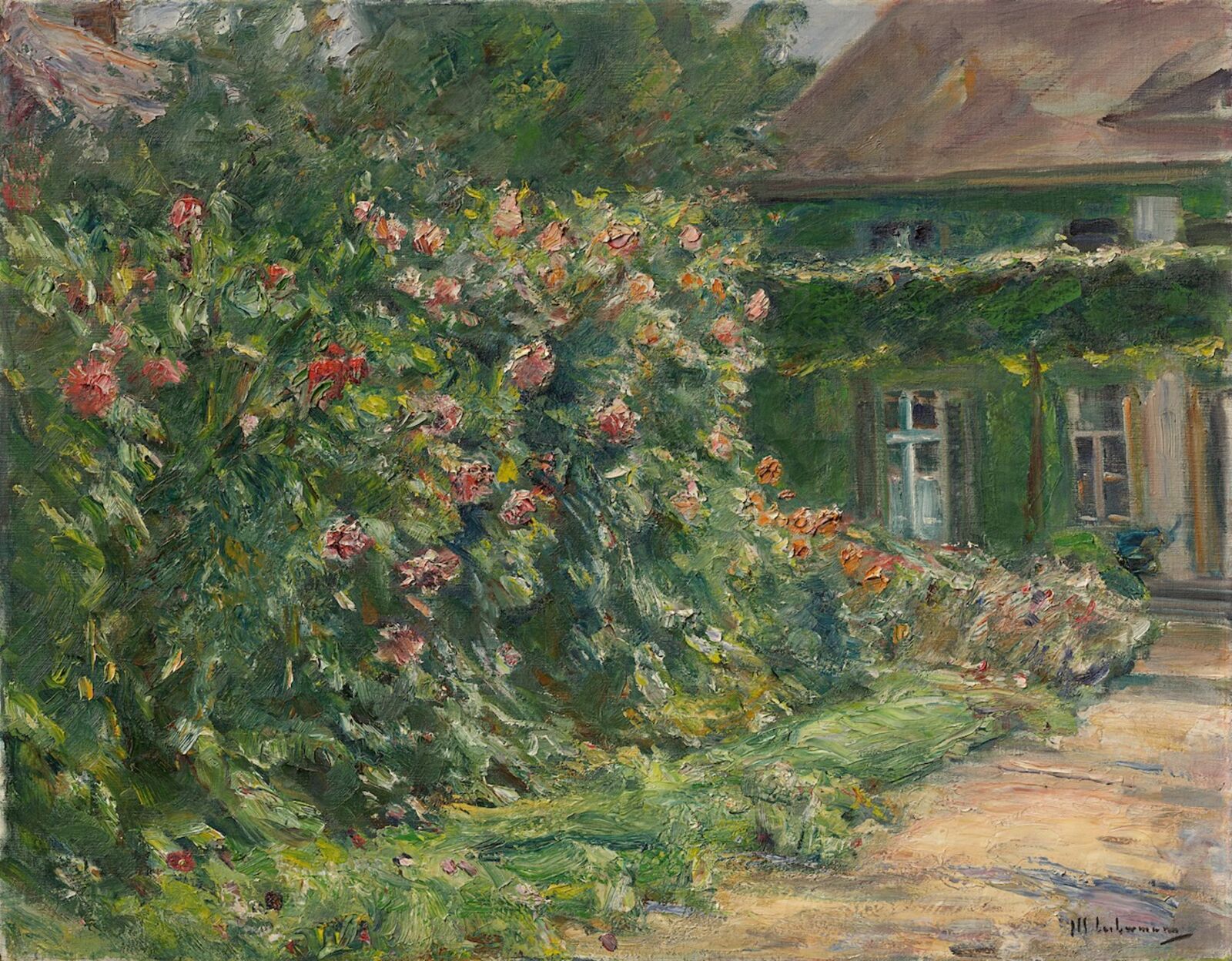
Private collection
Max Liebermann, My House in Wannsee, with garden, 1926
When figures are included in the composition, they are often family members—most notably his granddaughter Maria—or gardeners at work.
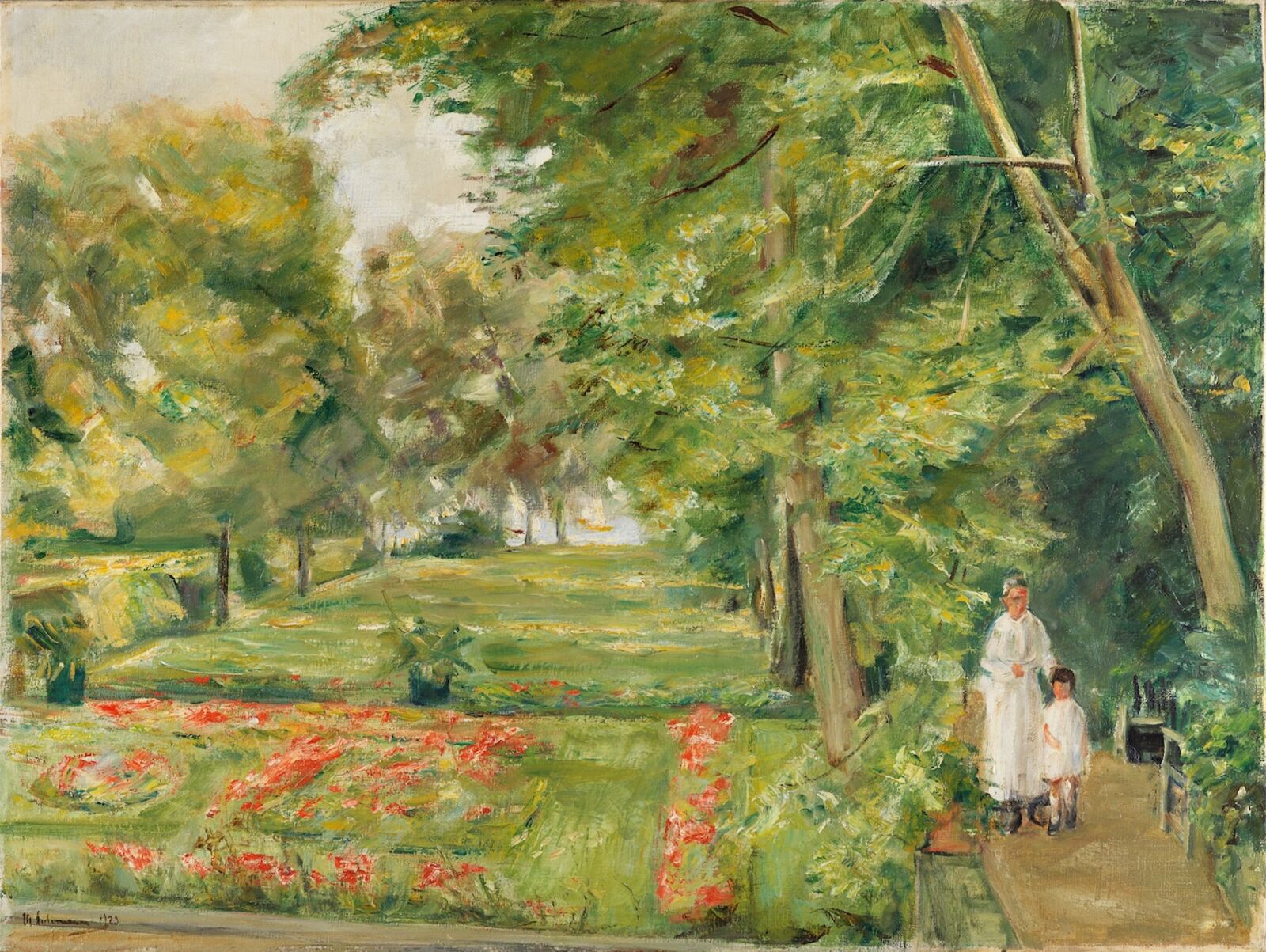
Museo Nacional Thyssen-Bornemisza, Carmen Thyssen Collection, Madrid
Max Liebermann, The Artist’s Granddaughter with Her Governess in the Wannsee Garden, 1923
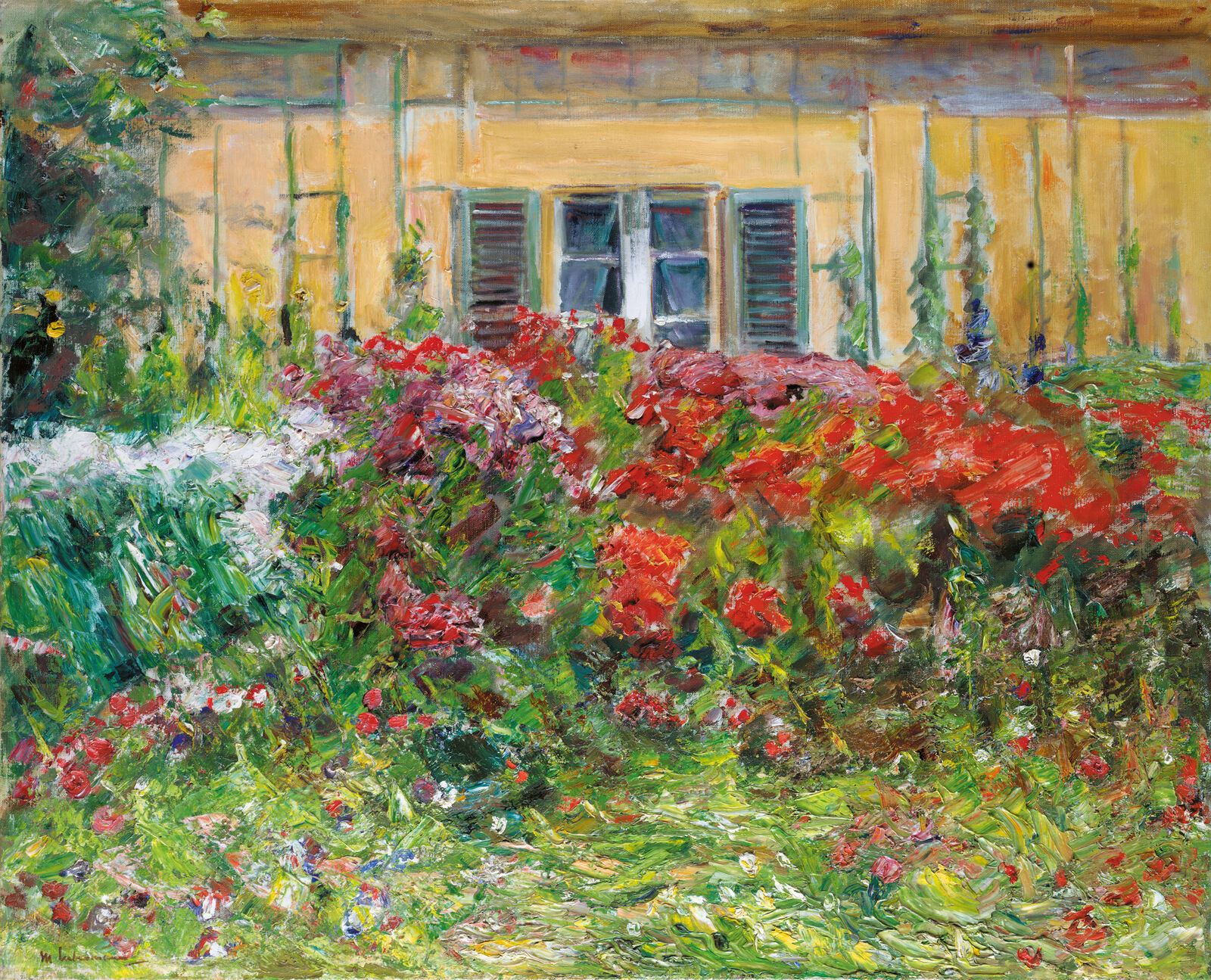
Private collection, Courtesy of Sotheby’s
Max Liebermann, Perennials in Front of the Gardener’s House to the North, 1928
After the National Socialists seized power in 1933, the painter anticipated the new regime by resigning his position as Honorary President of the Academy of Arts. Max Liebermann died in 1935. His widow, Martha Liebermann, took her own life in 1943, just days before her scheduled deportation to a concentration camp. Their daughter Käthe and granddaughter Maria had fled to the United States.
When Max Liebermann—Germany’s foremost Impressionist—was buried in 1935 at the Jewish Cemetery on Schönhauser Allee in Berlin, only a handful of friends dared to attend the final farewell.
Today, Liebermann’s artist villa at Wannsee stands as a significant cultural legacy: both the culmination and endpoint of the first German avant-garde movement. Yet it also serves as a solemn political memorial.
More on the Subject